How Long Is a Chow Chow Pregnant?
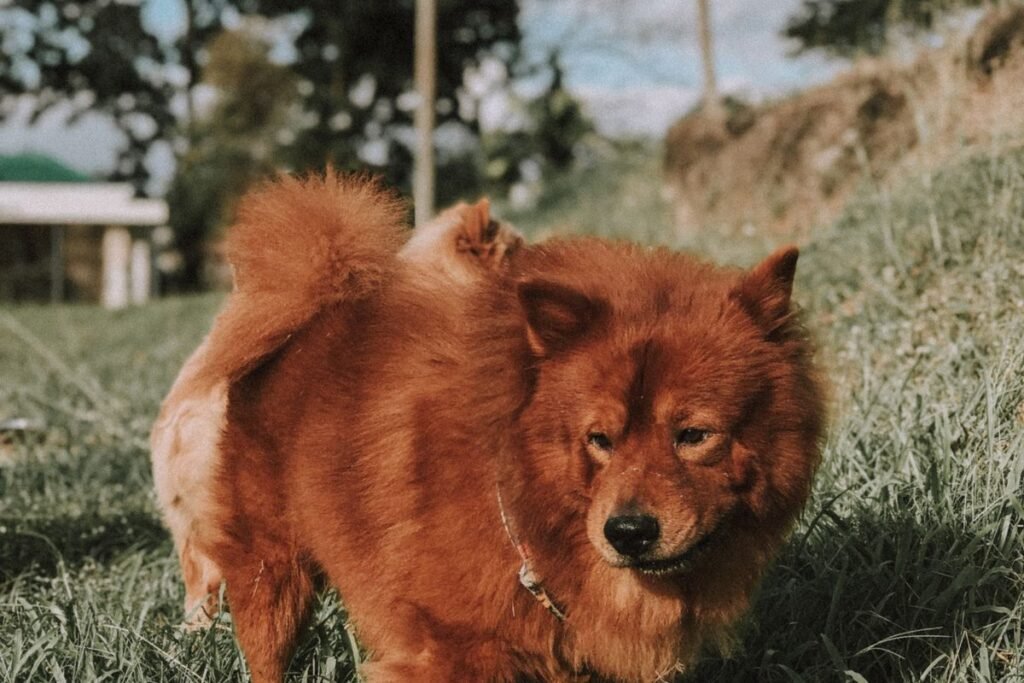
If you are asking how long is a Chow Chow pregnant, the answer is about 63 days from ovulation, the same as every other breed. For a Chow Chow, count 62 to 64 days from the ovulation date and you have the window to plan around, with day 63 in the middle. If you only know the mating dates, the window is wider, 58 to 72 days from the initial mating, because mating and ovulation are usually several days apart. A Chow does not carry her puppies for longer than other breeds, and her thick coat and heavy build do not stretch the pregnancy. What makes a Chow pregnancy different is a paradox that catches owners out: the litters are small, averaging 4.4 puppies, and small litters are supposed to be easier, yet the caesarean rate is 28.1 percent, the third highest in this series. Fewer puppies can mean larger puppies and a slow, attended labour, and that is the core of this article. The date is worked out with real dates below, then the litter figure, the caesarean rate, the coat care and the birth plan that follows from them.
How long is a Chow Chow pregnant from ovulation
A Chow Chow pregnancy lasts about 62 to 64 days from ovulation, with 63 days as the average. The Merck Veterinary Manual, the American Kennel Club and Cornell University all state the figure the same way. It holds for all breeds. For a Chow Chow, ovulation is the fixed point: the eggs are released, they need two to three days to mature, and birth follows about 63 days after ovulation. Nothing about the Chow changes that timetable.
For a Chow Chow, the wider numbers online come from counting from a different event. A dog pregnancy lasts 58 to 72 days, according to Merck and UC Davis, which Cornell expresses as 63 days plus or minus 7 days from the first breeding counted from the first mating. The width has a plain cause. For a Chow Chow, healthy sperm can survive inside the female for three to seven days, according to the AKC, so a mating can happen well before the eggs are ready, and the eggs then need two to three days after ovulation to mature before fertilisation, according to Cornell. For a Chow Chow, counted from the LH surge, the hormone peak about two days before ovulation, pregnancy lasts 64 to 66 days. Work from the ovulation clock when the vet has timed ovulation, the LH clock when you have the surge date, and the wide mating window when you have mating dates only. For a Chow Chow, the breed size question is answered in full in Does Breed Size Affect Dog Gestation Length?.
For a Chow Chow, litter size can move the date by about a day or two, with smaller litters running slightly longer and larger litters slightly shorter, but the studies disagree on whether that effect stands on its own once breed is taken into account. A Chow litter of three or four puppies may run a day or two past the central date, but that is a tendency, not a rule, and it is not a reason to adjust the due date. The window of 62 to 64 days from ovulation already covers it.
A Chow due date worked out with real dates
Take a Chow whose cycle was timed with progesterone testing. Her LH surge is detected on Monday 30 November 2026 and ovulation follows about two days later, on Wednesday 2 December 2026. From ovulation, 62 to 64 days gives Tuesday 2 to Thursday 4 February 2027, with the central date Wednesday 3 February 2027. From the LH surge, 64 to 66 days gives the same three days, Tuesday 2 to Thursday 4 February 2027. For a Chow Chow, the two clocks agree, which is the check that the timing was done right. Have the whelping area ready by the early edge, Tuesday 2 February, and treat the central date as the middle of a window, not as a promise.
Now take the same bitch with mating dates only: she was mated on Friday 27 November and Sunday 29 November 2026, and no ovulation testing was done. The honest answer is the mating window, 58 to 72 days from the first mating, which runs from Sunday 24 January to Sunday 7 February 2027. That is a fifteen day span, and the whelping area should be ready by Sunday 24 January. The table below sets out both calculations.
| What you know | Count from | Calculation | Result |
|---|---|---|---|
| Ovulation date Wednesday 2 December 2026 | Ovulation | Add 62 to 64 days | Tuesday 2 to Thursday 4 February 2027, central date Wednesday 3 February 2027 |
| LH surge Monday 30 November 2026 | LH surge | Add 64 to 66 days | Tuesday 2 to Thursday 4 February 2027 |
| First mating Friday 27 November 2026, last mating Sunday 29 November 2026 | First mating | Add 58 to 72 days | Sunday 24 January to Sunday 7 February 2027 |
For a Chow Chow, the vet call threshold is separate from the due date. The AKC says to call the vet if there are no signs of whelping 64 days after the last mating, which for the mating dates above is Monday 1 February 2027. Cornell gives the ovulation timed version: call one to two days past an ovulation timed due date, which here is Thursday 4 or Friday 5 February 2027. For a Chow Chow, use whichever threshold comes first, and ask your vet which clock they are working from. For a Chow Chow, never wait for the far edge of the mating window. For a Chow Chow, the method for any breeding date is in How to Calculate a Dog's Due Date, the ovulation count is in Dog Ovulation Due Date, and the overdue guide is Dog Past Due Date.
How many puppies do Chow Chows have
The published mean for the Chow Chow comes from Borge and colleagues, who studied 10,810 litters across 224 purebred breeds using Norwegian Kennel Club records from 2006 and 2007. Their paper, published in Theriogenology in 2011, gives the Chow mean litter size as 4.4 puppies, based on 36 litters, with a range of 1 to 9 puppies. For a Chow Chow, that row was read directly from Table 1 of the paper for this article. It is below the overall mean of 5.4 puppies across all breeds in the same study, so a Chow litter is typically a small one, but the range matters more than the mean. A litter of two and a litter of seven are both ordinary for this breed, and a first litter is frequently smaller than later ones.
The figure is corroborated by breed club guidance. The Chow Chow Club of Victoria buyer guide describes the breed as notorious for having small litters, with three to four puppies as the average litter size. That is a breed club description rather than a study figure, and it sits a little below the Borge mean of 4.4, but the two agree on the essential point: Chows have small litters. The general litter picture is in Average Dog Litter Size, and the question of how many puppies to expect is in How Many Puppies Will My Dog Have?.
Small litters that still carry risk
A litter of four puppies sounds easier than a litter of eight, and in some ways it is. There are fewer puppies to feed, fewer to count, and less demand on the dam after birth. But a small litter brings its own risks, and the Chow is the breed in this series where those risks are clearest.
The first risk is size. A puppy in a litter of three has more room and more nutrition than a puppy in a litter of eight, and it can grow larger. A large puppy in a medium bitch is a recognised cause of difficult birth, and it is the reason a small litter should never be treated as an easy litter. The second risk is the labour trigger. Labour is partly triggered by the puppies themselves, through the pressure and hormonal signals of a full uterus, and a litter of two or three puppies may not provide enough of that signal to start labour strongly or on time. The result can be a slow labour with long pauses between puppies, which is exactly what a breeder focused page for this breed describes: smaller litters can still mean large puppies and a slow, attended labour. For a Chow Chow, the singleton guide is Singleton Puppy Due Date, and the first litter guide is First Litter Dog Due Date.
The caesarean rate for Chow Chows, and what it means
The BreedTracker research table, which attributes its figures to Evans and Adams 2010, gives the Chow Chow caesarean rate as 28.1 percent. That attribution is secondary: the Evans and Adams paper itself, a study of 22,005 litters from the 2004 Kennel Club and BSAVA Purebred Dog Health Survey, names only the ten highest caesarean breeds in its abstract, and the Chow is not among them. The 28.1 percent figure comes from the BreedTracker table of that study's data, not from a direct read of the paper's full table, and this article says so rather than presenting the number as if it were read from the paper itself. For a Chow Chow, the full Evans and Adams Table 1 was not opened for this article.
A rate of more than one litter in four delivered by caesarean is high, and it is the third highest in this series. It sits well above the Akita rate of 10.2 percent and the Bichon rate of 5.6 percent in the same table. The same table flags the Chow as brachycephalic, which is consistent with a raised surgical delivery rate, since short faced breeds more often need help at birth. This article does not claim a specific mechanism beyond that flag: no verified Chow specific dystocia mechanism exists beyond the caesarean rate and the brachycephalic flag, and this article does not invent one.
What the rate means in practice is that a birth plan is essential. For a Chow Chow, discuss it with your vet before the due window opens: where the whelping will happen, who will be present, how long to allow between puppies before calling, and what happens if a caesarean is needed in the middle of the night. Know the nearest out of hours clinic in advance. A radiograph count after day 55 is part of the same plan, since it tells you when labour should be finished. For a Chow Chow, the breed level guide is Dog Breeds That Need a C Section, and the previous caesarean guide is Dog Due Date After Previous C Section.
Breeding age, and a note on the breed club guide
A question that arises for this breed is the age at which a bitch should first be bred. The Chow Chow Club Inc. guide on breeding, whelping and rearing puppies states that no bitch should be bred before the age of two. That guide was written in 1996, and it is a breed club guide, not a veterinary source, so this article presents it as breeder guidance rather than as a veterinary rule. The right age for an individual bitch is a question for your vet and your breed club, taking her health screening into account. A bitch bred too young carries more risk for herself and for the puppies, and a question and answer page seen in the search results shows a thirteen month old Chow in whelp, which is the situation the club guidance is written to prevent.
Coat care before birth
A Chow in full coat needs more grooming attention in late pregnancy than a short coated breed, and the last two weeks are the time to deal with it. The belly and the area around the nipples should be kept clean and free of matting so the puppies can find the teats and nurse without difficulty, and the coat around the rear should be kept clean for the same reason. Do this gently and in short sessions, with the bitch lying comfortably, and stop if she becomes stressed. Do not clip or bathe her for the first time in late pregnancy: introduce any grooming change well before the due window, or leave it to a groomer she knows. A heavily matted coat can hide skin problems and make the temperature checks and the observation of labour signs harder, so regular brushing through pregnancy is part of the preparation, not a cosmetic extra. Ask your vet or groomer what is appropriate for your bitch, and do not use any new product on her in late pregnancy without checking first.
How the vet confirms a Chow pregnancy
Vet confirmation follows the same timetable as for any breed, with one Chow specific caution already covered: the relaxin test can read negative in a small litter. A relaxin blood test can detect pregnancy from around day 22 to 27 after breeding, yet a negative result before day 27 should be repeated. Palpation is possible from around day 21 and most reliable between days 28 and 35, though it takes an experienced hand and is less certain in a heavily coated, deep chested bitch than in a small one. Ultrasound is the most useful early test: that is reliable from around day 25 and most reliably after day 28, and it shows heartbeats, which is the confirmation that matters. For a Chow Chow, a radiograph is the counting tool: the skeletons are visible from around day 45, and the best count comes at day 55 or later. For a Chow Chow, book the radiograph in the final week if what you need is an accurate number of puppies, and book the first visit for around day 25 to 28 rather than waiting until she looks pregnant. For a Chow Chow, the test guide is Dog Pregnancy Test, the ultrasound guide is Dog Pregnancy Ultrasound, and the visit schedule is Pregnant Dog Vet Visit Schedule.
What a Chow pregnancy looks like week by week
In the first three weeks, the outward signs are typically slight: a change in appetite, a little more sleep, some sensitivity around the belly. A bitch who is either more clingy or more withdrawn than usual. For a Chow Chow, the teats may start to enlarge and pinken from around three weeks. None of these signs confirms a pregnancy on its own. The symptom guide is Dog Pregnancy Symptoms.
The pregnancy becomes easier to confirm and the belly begins to show from week four to week six. The bitch may start to gain weight, her appetite typically steadies and then rises, and an ultrasound can confirm the pregnancy reliably from around day 25, most reliably after day 28. A Chow in full coat can hide the early changes well, so do not judge by her shape. For a Chow Chow, keep her routine as normal as possible: regular walks on the lead, no rough play, no jumping, and no new strenuous exercise. The exercise guidance is in Exercise for Pregnant Dogs.
For a Chow Chow, from week six to the due date, the changes are obvious. The belly drops and widens, the mammary glands fill, the teats enlarge. The bitch starts to nest, scratching at bedding and seeking a quiet corner. For a Chow Chow, her food intake rises, and she may want smaller meals more often as the puppies press on her stomach. For a Chow Chow, in the last week, take her temperature twice a day so you know her normal range. A drop below 100 degrees Fahrenheit, frequently to 99 degrees or lower, usually comes 8 to 24 hours before labour, and the drop lasts only about 8 hours, so it is easy to miss if you check once a day. The temperature guide is Dog Temperature Before Labor. For a Chow Chow, the general weekly guide is Dog Pregnancy Week by Week.
Feeding and the whelping box
A Chow in the first half of pregnancy needs her normal food in her normal amount. For a Chow Chow, her energy needs have barely changed, the puppies are small, and overfeeding early adds fat rather than puppies. The increase comes in the second half. For a Chow Chow, from around week five, move her onto a high quality puppy food or a food your vet recommends for late pregnancy and lactation, and increase the amount gradually so that by the final week she is eating substantially more than her maintenance ration. For a Chow Chow, offer smaller meals more often in the last two weeks, because the puppies press on her stomach and a large meal becomes uncomfortable. Fresh water should always be available. For a Chow Chow, the feeding guides are What to Feed a Pregnant Dog and Best Food for Pregnant Dogs.
The whelping box needs to fit a medium, heavily built bitch lying at full stretch on her side, with room for four or five puppies beside her and rails or a lip that keep a puppy from being trapped against the side. For a Chow Chow, set the box up in a quiet, warm, draught free room at least a week before the early edge of the due window, and let her sleep in it and get used to it before labour starts. For a Chow Chow, a box introduced on the day of labour is a strange place, not a nest. For a Chow Chow, the box guide is DIY Whelping Box, the supplies list is Whelping Supplies Checklist, and the planned Round 3 box size guide is Whelping Box Size Calculator.
Signs labour is near, and when to call the vet
For a Chow Chow, labour usually announces itself a day or two before it starts. For a Chow Chow, the bitch goes off her food, becomes restless, paces, pants, digs at her bedding, seeks company or seeks solitude, and her temperature drops below 100 degrees Fahrenheit. For a Chow Chow, once the drop has happened, labour usually follows within 8 to 24 hours. For a Chow Chow, the signs guide is Signs of Labor in Dogs, and the stages are in Dog Labor Stages.
For a Chow Chow, first stage labour, restlessness, panting and nesting without straining, can last 6 to 12 hours in a first litter and is often shorter in later ones. Second stage is the delivery of the puppies. For a Chow Chow, expect strong straining with each puppy and a gap between puppies that is usually well under two hours. With a small litter, the gap between puppies matters even more than usual, since there are fewer puppies to keep the process moving: a long pause after the first puppy in a litter expected to be four is a reason to call, not a reason to wait. For a Chow Chow, count the puppies against the radiograph count and count the placentas too, one per puppy.
For a Chow Chow, call the vet at once if any of these happen: strong straining for 20 to 30 minutes with no puppy; more than two hours between puppies; green discharge before the first puppy; a temperature that dropped more than 24 hours ago with no labour; a temperature over 103 degrees Fahrenheit; bleeding for more than 10 minutes; or no signs of whelping 64 days after the last mating. These thresholds come from the AKC and Cornell. With a caesarean rate above a quarter, do not wait to see if things improve once one of them is met. For a Chow Chow, the labour duration guide is How Long Does Dog Labor Last?, and the overdue guide is Dog Past Due Date.
What rival Chow pages get wrong
The rival pages for this question are thin. A breed club style page seen in the search results gets the central point right, stating that gestation is roughly 63 days from ovulation, not from the day of mating, and noting that smaller litters can still mean large puppies and a slow, attended labour. Its gaps are the absence of any litter mean, no caesarean rate, no vet test timing, and no due date maths beyond the one sentence. The PetCalculator Chow page, seen in the search results, gives the Borge mean of 4.4 with its sample size and range and the 63 day average, but it has no whelping or dystocia content. The breed profile page gives a litter size of three to six with a gestation of approximately 55 to 72 days; the range is wider than any verified range at the low end and is unsourced. This article beats all of them on the same points: the anchor named every time, the Borge figure read directly from Table 1, the 28.1 percent caesarean rate with its attribution stated, the small litter paradox explained, and the vet call thresholds.
Checking the date and planning the window
For a Chow Chow, enter the ovulation date in the dog due date calculator and note the full window, not just the central date. A calculator gives an estimate only.
Frequently asked questions
How long is a Chow Chow pregnant?
For a Chow Chow, about 63 days from ovulation, in a window of 62 to 64 days. Counted from the first mating, the range is 58 to 72 days, since mating and ovulation are typically days apart. Her thick coat and heavy build do not change the length of the pregnancy.
How many puppies do Chow Chows have?
The published mean is 4.4 puppies, from Borge and colleagues 2011, based on 36 litters with a range of 1 to 9 puppies. A breed club guide describes Chows as notorious for small litters of three to four puppies, which agrees with the study figure.
Do Chow Chows often need a caesarean?
The BreedTracker research table of Evans and Adams 2010 data gives a Chow caesarean rate of 28.1 percent, the third highest in this series. More than one litter in four in the survey was delivered surgically. For a Chow Chow, discuss a birth plan with your vet before the due window opens.
Are small Chow litters easier to whelp?
Not necessarily. Fewer puppies can mean larger puppies and a slow labour, and a litter of two or three may not trigger labour strongly on its own. A small litter is a different kind of risk, not a smaller one.
When can a vet confirm a Chow pregnancy?
For a Chow Chow, a relaxin blood test from around day 22 to 27 after breeding, palpation most reliably between days 28 and 35, and ultrasound reliably from around day 25 and most reliably after day 28. For a Chow Chow, a radiograph after day 55 gives the best puppy count. A negative relaxin test in a small litter should be repeated or confirmed with ultrasound.
What should I do if my Chow is past her due date?
Call the vet. For a Chow Chow, the thresholds are no signs of whelping 64 days after the last mating, or one to two days past an ovulation timed due date. For a Chow Chow, do not wait for the far edge of the mating window to run out.
Sources
- American Kennel Club, "Dog Pregnancy: Signs, Care, and Preparing for Puppies." https://www.akc.org/expert-advice/health/dog-pregnancy-care-prep/ — Gestation about 62 to 64 days; no signs of whelping 64 days after the last mating is a reason to call the vet; temperature drop before labour; straining and interval thresholds.
- American Kennel Club, "How to Time Ovulation in the Heat Cycle." https://www.akc.org/expert-advice/dog-breeding/ovulation-timing/ — Healthy sperm survive three to seven days; ovulation about 48 hours after the LH surge; about 65 days from the LH surge and 63 days from ovulation.
- Cornell University College of Veterinary Medicine, Riney Canine Health Center, "The normal whelping process." https://www.vet.cornell.edu/departments-centers-and-institutes/riney-canine-health-center/canine-health-topics/normal-whelping-process — Average 63 days from ovulation; 63 plus or minus 1 to 2 days from a known ovulation date; 63 plus or minus 7 days from the first breeding; eggs mature 2 to 3 days after ovulation; call the vet one to two days past an ovulation timed due date.
- Merck Veterinary Manual, Dog Owners, "Management of Reproduction in Dogs." https://www.merckvetmanual.com/dog-owners/reproductive-disorders-of-dogs/management-of-reproduction-in-dogs?query=reproductive — Pregnancy about 62 to 64 days from ovulation; 64 to 66 days from the LH surge; 58 to 72 days from first mating; breeding date does not always match conception.
- UC Davis School of Veterinary Medicine, "Normal Whelping in the Bitch." https://healthtopics.sf.ucdavis.edu/sites/g/files/dgvnsk6721/files/inline-files/cenormalwhelp.pdf — 64 to 66 days from the LH surge and from the first progesterone rise; 58 to 72 days from first mating. Cited via the programme verified source record.
- Borge KS, Tonnessen R, Nodtvedt A, Indrebo A. "Litter size at birth in purebred dogs: a retrospective study of 224 breeds." Theriogenology 75(5):911-919, 2011. DOI: 10.1016/j.theriogenology.2010.10.034. PMID: 21196028. https://nkk2023.stage22.coretrek.no/getfile.php/13278750-1508249559/Dokumenter/Helse/Avl%20og%20oppdrett/Litter-size-at-birth-in-purebred-dogs-Borge-et-al2.pdf — 10,810 litters; overall mean 5.4 puppies. The Chow Chow row, 36 litters, mean 4.4, range 1 to 9, was read directly from Table 1 of the PDF for this article.
- PetCalculator, "How Many Puppies Does a Chow Chow Have?" https://petcalculator.com/how-many-puppies-chow-chow-litter-have/ — Search result only. Borge mean 4.4, n=36, range 1 to 9; 63 days average, 58 to 68 days.
- BreedTracker, "Dog Breed Whelping and Health Data." https://www.breedtracker.com/research/dog-breed-whelping-and-health-data — Research table attributing its caesarean rates to Evans and Adams 2010. Chow Chow caesarean rate 28.1 percent. Secondary attribution; the full Evans and Adams Table 1 was not opened for this article. The same table flags the Chow as brachycephalic.
- Evans KM, Adams VJ. "Proportion of litters of purebred dogs born by caesarean section." Journal of Small Animal Practice 51(2):113-118, 2010. DOI: 10.1111/j.1748-5827.2009.00902.x. https://www.researchgate.net/publication/41411612_Proportion_of_litters_of_purebred_dogs_born_by_caesarean_section — Abstract opened. 13,141 bitches, 22,005 litters, 151 breeds; the abstract names only the ten highest caesarean breeds, none of which is the Chow Chow.
- Chow Chow Club of Victoria, buyer guide. https://www.dogzonline.com.au/breed-info/chow-chow-information-for-prospective-buyers.pdf — Breed club guidance describing Chows as notorious for small litters of three to four puppies.
- Chow Chow Club Inc., "Breeding, Whelping and Rearing Puppies," by Liza Lee Miller, 1996. https://chowchow.org/breeding-whelping-and-rearing-puppies/ — Search result only. Breed club guide: no bitch bred before age two; week by week fetal development. Its figures are breeder guidance from 1996, not veterinary facts.
- VCA Hospitals, "Pregnancy Testing in the Dog." https://vcahospitals.com/know-your-pet/pregnancy-testing-in-the-dog — Relaxin timing and false negatives in small litters; ultrasound and palpation timing.
Where sources disagree, the disagreement is stated in the article rather than picking one figure silently: the caesarean rate is a secondary attribution from the BreedTracker table of Evans and Adams 2010 data; no verified Chow specific dystocia mechanism exists beyond the caesarean rate and the brachycephalic flag; the rival 55 to 72 day gestation range is not used because it is unsourced and wider than verified; the 1996 breed club guide figures are labelled as breeder guidance, not veterinary facts.
Disclaimer
This article is general information only. It cannot tell you whether a dog is pregnant, diagnose any condition, or stand in for veterinary advice. Calculator results on this site are estimates. If you think your dog may be pregnant, or if anything in this guide worries you, speak to your veterinarian.
Keep reading

My Dog Is Pregnant: What Do I Do Now
Your dog is pregnant and it was not planned. Start here: confirm it, book the vet, work out the due date, and…

Dog Pregnancy Preparation Guide Before Due Date
Get ready before the due date in three waves: the vet plan and puppy count, the room and whelping box, and the…

How to Care for a Pregnant Dog for the First Time
Your dog is pregnant for the first time, and you have never done this before. Start with confirmation and a vet plan,…