Whelping Supplies Checklist: Everything You Need for Birth
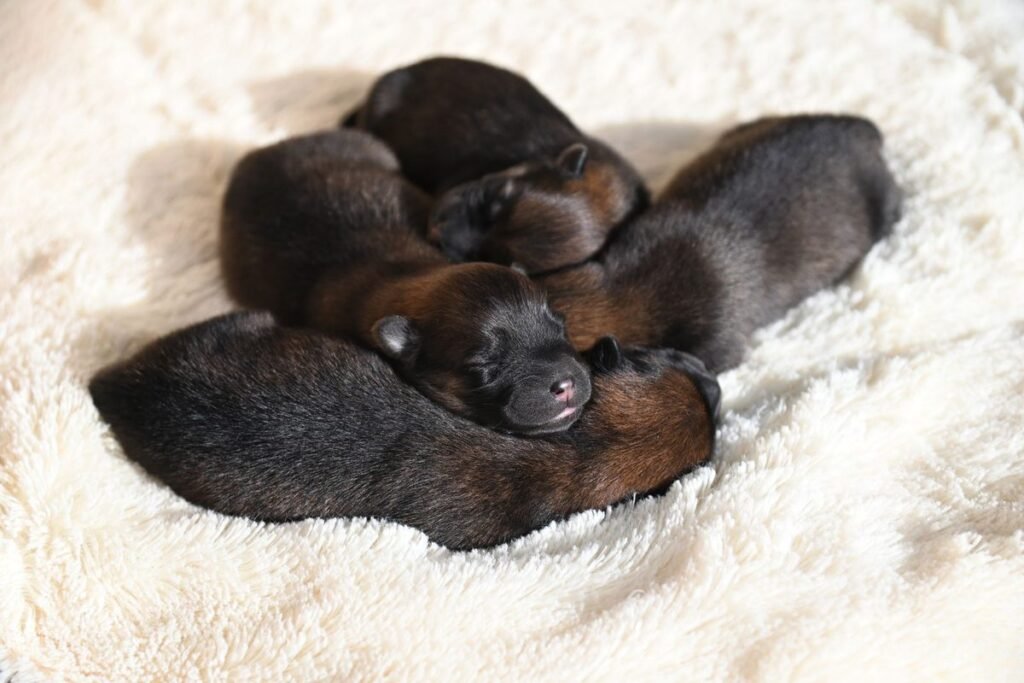
A whelping supplies checklist is a list of everything you need gathered and ready before your dog goes into labour, grouped so you can find each item quickly in the middle of the night. The short answer is this: have your whelping box set up, plenty of clean towels and washable bedding, a thermometer, a torch, a notebook, your vet's number and your emergency clinic's number, and a way to keep the puppies warm, all ready by about day 55 of pregnancy. Gestation in dogs is about 63 days from ovulation (62 to 64 days, Merck, Cornell and the AKC), or 58 to 72 days from a first mating (Merck and UC Davis), so day 55 gives you a week or two of breathing room.
The rest of this guide works through each group of supplies, explains what each item is for, and ends with a full printable checklist you can tick off as you gather things.
| Supply group | What it is for | When you need it |
|---|---|---|
| Whelping box and bedding | A clean, warm, draft free place for birth and the first weeks | Set up by day 55 |
| Hygiene and cleaning | Keeping the box, the mother and the puppies clean | From the first puppy |
| Monitoring | Watching temperature, weight and feeding | Daily from birth |
| Puppy care | Feeding and warming puppies that need help | As needed after birth |
| Emergency contacts | Your vet and the nearest out of hours clinic | Before labour starts |
Why gather everything by day 55
Labour does not wait for a delivery driver. Once it starts, you will not want to leave your dog to go to a shop, or to search the house for a torch or a clean towel while she is straining. Having everything ready by about day 55 means the last week of pregnancy can be spent watching your dog, not shopping.
There is a second reason for the day 55 target. The due date is an estimate, especially when counted from a mating date rather than a vet timed ovulation. A pregnancy counted from a first mating can end anywhere from 58 to 72 days after that mating, so a dog can quite normally go into labour a few days earlier than the date on your calendar. If your supplies are ready by day 55, an early start is an inconvenience, not a crisis. If you are unsure of your dog's dates, use the dog due date calculator and plan around the early edge of the window. Start gathering things early in the second half of pregnancy and tick them off as they arrive.
The whelping box and bedding
The whelping box itself is the biggest item, and it should be set up in its final place by day 55, with your dog already getting used to it. It needs to be big enough for her to stretch out fully with the puppies beside her, with low sides she can step over and a safety rail around the inside edge. Use the whelping box size calculator to size it to your own dog.
Bedding is the item you will use most and change most often. Gather several complete sets of washable bedding, such as old towels, fleece blankets and vet bedding, so you can lift off a soiled layer and put a clean one down without waiting for the washing machine. Avoid bedding with loops, tassels or loose threads, and loose straw or shredded paper for newborns, which can tangle around a puppy. Under the bedding, put a waterproof layer on the floor of the box, and a non slip mat if the box sits on a hard floor. Also gather a spare box or puppy pen for cleaning days, so the puppies have somewhere warm and safe to wait while you change the bedding.
Hygiene supplies
Birth is messy, and clean hands and clean surfaces matter. Gather plenty of clean towels, far more than you think you will need, because towels are used for drying each puppy, wiping the mother, lining the box, and keeping your hands clean. Old towels are fine. Wash them all before the due date, and keep a clean stack in the whelping room and another stack nearby.
You will also need a dog safe surface cleaner for the box, disposable gloves if you prefer them, bin bags for soiled bedding and waste, and a roll of paper towels for quick clean ups. Keep a small bin beside the box so soiled items do not pile up on the floor. Wash your hands before handling newborn puppies and after handling anything soiled, and keep hand soap or sanitiser at the door of the whelping room.
Monitoring supplies
You need to be able to tell what is happening and to record it. The most useful monitoring tool is a rectal thermometer, used with a little lubricant, because a drop in your dog's temperature is one of the best early signs that labour is approaching. Her normal temperature is 100 to 102.5F. A drop to below 100F (37.8C), often to 99F or lower, usually happens 8 to 24 hours before labour. That drop lasts only about 8 hours, so it can easily be missed, which is why taking her temperature twice a day in the last week is more useful than taking it once.
A torch is essential for checking the puppies in the dark without bright overhead lights, and for checking the colour of any discharge. A clock or timer matters too, because the timing of contractions and the gaps between puppies is exactly what your vet will ask about. Keep a pen and notebook beside the box, and write down the time each puppy is born, the time each placenta appears, and anything unusual. Do not buy monitoring equipment you do not know how to use. The most reliable monitor is an owner who is present, calm and paying attention.
Puppy care supplies
Each puppy will need to be dried, kept warm, and checked over as it is born. Clean towels are the main item: one towel per puppy for drying is a good working rule, plus spares. Rub each puppy gently with a clean towel to dry it and encourage it to breathe, then place it near its mother so it can nurse. Do not use a hairdryer on a newborn puppy, and do not put a hot water bottle directly against a puppy where it cannot move away from the heat.
Warmth is the other priority. Newborn puppies cannot regulate their own temperature well in the first days, so the whelping room should be warm and draft free, and the box should have a warm area and a cooler area. A heat pad designed for animals, used under part of the bedding and never under the whole box, is a common choice. Check any heat source with your hand before the puppies are born.
Also gather clean blunt ended scissors and clean string, in case your vet has shown you how to deal with a cord, a small kitchen scale for weighing the puppies, and a small basket lined with a warm towel as a holding place while the mother is still giving birth. Weighing each puppy at birth and daily afterwards gives an early warning if one is not gaining weight. You can track weights with the puppy weight gain calculator on this site.
Emergency contacts and transport
This is the group owners most often forget, and the one that matters most when something goes wrong. Write down your vet's phone number and the number of the nearest emergency vet clinic, and put them on the wall of the whelping room and in your phone. Include the clinic's address and opening hours, and note the route you would drive, because finding directions at two in the morning is harder than it sounds.
Keep your car fuelled and your keys in a known place from day 55 onwards. Have a travel box or crate ready, lined with a warm towel, in case you need to take the mother and puppies to the vet. Keep them together, keep them warm, and call the vet before you set off so they know you are coming.
Know the warning signs before you need them. The red flags to watch for during labour are set out in full in the DIY whelping box guide: straining with no puppy, pauses over 2 hours, green discharge before the first puppy, a temperature drop more than 24 hours ago, a temperature over 103F, or bleeding beyond 10 minutes. Print this checklist and keep it by the box, and call your vet at once if any of those signs appears.
Keeping a whelping notebook
A whelping notebook is a simple record of the birth, useful both during labour and afterwards. For each puppy, write down the time it was born, its sex if you can tell, its weight, and whether a placenta followed. Note the time your dog's temperature dropped, the time labour started, and anything unusual, with the time it happened.
After the birth, keep using the notebook for the first few weeks. Weigh each puppy daily at the same time of day and write the weights down. A puppy gaining weight steadily is usually doing well; one that loses weight or stops gaining is a reason to call your vet. You can check growth with the puppy weight gain calculator on this site. Keep the notebook with the supplies, not in another room. A record written down during the birth is worth far more than one reconstructed the next day.
What not to buy or use
A whelping kit does not need to be complicated, and some items cause more harm than good. Do not buy medications, supplements or treatments to give during labour, and do not give your dog any drug, wormer or vaccine during pregnancy or whelping unless your vet has specifically told you to. There are no safe doses to guess at, and this guide does not give any. If you think your dog needs medication, call your vet and ask.
Do not buy equipment for interventions you have not been trained to do. A whelping kit is for supporting a normal birth, keeping the puppies warm and clean, and knowing when to call the vet. Avoid loose string, elastic bands and small items that can be swallowed or tangled around a puppy, and strong smelling disinfectants or air fresheners near newborns. Any cleaner you use should be a dog safe product used as directed, with surfaces dried before the puppies go back. If you are unsure whether a product is safe, ask your vet before the due date, not during labour.
Buying on a budget and what to prioritise
If money is tight, prioritise in this order. First, the whelping box and bedding, because the puppies will live in it for weeks. Second, towels and hygiene supplies, because you will use them constantly. Third, the thermometer and the notebook, because they tell you what is happening. Fourth, the heat source and the puppy care items. Last, the extras that make life easier but are not essential.
Much of the list can be gathered for very little money. Old towels, an old fleece blanket, a borrowed whelping box, a kitchen scale you already own, and a notebook from a drawer will cover most of it. What matters is that the items are clean, that they work, and that they are in the whelping room before labour starts. A simple kit that is ready on time is far better than an expensive kit that arrives the day after the puppies are born.
Check your dates: use the whelping calculator to work out your dog's expected whelping date, then aim to have every item on the checklist below gathered by about day 55.
Printable checklist
Print this section and tick each item off as you gather it. Keep the printed list on the wall of the whelping room so you can see at a glance what is still missing.
Whelping box and bedding
- Whelping box, set up in its final place, with a safety rail fitted
- Waterproof layer for the floor of the box
- Non slip mat under the box if it sits on a hard floor
- Several complete sets of washable bedding, such as towels, fleece blankets or vet bedding
- Spare box or puppy pen for cleaning days
Hygiene
- Plenty of clean towels, washed and ready
- Dog safe surface cleaner for the box
- Disposable gloves
- Bin bags for soiled bedding and waste
- Paper towels
- Hand soap or hand sanitiser at the door of the whelping room
Monitoring
- Rectal thermometer and lubricant
- Torch
- Clock or timer
- Notebook and a working pen
Puppy care
- Clean towels for drying each puppy, plus spares
- Heat source designed for animals, such as a heat pad, checked before the due date
- Small kitchen scale for weighing puppies
- Clean blunt ended scissors and clean string, only if your vet has shown you how to use them
- Small basket or box lined with a warm towel, as a holding place for puppies
Emergency contacts and transport (checklist)
- Vet's phone number, written on the wall and saved in your phone
- Emergency vet clinic number, address and opening hours
- Car fuelled, keys in a known place
- Travel box or crate lined with a warm towel
Food and comfort for the mother
- Her usual food and fresh water, within easy reach of the box
- A chair for yourself beside the box
- A flask or bottle of water for yourself for long nights
Disclaimer
This site's due date calculator gives an estimate only. It cannot confirm a pregnancy, and it is no substitute for veterinary advice. This article is general information only. It does not give medical advice, and it does not tell you how to diagnose or treat any condition. If anything about your dog worries you at any point in pregnancy or labour, call your veterinarian.
Related guides
Frequently asked questions
When should I have my whelping supplies ready?
Have everything gathered and the whelping box set up by about day 55 of pregnancy. Gestation is about 63 days from ovulation, or 58 to 72 days from a first mating, so day 55 leaves a week or two of breathing room and covers the possibility of an early start. If you only know the mating date, plan around the early edge of that wider window.
How many towels do I need for whelping?
Gather plenty of clean towels, far more than you think you will need. Towels are used for drying each puppy, for wiping the mother, for lining the box, and for keeping your hands clean, so a generous stack is more useful than an exact count. Wash them all before the due date and keep a clean stack in the whelping room.
Do I need a thermometer for whelping?
A rectal thermometer is one of the most useful items on the list. A drop in your dog's temperature to below 100F (37.8C), often to 99F or lower, usually happens 8 to 24 hours before labour, and that drop lasts only about 8 hours, so it can be missed. Taking her temperature twice a day in the last week of pregnancy gives you the best chance of catching it.
What should I do if my dog is straining with no puppy?
Call your vet if she strains strongly for 20 to 30 minutes with no puppy. Do not wait and do not try to intervene yourself. Note the time the straining started so you can tell the vet exactly how long it has been going on, and keep your vet's number where you can reach it without leaving her side.
Should I give my dog any medication during whelping?
No. Do not give your dog any medication, wormer or vaccine during pregnancy or whelping unless your vet has specifically told you to. There are no safe doses to guess at. If you think she needs medication, call your vet and ask for advice.
What numbers should I have ready before labour starts?
Your vet's phone number and the number, address and opening hours of the nearest emergency vet clinic, written on the wall of the whelping room and saved in your phone. Also keep your car fuelled and a travel box lined with a warm towel ready, in case you need to take the mother and puppies to the vet. Call the vet before you set off so they know you are coming.
Sources
- American Kennel Club, Dog Pregnancy: Signs, Care, and Preparing for Puppies: https://www.akc.org/expert-advice/health/dog-pregnancy-care-prep/
- Merck Veterinary Manual, Management of Reproduction in Dogs: https://www.merckvetmanual.com/dog-owners/reproductive-disorders-of-dogs/management-of-reproduction-in-dogs?query=reproductive
- Cornell University College of Veterinary Medicine, Riney Canine Health Center, The Normal Whelping Process: https://www.vet.cornell.edu/departments-centers-and-institutes/riney-canine-health-center/canine-health-topics/normal-whelping-process
- UC Davis School of Veterinary Medicine, Normal Whelping in the Bitch: https://healthtopics.sf.ucdavis.edu/sites/g/files/dgvnsk6721/files/inline-files/cenormalwhelp.pdf
- VCA Animal Hospitals, Breeding for Dog Owners: Problems at Birth: https://vcahospitals.com/know-your-pet/breeding-for-dog-owners-problems-at-birth
- PetMD, Whelping: A Guide To Help Your Dog Through Labor: https://www.petmd.com/dog/general-health/whelping
Keep reading

How Long Do Dogs Bleed After Giving Birth?
Dogs bleed after giving birth for usually about three weeks, though it may last up to eight weeks, and the discharge, called…

Caring for a Mother Dog After Giving Birth
Caring for a mother dog after giving birth means three things: feeding her well, checking her every day for the first two…

Signs a Dog Is Done Giving Birth: How to Tell
A dog is likely done giving birth when she settles and rests calmly, nurses her puppies without straining, has had no contractions…