Dog Due Date After Previous C-Section
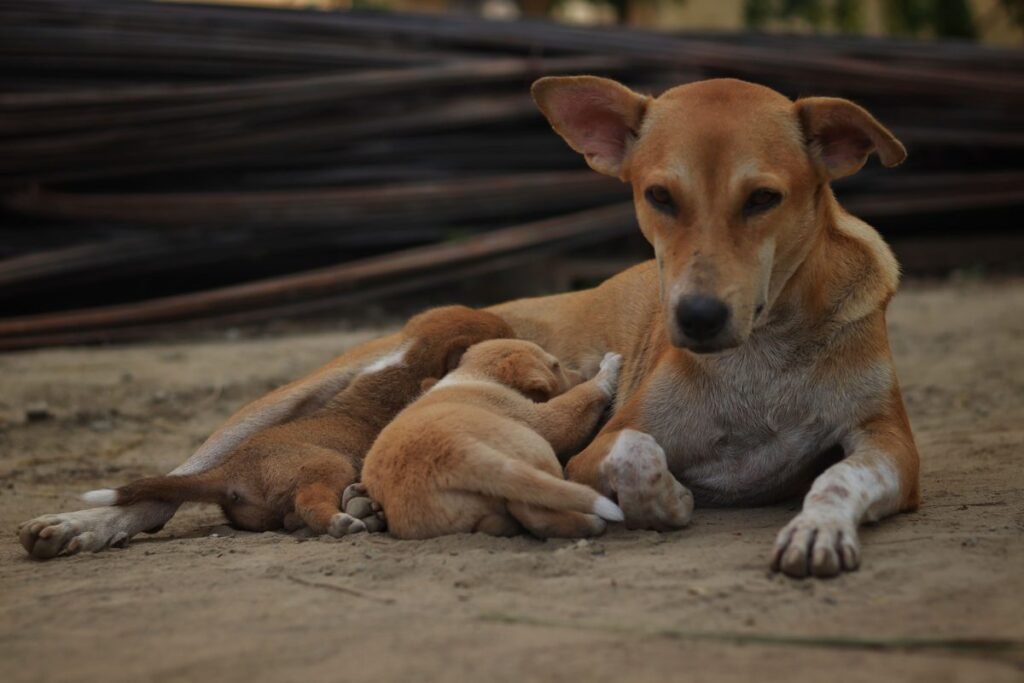
A dog due date after previous c-section does not move: gestation is still about 63 days from ovulation. A previous C-section does not change a dog's due date. Gestation is still about 63 days from ovulation, and the due date is still counted from the same starting points as any other pregnancy. What changes is the plan around that date: the vet needs timed dates more, not less, because the timing of a repeat planned C-section, if one is chosen, is measured in days from ovulation. The date stays put. The decisions around it get tighter, and they belong to the vet, not to a calculator.
Dog due date after previous c-section: the date does not move
The first point to settle is the one owners ask first. A dog that had a C-section in an earlier litter does not carry the next litter for longer or shorter because of the surgery. The veterinary sources give one gestation length from ovulation for all dogs, about 62 to 64 days, with an average near 63 days, and no source opened for this article gives a different figure for a dog with a previous C-section. Breed does not move that figure either, and neither does a surgical history.
What a previous C-section can change is the risk around the birth, and the way the vet monitors the pregnancy. VCA notes that the correct timing of a C-section is difficult to determine in dogs, and that it is extremely important to know the timing of mating as well as the number of puppies, especially in at risk breeds. That warning applies with extra force after a previous C-section, because the vet may need to decide between a planned repeat C-section and an attempt at a natural birth, and that decision needs accurate dates and an accurate puppy count. The all breeds gestation figure behind the date is in How Long Are Dogs Pregnant?.
One pregnancy, dated for a C-section decision
Take a dog first mated on Monday 30 November 2026, with ovulation on Friday 4 December 2026. Counted from ovulation, the due date is Friday 5 February 2027, and the timed window is Thursday 4 to Saturday 6 February 2027, which is 62 to 64 days after ovulation. The mating clock puts the middle date on Monday 1 February 2027, and the full window runs from Wednesday 27 January 2027 to Wednesday 10 February 2027, which is 58 to 72 days after the first mating.
The gap between the two central dates, 1 February on the mating clock and 5 February on the ovulation clock, is four days. That gap is the whole reason timed dates matter here. A repeat C-section timed from a mating date could be scheduled days too early, and a C-section done too early risks premature puppies. VCA states that risk directly: if surgery is delayed for too long, it can result in the death of the puppies, and if started too early, the puppies may be premature. A four day error is large enough to matter, which is why the vet will want the ovulation date, not just the mating date. The step by step method for the calculation is in How to Calculate a Dog's Due Date.
How a repeat C-section is timed
When a vet plans an elective C-section, the timing is counted from ovulation, not from breeding. Several veterinary clinic pages state the same window, and this article reports it as clinic guidance, not as a figure from AKC, Merck, VCA, or Cornell, because none of those opened pages states the day range in that form. Tender Care Animal Hospital states that there is only a four day window when a safe elective C-section can be performed, days 61 to 65 after ovulation, not after breeding. Newport Harbor Animal Hospital states that elective C-sections are typically scheduled for the day before the anticipated natural delivery date, but can be delivered within a two day window of the anticipated due date, and that accurate ovulation timing is very important so the clinic knows when pregnancy begins.
Applied to the worked example, with ovulation on Friday 4 December 2026, the day 61 to 65 window runs from Wednesday 3 February 2027 to Sunday 7 February 2027. The day before the anticipated natural delivery date, taking Friday 5 February 2027 as the ovulation counted due date, is Thursday 4 February 2027. A clinic that schedules 63 days from ovulation, as Tender Care describes, would land on Friday 5 February 2027, within 24 hours of the ideal due date on that clinic's wording.
Those three statements describe the same timing from three angles: a four day safe window, a day before the expected birth, and a date 63 days from ovulation. Run the ovulation date through the dog due date calculator to see the timed window, then take that window to the vet when the repeat C-section is discussed. They all depend on knowing the ovulation date. A mating date cannot give that precision, because mating and ovulation are days apart, and the mating window is fifteen days wide. An owner whose dog had a previous C-section and who wants a planned repeat should therefore treat ovulation timing as part of the breeding plan, discussed with the vet before mating, not as a detail to reconstruct after the pregnancy is confirmed.
Natural birth after a previous C-section, or a planned repeat
A previous C-section does not by itself decide how the next litter will be born. Newport Harbor lists medical history, including a previous C-section, as one reason a dog may be a candidate for an elective C-section, especially if the owner has limited access to emergency care overnight. That is a candidacy, not a rule. The AKC lists whether a planned C-section may be advisable among the topics to discuss at regular vet visits through pregnancy, alongside the expected dates, the litter size, possible birth complications, and the emergency plan.
The vet's decision will rest on the reason for the first C-section, the dog's health since then, the size of the current litter, and the puppy count from the late X-ray. A first C-section caused by a single oversized puppy is a different history from a first C-section caused by a narrow pelvis, and a vet who knows which one it was can judge the next birth differently. This article does not list reasons that favour one route or the other, because no authoritative source opened for this article gives that decision rule, and a list assembled from secondary pages would be guesswork presented as guidance.
What the owner can do is keep the record. The previous C-section record should travel with the dog to every pregnancy visit: the date of the surgery, the reason the vet gave for it, the number of puppies delivered, and any notes the vet made about the uterus or about future breeding. Without that record, the vet is deciding with half the history missing.
The recovery interval conflict, reported honestly
The question most owners ask after a previous C-section is how long to wait before breeding again, and the sources disagree. This article reports the disagreement without resolving it, because the sources do not agree with each other, and picking one figure silently would mislead the reader.
One side says wait a long time. Dogs-Palace, a secondary question and answer page, states that vets typically recommend waiting at least 12 to 18 months before allowing a dog to become pregnant again, and elsewhere on the same page advises spacing pregnancies at least 18 to 24 months apart to allow the mother's body to fully recuperate. Those figures are presented as typical veterinary advice, and they are not traced to a named veterinary authority on that page.
The other side says the uterus heals fast. Dr Emmanuel Fontaine, a veterinarian writing about previous C-sections, reports that breeders often tell him they were told to wait at least a year or to skip two to three cycles, and says the reality is quite different: the uterus recovers very quickly, stitches on the uterus are often impossible to find two weeks after surgery, and bitches should typically not cycle before four months after the procedure, by which time the uterus would have fully healed. On that account, breeding could technically take place once the dog cycles again, if there are no other contraindications.
Those two positions cannot both be a rule. One treats the interval as a year or more of recovery. The other treats four months as the point by which healing is complete. Neither is presented here as the settled veterinary position, because neither comes from AKC, Merck, VCA, or Cornell, and the two secondary sources do not cite a study that settles the question. The honest advice is to ask the vet who performed the first C-section, or the vet caring for the current pregnancy, what interval they recommend for this dog, and why. The vet's answer will rest on the individual dog's surgery, health, age, and breed, which no general article can know.
Monitoring a pregnancy after a previous C-section
The monitoring schedule for a pregnancy after a previous C-section is the standard schedule, followed closely. The AKC advises regular vet visits through pregnancy, with the due date, litter size, possible complications, and emergency plans discussed. The tests that date and count the pregnancy are the same ones used for any pregnancy, and the vet will use them to narrow the window and to plan the birth.
Palpation can be done from about day 28 to 30, according to the AKC. Ultrasound reliably detects pregnancy from 25 to 35 days, according to Merck, and most scans after day 28 are reliable, according to VCA. VCA states that a relaxin blood test comes back positive in most dogs 22 to 27 days after breeding. X-ray shows skeletons after about day 45, according to Merck, and is best after day 55 for counting puppies, according to the AKC and Merck. In the worked example, with a first mating on 30 November 2026, day 55 falls on Sunday 24 January 2027, which is three days before the early edge of the mating window on 27 January. That count is the number the vet and the owner will use to know when whelping is finished, and it is the number a cover person needs if the owner is away.
Temperature checks in the final days work the same way as in any pregnancy. Cornell puts the pre labour temperature fall at under 99 degrees Fahrenheit, against a usual range of 100 to 102.5 degrees, occurring within a day of whelping and lasting typically about eight hours. A temperature drop after a previous C-section means ringing the vet straight away, rather than waiting to see if labour follows, because the vet may need to bring the birth plan forward. The AKC vet call thresholds apply unchanged: labour not started within 24 hours of a temperature drop, a gap of over two hours between puppies, strong contractions with no puppy delivered, green discharge before the first puppy, and no signs of whelping 64 days after the last mating. How vets date a pregnancy, including the ultrasound and X-ray methods used here, is set out in How Do Vets Date a Dog Pregnancy.
Why the reason for the first C-section matters
The vet's planning for the next birth starts with the reason for the first C-section, and that reason should be in the record the owner brings to the first pregnancy visit. A first C-section that happened because labour stalled is a different history from one that happened because a single puppy was too large, and both are different from one that happened because the mother was exhausted after a long labour. The vet who knows the reason can judge whether the same problem is likely to recur, and can plan the monitoring and the birth accordingly.
This article does not list reasons that favour a natural birth or a repeat C-section, because no authoritative source opened for this article gives that decision rule, and a list assembled from secondary pages would be guesswork presented as guidance. What can be said safely is that the reason matters, that it should be written down, and that a vet who is asked to plan a birth without it is working with half the history. If the owner does not know the reason, the vet who performed the first surgery may still have the record, and it is worth asking for it before the pregnancy advances.
Breed history matters in the same way, and it is already covered on this site in the breed based C-section article. Flat faced breeds have a higher incidence of birthing problems, according to VCA, and fewer puppies in a litter are sometimes bigger, which can make delivery harder. A dog whose breed already carries a higher risk, and who also has a previous C-section, is a dog whose vet needs the fullest possible picture: breed, previous surgery, current litter size, and timed dates, all together.
The puppy count and the birth plan
The late X-ray count is the number that turns a birth plan into a workable plan, because it gives the expected number, so the owner knows when the last puppy has arrived. In the worked example, with a first mating on 30 November 2026, day 55 falls on Sunday 24 January 2027, and that is the date for the most accurate count. A count taken earlier, when skeletons first become visible around day 43 to 45, can confirm the pregnancy and give a rough number, but the day 55 count is the one the vet and the owner should plan around.
The count matters for a natural birth and for a planned C-section alike. In a natural birth, it tells the owner and the cover person when to stop waiting for another puppy, and when to call the vet because a puppy is still inside. In a planned C-section, it tells the surgical team how many puppies to expect and to prepare for. In both cases, a count that is wrong by one puppy can mean a puppy left inside unnoticed, or a long wait for a puppy that does not exist. That is why the AKC and Merck both point to the day 55 X-ray as the best way to determine litter size, and why this article keeps returning to it. Single puppy pregnancies, which often need C-section planning, are covered in Singleton Puppy Due Date.
What to have ready before the due window
Preparation for a pregnancy after a previous C-section is preparation for two possibilities at once: a natural birth and a planned C-section. The whelping area should be ready before the early edge of the mating window, Wednesday 27 January 2027 in the example, because a natural birth can start on that edge. The C-section plan should be settled with the vet before the timed window opens on Thursday 4 February 2027, because a planned surgery cannot be arranged on the day labour starts.
The owner should have, in writing, the vet's number, the emergency clinic address and number, the expected puppy count from the late X-ray, the timed ovulation date, and the vet's stated plan for the birth. The cover person, if there is one, needs the same list. The planning article in this cluster covers the life logistics, time off, travel, and cover, in full, and this article does not repeat them. For a first litter, timing and planning differences are in First Litter Dog Due Date. The Whelping Calculator helps plan the whelping itself.
Frequently asked questions
Does a previous C-section change my dog's due date?
No. Gestation is still about 63 days from ovulation, and the due date is counted from the same starting points as any other pregnancy. A previous C-section changes the birth plan and the monitoring, not the date.
Will my dog need another C-section?
Not necessarily. A previous C-section makes a dog a candidate for an elective repeat, especially if emergency care is hard to reach overnight, but the decision belongs to the vet. It rests on the reason for the first C-section, the dog's health since then, and the current litter size and puppy count.
When is a repeat C-section scheduled?
Elective C-sections are timed from ovulation, not from breeding. Clinic guidance puts the safe window at days 61 to 65 after ovulation, typically scheduled for the day before the anticipated natural delivery date, or 63 days from ovulation. The exact date is the vet's decision, and it needs an accurate ovulation date.
How long should I wait to breed a dog after a C-section?
The sources disagree, and this article does not resolve the disagreement. One secondary source advises 12 to 18 months, and up to 18 to 24 months between pregnancies. A veterinarian writing about the subject says the uterus heals quickly and that bitches typically do not cycle before four months after the procedure. Ask the vet who knows the dog, and follow their advice for that individual.
How many C-sections can a dog have?
Clinic guidance commonly gives two to three as a general rule of thumb, to preserve the mother's quality of life and that of future puppies. That figure is a clinic's rule of thumb, not a limit stated by AKC, Merck, VCA, or Cornell in the pages opened for this article. The vet caring for the dog is the person to ask.
What should I tell my vet about the previous C-section?
Bring the full record: the date of the surgery, the reason the vet gave for it, the number of puppies delivered, and any notes about the uterus or about future breeding. Also bring the current pregnancy's mating dates, any timed ovulation or progesterone dates, and the late X-ray puppy count.
Disclaimer
This article is general information only. It cannot tell you whether a dog is pregnant, diagnose any condition, or stand in for veterinary advice. Calculator results on this site are estimates. If you think your dog may be pregnant, or if anything in this guide worries you, speak to your veterinarian.
Keep reading

My Dog Is Pregnant: What Do I Do Now
Your dog is pregnant and it was not planned. Start here: confirm it, book the vet, work out the due date, and…

Dog Pregnancy Preparation Guide Before Due Date
Get ready before the due date in three waves: the vet plan and puppy count, the room and whelping box, and the…

How to Care for a Pregnant Dog for the First Time
Your dog is pregnant for the first time, and you have never done this before. Start with confirmation and a vet plan,…