How Long Is a Goldendoodle Pregnant?
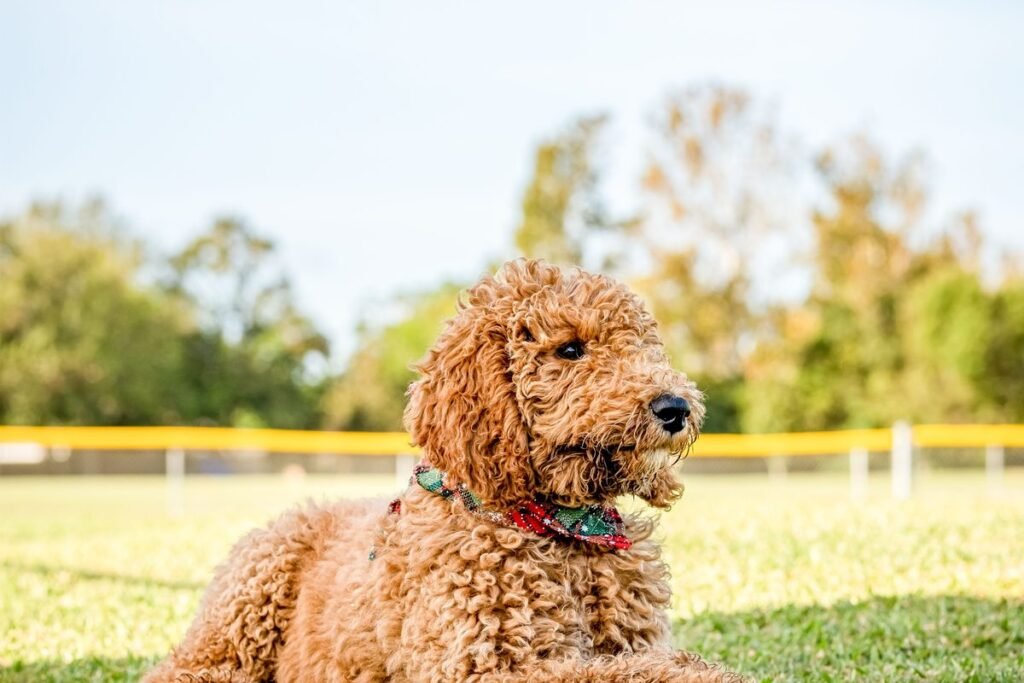
If you are asking how long is a Goldendoodle pregnant, the answer is about 63 days from ovulation, whether she is a mini, a medium or a standard. For a Goldendoodle, count 62 to 64 days from the ovulation date and you have the window to plan around, with day 63 in the middle. When you only know the mating dates, the window is wider, 58 to 72 days from the first mating, because mating and ovulation are typically several days apart. Size does not change the length of a Goldendoodle pregnancy, and neither does generation: an F1, an F1B and a multigenerational Goldendoodle all carry for the same 63 days from ovulation. What size and generation do change is the litter. A mini Goldendoodle usually has three to six puppies, a standard usually has six to eight, and the whole range across the cross is usually four to eight. This article is built on that distinction: the same 63 days, a different litter, and the doodle specific practical section the rivals mostly miss, which is coat care before birth.
How long is a Goldendoodle pregnant from ovulation
A Goldendoodle pregnancy lasts about 62 to 64 days from ovulation, with 63 days as the average. The Merck Veterinary Manual, the American Kennel Club and Cornell University all state the figure the same way, and it holds for all breeds and crosses. For a Goldendoodle, ovulation is the fixed point: the eggs are released, they need two to three days to mature, and birth follows about 63 days after ovulation. A mini Goldendoodle is a smaller dog than a standard Goldendoodle, and she carries her puppies for the same length of time. The question of whether small dogs carry for less time is answered in full in Does Breed Size Affect Dog Gestation Length?, and the mixed breed angle is in Mixed Breed Dog Due Date.
For a Goldendoodle, the wider numbers online come from counting from a different event. Counted from the initial mating, a dog pregnancy lasts 58 to 72 days, as stated by Merck and UC Davis, which Cornell expresses as 63 days plus or minus 7 days from the first breeding. The width has a plain cause. For a Goldendoodle, healthy sperm can survive inside the female for three to seven days, according to the AKC, so a mating can happen well before the eggs are ready, and the eggs then need two to three days after ovulation to mature before fertilisation, according to Cornell. For a Goldendoodle, counted from the LH surge, the hormone peak about two days before ovulation, pregnancy lasts 64 to 66 days. For a Goldendoodle, use the ovulation clock when your vet has timed ovulation, the LH clock when you have the surge date, and the wide mating window when you have mating dates only.
Two rival claims about this cross need correcting before they go any further. The first is the claim from one breeder that her Goldendoodles ovulate early and give birth earlier, generally on day 61, with an average litter of eight to eleven puppies and litters of ten to thirteen. That is one breeder's experience presented as a breed fact, and the litter figure contradicts the wider consensus of four to eight puppies. This article does not repeat it. The second is the claim from another page that the minimum age to get pregnant is two to three years and the maximum is twelve years. That claim is unsourced, and this article does not repeat it either. The right age to breed a Goldendoodle is a question for your vet, taking her health screening into account.
Are mini Goldendoodles pregnant for less time
No. A mini Goldendoodle, a medium Goldendoodle and a standard Goldendoodle are all pregnant for about 63 days from ovulation. The size classes differ in the weight of the dam and in the number of puppies she carries, not in the length of the pregnancy. The confusion comes from the same place as the confusion for purebreds: articles that count from mating and articles that count from ovulation give different numbers, and a reader who compares a mini counted one way with a standard counted the other way can conclude that size changes the length. It does not. The strongest rival page for this cross, opened in full for this article, states the point correctly: size does not change the length, and the pregnancy is 63 days from ovulation and 58 to 68 days from mating. This article agrees with that page on the anchor and goes further on the litter, which is where the size difference actually shows.
The same reasoning applies to generation. An F1 Goldendoodle is the first cross between a Golden Retriever and a Poodle. An F1B is a Goldendoodle bred back to a Poodle. A multigenerational Goldendoodle, often written as multigen, is a Goldendoodle bred to another Goldendoodle over several generations. None of these changes the gestation length. Generation can change the coat, and it can change the size if the Poodle parent is a miniature rather than a standard, but it does not change the 63 days from ovulation. If a breeder tells you that F1B bitches carry for longer or shorter than F1 bitches, ask what dates the claim is counted from. The answer is usually the mating date, not the ovulation date, and the difference disappears once the anchor is named.
A Goldendoodle due date worked out with real dates
Take a standard Goldendoodle whose cycle was timed with progesterone testing. Her LH surge is detected on Tuesday 8 December 2026 and ovulation follows about two days later, on Thursday 10 December 2026. From ovulation, 62 to 64 days gives Wednesday 10 to Friday 12 February 2027, with the central date Thursday 11 February 2027. From the LH surge, 64 to 66 days gives the same three days, Wednesday 10 to Friday 12 February 2027. For a Goldendoodle, the two clocks agree, which is the check that the timing was done right. Have the whelping area ready by the early edge, Wednesday 10 February, and treat the central date as the middle of a window, not as a promise. The same three days would apply to a mini Goldendoodle with the same ovulation date, because the size of the bitch does not change the count.
Now take the same bitch with mating dates only: she was mated on Saturday 5 December and Monday 7 December 2026, and no ovulation testing was done. The honest answer is the mating window, 58 to 72 days from the first mating, which runs from Monday 1 February to Monday 15 February 2027. That is a fifteen day span, and the whelping area should be ready by Monday 1 February. The table below sets out both calculations.
| What you know | Count from | Calculation | Result |
|---|---|---|---|
| Ovulation date Thursday 10 December 2026 | Ovulation | Add 62 to 64 days | Wednesday 10 to Friday 12 February 2027, central date Thursday 11 February 2027 |
| LH surge Tuesday 8 December 2026 | LH surge | Add 64 to 66 days | Wednesday 10 to Friday 12 February 2027 |
| First mating Saturday 5 December 2026, last mating Monday 7 December 2026 | First mating | Add 58 to 72 days | Monday 1 to Monday 15 February 2027 |
For a Goldendoodle, the vet call threshold is separate from the due date. The AKC says to call the vet if there are no signs of whelping 64 days after the last mating, which for the mating dates above is Tuesday 9 February 2027. Cornell gives the ovulation timed version: call one to two days past an ovulation timed due date, which here is Friday 12 or Saturday 13 February 2027. For a Goldendoodle, use whichever threshold comes first, and ask your vet which clock they are working from. For a Goldendoodle, never wait for the far edge of the mating window. For a Goldendoodle, the method for any breeding date is in How to Calculate a Dog's Due Date, the ovulation count is in Dog Ovulation Due Date, and the overdue guide is Dog Past Due Date.
How many puppies do Goldendoodles have
There is no published mean litter size for the Goldendoodle, and no published caesarean rate either, and this article states both gaps plainly rather than filling them with invented figures. The reason is straightforward: Borge and colleagues studied purebred dogs only, so their 2011 paper has no Goldendoodle row, and the Evans and Adams caesarean study is a purebred survey too. The Goldendoodle is a cross, not a recognised breed, so it appears in neither study. Any page that quotes a Goldendoodle mean litter size as a study figure is wrong, and any page that quotes a Goldendoodle caesarean percentage is inventing it.
What does exist is a secondary consensus across breeder and doodle guides: Goldendoodles usually have four to eight puppies, with the size of the dam driving the number. The split by size class, drawn from the doodle guides, is set out below. Present these figures as what they are, breeder and guide consensus, never as a study figure.
| Size class | Usual litter | Notes |
|---|---|---|
| Mini Goldendoodle | About 3 to 4 puppies, sometimes given as 4 to 6 | The smallest litters in the cross; a litter of two or three is ordinary |
| Medium Goldendoodle | About 5 to 6 puppies | Between the mini and the standard |
| Standard Goldendoodle | About 6 to 8 puppies | The largest litters in the cross; a litter of nine is possible but not usual |
The parent breeds give useful context for why the size split looks the way it does. From Borge and colleagues, reproduced in the BreedTracker research table, the Golden Retriever mean litter size is 7.5 puppies, the Standard Poodle mean is 7.0 puppies, and the Miniature Poodle mean is 3.0 puppies. A standard Goldendoodle has two large litter parents, so a litter of six to eight is no surprise. A mini Goldendoodle has a Miniature Poodle parent whose mean is 3.0, so a litter of three or four is no surprise either. The parent figures are verified Borge figures; the doodle figures are consensus, and the article keeps the two separate. For a Goldendoodle, the general litter picture is in Average Dog Litter Size, and the question of how many puppies to expect is in How Many Puppies Will My Dog Have?.
A first litter is often smaller than later ones, and the size of the sire matters too: a mini Goldendoodle bred to a standard Poodle will tend to have a larger litter than a mini bred to a miniature Poodle, and a standard bred to a miniature Poodle will tend to have a smaller one. The radiograph count after day 55 is the way to know the actual number for your bitch, and with a cross whose litter can run from three to eight, the count matters more than the breed average. For a Goldendoodle, the counting question is in the live Dog Pregnancy X Ray guide.
Coat care before birth
Coat care is the doodle specific practical section that most rival pages miss, and it matters more for a Goldendoodle than for almost any other dog in this series. A Goldendoodle coat mats easily, and a matted belly and nipple area can keep puppies from finding the teats and nursing in the first hours after birth, when colostrum matters most. The strongest rival page for this cross recommends a belly, nipple and sanitary clip about two weeks before the due date, and this article agrees with that timing while adding the cautions that belong with it.
Do the clip about two weeks before the early edge of the due window, not on the day labour starts. Clip the belly and the area around the nipples short, and trim the coat around the rear for cleanliness. Do it gently and in short sessions, with the bitch lying comfortably, and stop if she becomes stressed. If she has never been clipped before, introduce the clippers well before the due window, or leave the work to a groomer she knows. Do not bathe her for the first time in late pregnancy, and do not use any new product on her in late pregnancy without checking with your vet first. Regular brushing through pregnancy keeps the rest of the coat free of matting, and a heavily matted coat can hide skin problems and make the temperature checks and the observation of labour signs harder.
The whelping box size also depends on the size class. A standard Goldendoodle needs a box of about 120 by 120 centimetres, and a mini needs one of about 90 by 90 centimetres, according to the doodle guides. Those are guide figures, not veterinary standards, but they are a useful starting point: the bitch must be able to lie at full stretch on her side with room for the puppies beside her, and the box must have rails or a lip that keep a puppy from being trapped against the side. For a Goldendoodle, set the box up in a quiet, warm, draught free room at least a week before the early edge of the due window, and let her sleep in it and get used to it before labour starts. For a Goldendoodle, the box guide is DIY Whelping Box, the supplies list is Whelping Supplies Checklist, and the planned Round 3 box size guide is Whelping Box Size Calculator.
How the vet confirms a Goldendoodle pregnancy
For a Goldendoodle, vet confirmation follows the same timetable as for any breed. The confirmation table below is consistent with the verified ranges, and it matches the table on the strongest rival page, which was opened in full for this article.
| Test | When it works | Notes |
|---|---|---|
| Relaxin blood test | Around day 22 to 27 after breeding | A negative result before day 27 should be repeated; small litters can give false negatives |
| Palpation | From around day 21, most reliably days 28 to 35 | Takes an experienced hand; less certain in a heavily coated bitch |
| Ultrasound | Reliably from around day 25, most reliably after day 28 | Shows heartbeats, which is the confirmation that matters |
| Radiograph | Skeletons visible from around day 45, best count day 55 or later | The counting tool; book it in the final week for an accurate number |
Book the first visit for around day 25 to 28 rather than waiting until she looks pregnant, and book the radiograph in the final week if what you need is an accurate number of puppies. For a Goldendoodle, the test guide is Dog Pregnancy Test, the ultrasound guide is Dog Pregnancy Ultrasound, and the visit schedule is Pregnant Dog Vet Visit Schedule.
What a Goldendoodle pregnancy looks like week by week
For a Goldendoodle, in the first three weeks, the outward signs are usually slight: a change in appetite, a little more sleep, some sensitivity around the belly, and a bitch who is either more clingy or more withdrawn than usual. For a Goldendoodle, the teats may start to enlarge and pinken from around three weeks. For a Goldendoodle, none of these signs confirms a pregnancy on its own. The symptom guide is Dog Pregnancy Symptoms.
For a Goldendoodle, from week four to week six, the pregnancy becomes easier to confirm and the belly begins to show. For a Goldendoodle, the bitch may start to gain weight, her appetite usually steadies and then rises, and an ultrasound can confirm the pregnancy reliably from around day 25, most reliably after day 28. For a Goldendoodle, keep her routine as normal as possible: regular walks on the lead, no rough play, no jumping, and no new strenuous exercise. The exercise guidance is in Exercise for Pregnant Dogs.
For a Goldendoodle, from week six to the due date, the changes are obvious. For a Goldendoodle, the belly drops and widens, the mammary glands fill, the teats enlarge, and the bitch starts to nest, scratching at bedding and seeking a quiet corner. For a Goldendoodle, her food intake rises, and she may want smaller meals more often as the puppies press on her stomach. For a Goldendoodle, in the last week, take her temperature twice a day so you know her normal range. A drop below 100 degrees Fahrenheit, often to 99 degrees or lower, usually comes 8 to 24 hours before labour. The drop lasts only about 8 hours, so it is easy to miss if you check once a day. The temperature guide is Dog Temperature Before Labor. For a Goldendoodle, the general weekly guide is Dog Pregnancy Week by Week.
Feeding a pregnant Goldendoodle
A Goldendoodle in the first half of pregnancy needs her normal food in her normal amount. For a Goldendoodle, her energy needs have barely changed, the puppies are small, and overfeeding early adds fat rather than puppies. The increase comes in the second half. For a Goldendoodle, from around week five, move her onto a high quality puppy food or a food your vet recommends for late pregnancy and lactation, and increase the amount gradually so that by the final week she is eating substantially more than her maintenance ration. For a Goldendoodle, offer smaller meals more often in the last two weeks, because the puppies press on her stomach and a large meal becomes uncomfortable. Fresh water should always be available. The strongest rival page suggests a gradual increase from week five, with puppy food from week six, and warns against adding calcium unless the vet prescribes it, because of the risk of eclampsia. That warning is sound in general terms, and it applies here too: do not add calcium or other supplements without veterinary advice. For a Goldendoodle, the feeding guides are What to Feed a Pregnant Dog and Best Food for Pregnant Dogs.
False pregnancy can also occur in Goldendoodles, as in any breed, and a bitch in false pregnancy can show enlarged mammary glands, milk production, nesting and weight gain without being pregnant. Only a vet test can tell the difference. The false pregnancy guide is False Pregnancy in Dogs.
Signs labour is near, and when to call the vet
For a Goldendoodle, labour usually announces itself a day or two before it starts. For a Goldendoodle, the bitch goes off her food, becomes restless, paces, pants, digs at her bedding, seeks company or seeks solitude, and her temperature drops below 100 degrees Fahrenheit. For a Goldendoodle, once the drop has happened, labour usually follows within 8 to 24 hours. For a Goldendoodle, the signs guide is Signs of Labor in Dogs, and the stages are in Dog Labor Stages.
For a Goldendoodle, first stage labour, restlessness, panting and nesting without straining, can last 6 to 12 hours in a first litter and is often shorter in later ones. Second stage is the delivery of the puppies. For a Goldendoodle, expect strong straining with each puppy and a gap between puppies that is usually well under two hours. Count the puppies against the radiograph count and count the placentas too, one per puppy, and keep notes as you go.
For a Goldendoodle, call the vet at once if any of these happen: strong straining for 20 to 30 minutes with no puppy; more than two hours between puppies; green discharge before the first puppy; a temperature that dropped more than 24 hours ago with no labour; a temperature over 103 degrees Fahrenheit; bleeding for more than 10 minutes; or no signs of whelping 64 days after the last mating. These thresholds come from the AKC and Cornell. One point of care is needed here: the strongest rival page lists green or black discharge before the first puppy as a call the vet trigger. Black discharge before the first puppy is unverified as a standalone red flag, and dark discharge after birth is normal, so this article uses green discharge only as the pre birth warning sign, and does not repeat the black discharge claim. For a Goldendoodle, the labour duration guide is How Long Does Dog Labor Last?, and the overdue guide is Dog Past Due Date.
What rival Goldendoodle pages get wrong
The strongest rival in this whole series is the Goldendoodle page opened in full for this article. It gets the anchor right, gives a week by week calendar, gives a confirmation table, splits the litter by size, explains generation, covers coat care with the clip timing, gives feeding guidance with the calcium warning, and lists labour stages with mostly correct red flags. Its gaps are the absence of any litter mean by size with a source, which is honest, because none exists, but it gives ranges only and never explains why no study figure exists; it gives no caesarean rate, for the same reason; and it has no due date calculator tie in. This article beats it on the size split litter figures with the parent breed Borge context, on the explicit statement that no mean and no caesarean rate exist and why, and on the calculator.
The other rivals are thinner. A breeder experience page claims her Goldendoodles give birth generally on day 61 with an average litter of eight to eleven and litters of ten to thirteen; that is one breeder's experience, and the litter figure contradicts the consensus of four to eight, so it is not used here. A vet advice page gives the correct 63 day average with a 58 to 68 day range and notes that sperm survive several days and eggs are fertile for up to 48 hours, but it gives no litter mean and no generation or size split. A doodle guide page gives about 63 days with a 61 to 64 day variant that is unsourced, and another gives a 57 to 71 day range with a minimum breeding age of two to three years and a maximum of twelve years that is unsourced. None of those figures is used here.
Checking the date and planning the window
For a Goldendoodle, enter the ovulation date in the dog due date calculator and note the full window, not just the central date. A calculator gives an estimate only.
Frequently asked questions
How long is a Goldendoodle pregnant?
About 63 days from ovulation, in a window of 62 to 64 days, whether she is a mini, a medium or a standard. Counted from the initial mating, the range is 58 to 72 days, since mating and ovulation are usually days apart. Size and generation do not change the length of the pregnancy.
Are mini Goldendoodles pregnant for less time?
No. A mini, a medium and a standard Goldendoodle are all pregnant for about 63 days from ovulation. Size changes the litter, not the length: minis usually have three to six puppies and standards usually have six to eight.
How many puppies do Goldendoodles have?
There is no published mean litter size, because the Borge study covered purebreds only. Breeder and doodle guides generally report four to eight puppies, with minis at about three to six and standards at about six to eight. The parent breed means are Golden Retriever 7.5, Standard Poodle 7.0 and Miniature Poodle 3.0.
What is the difference between F1, F1B and multigen Goldendoodles?
An F1 is the first cross between a Golden Retriever and a Poodle. An F1B is a Goldendoodle bred back to a Poodle. A multigenerational Goldendoodle is a Goldendoodle bred to another Goldendoodle over several generations. Generation does not change the 63 day pregnancy length.
Should I groom my pregnant Goldendoodle before birth?
Yes, about two weeks before the due date. Clip the belly and the area around the nipples short and trim the coat around the rear, gently and in short sessions, so the puppies can find the teats and nurse. Do not introduce clipping or bathing for the first time in late pregnancy.
When can a vet confirm a Goldendoodle pregnancy?
For a Goldendoodle, a relaxin blood test from around day 22 to 27 after breeding, palpation most reliably between days 28 and 35, and ultrasound reliably from around day 25 and most reliably after day 28. For a Goldendoodle, a radiograph after day 55 gives the best puppy count.
Sources
- American Kennel Club, "Dog Pregnancy: Signs, Care, and Preparing for Puppies." https://www.akc.org/expert-advice/health/dog-pregnancy-care-prep/ — Gestation about 62 to 64 days; no signs of whelping 64 days after the last mating is a reason to call the vet; temperature drop before labour; straining and interval thresholds.
- American Kennel Club, "How to Time Ovulation in the Heat Cycle." https://www.akc.org/expert-advice/dog-breeding/ovulation-timing/ — Healthy sperm survive three to seven days; ovulation about 48 hours after the LH surge; about 65 days from the LH surge and 63 days from ovulation.
- Cornell University College of Veterinary Medicine, Riney Canine Health Center, "The normal whelping process." https://www.vet.cornell.edu/departments-centers-and-institutes/riney-canine-health-center/canine-health-topics/normal-whelping-process — Average 63 days from ovulation; 63 plus or minus 1 to 2 days from a known ovulation date; 63 plus or minus 7 days from the first breeding; eggs mature 2 to 3 days after ovulation; call the vet one to two days past an ovulation timed due date.
- Merck Veterinary Manual, Dog Owners, "Management of Reproduction in Dogs." https://www.merckvetmanual.com/dog-owners/reproductive-disorders-of-dogs/management-of-reproduction-in-dogs?query=reproductive — Pregnancy about 62 to 64 days from ovulation; 64 to 66 days from the LH surge; 58 to 72 days from first mating; breeding date does not always match conception.
- UC Davis School of Veterinary Medicine, "Normal Whelping in the Bitch." https://healthtopics.sf.ucdavis.edu/sites/g/files/dgvnsk6721/files/inline-files/cenormalwhelp.pdf — 64 to 66 days from the LH surge and from the first progesterone rise; 58 to 72 days from first mating. Cited via the programme verified source record.
- Borge KS, Tonnessen R, Nodtvedt A, Indrebo A. "Litter size at birth in purebred dogs: a retrospective study of 224 breeds." Theriogenology 75(5):911-919, 2011. DOI: 10.1016/j.theriogenology.2010.10.034. PMID: 21196028. — 10,810 litters; overall mean 5.4 puppies. Borge covers purebreds only, so no Goldendoodle figure exists in this study. Parent breed means are taken from the BreedTracker research table reproducing Borge: Golden Retriever 7.5, Standard Poodle 7.0, Miniature Poodle 3.0.
- 1001Doggy, "Goldendoodle Pregnancy." https://1001doggy.com/goldendoodle-pregnancy/ — Opened in full. Correct anchor explanation, week by week calendar, confirmation table, litter four to eight, generation explanation, coat care with belly, nipple and sanitary clip about two weeks before the due date, feeding guidance, labour stages. Its black discharge red flag is not repeated here because it is unverified as a standalone pre birth warning.
- BreedTracker, "Dog Breed Whelping and Health Data." https://www.breedtracker.com/research/dog-breed-whelping-and-health-data — Research table reproducing Borge litter figures. Parent breed means: Golden Retriever 7.5, Standard Poodle 7.0, Miniature Poodle 3.0.
- WeLoveDoodles, "Goldendoodle Litter Size." https://welovedoodles.com/goldendoodle-litter-size/ — Search result only. Secondary consensus on litter size by size class.
- Daring Doodle, "How Many Puppies Do Goldendoodles Have?" https://daringdoodle.com/how-many-puppies-do-goldendoodles-have/ — Search result only. Secondary consensus on litter size by size class.
- VCA Hospitals, "Pregnancy Testing in the Dog." https://vcahospitals.com/know-your-pet/pregnancy-testing-in-the-dog — Relaxin timing and false negatives in small litters; ultrasound and palpation timing.
Where sources disagree, the disagreement is stated in the article rather than picking one figure silently: no published Goldendoodle mean litter size and no caesarean rate exist, and the size split figures are breeder and guide consensus, not study figures; the parent breed Borge figures are kept separate from the doodle consensus; the black discharge red flag from the strongest rival is not repeated because it is unverified as a standalone pre birth warning; the single breeder litter figure of eight to eleven is not used because it contradicts the wider consensus.
Disclaimer
This article is general information only. It cannot tell you whether a dog is pregnant, diagnose any condition, or stand in for veterinary advice. Calculator results on this site are estimates. If you think your dog may be pregnant, or if anything in this guide worries you, speak to your veterinarian.
Keep reading

My Dog Is Pregnant: What Do I Do Now
Your dog is pregnant and it was not planned. Start here: confirm it, book the vet, work out the due date, and…

Dog Pregnancy Preparation Guide Before Due Date
Get ready before the due date in three waves: the vet plan and puppy count, the room and whelping box, and the…

How to Care for a Pregnant Dog for the First Time
Your dog is pregnant for the first time, and you have never done this before. Start with confirmation and a vet plan,…