How Long Is a Bichon Frise Pregnant?
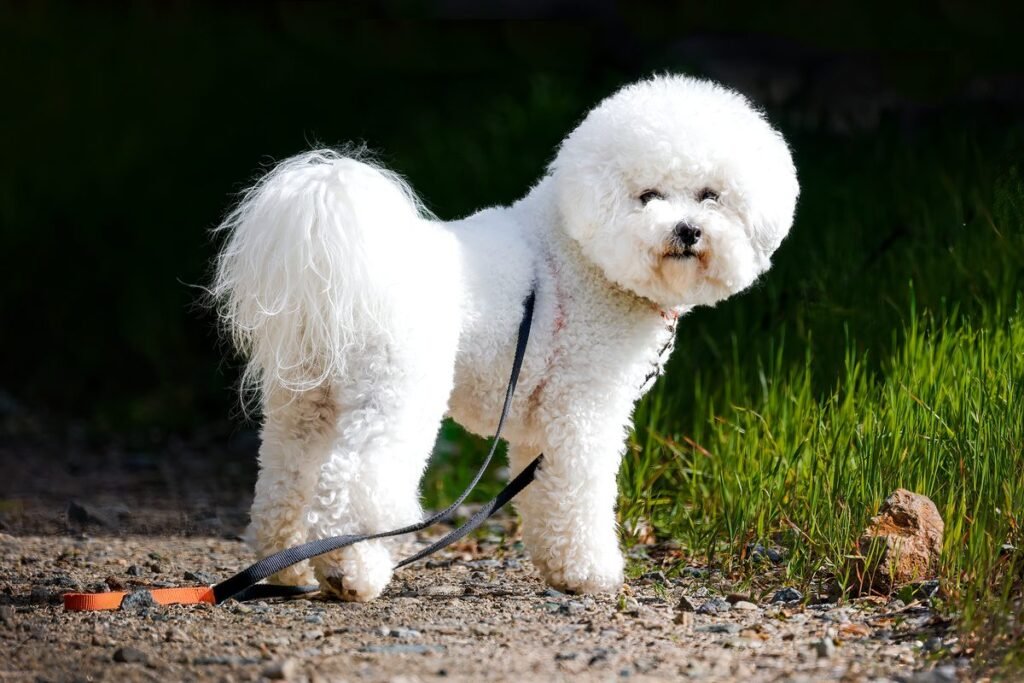
If you are asking how long is a Bichon Frise pregnant, the answer is about 63 days from ovulation, the same as every other breed, large or small. For a Bichon Frise, count 62 to 64 days from the ovulation date and you have the window to plan around, with day 63 in the middle. When you only know the mating dates, the window is wider, 58 to 72 days from the first mating, because mating and ovulation are usually several days apart. A Bichon does not carry her puppies for a shorter time because she is small, and she does not carry them for longer either. The reassuring core of a Bichon pregnancy is that the numbers are kind: a modest litter, the most reliable litter mean in this whole series, and a low caesarean rate. The warning that sits beside it is the small litter problem. A litter of one or two puppies can be harder to confirm, harder to count, and harder for the bitch to start on her own than a litter of five. This article works out the due date with real dates, gives the published litter and caesarean figures with their sources, and explains the small litter risks that matter most for this breed.
How long is a Bichon Frise pregnant from ovulation
A Bichon Frise pregnancy lasts about 62 to 64 days from ovulation, with 63 days as the average. The Merck Veterinary Manual gives 62 to 64 days from ovulation, the American Kennel Club states the same figure, and Cornell University states it the same way again. It holds for all breeds, and the Bichon is the proof that small size changes nothing about the timetable. A toy breed and a giant breed carry for the same length of time when both are counted from ovulation.
For a Bichon Frise, the wider numbers online come from counting from a different event. Counted from the initial mating, a dog pregnancy lasts 58 to 72 days, according to Merck and UC Davis, which Cornell expresses as 63 days plus or minus 7 days from the first breeding. The width has a plain cause. According to the AKC, so a mating can happen well before the eggs are ready, and the eggs then need two to three days after ovulation to mature before fertilisation, according to Cornell, healthy sperm can survive inside the female for three to seven days. For a Bichon Frise, counted from the LH surge, the hormone peak about two days before ovulation, pregnancy lasts 64 to 66 days. Work from the ovulation clock when your vet has timed ovulation, the LH clock when you have the surge date, and the wide mating window when you have mating dates only. For a Bichon Frise, the breed size question is answered in full in Does Breed Size Affect Dog Gestation Length?.
Litter size can move the date by about a day or two, with smaller litters running slightly longer and larger litters slightly shorter. The studies disagree on whether that effect stands on its own once breed is taken into account. A Bichon litter of one or two puppies may run a day or two past the central date, but that is a tendency, not a rule, and it is not a reason to adjust the due date. The window of 62 to 64 days from ovulation already covers it, and the vet call thresholds at the end of this article are the safety net, not a revised calculation.
A Bichon due date worked out with real dates
Take a Bichon whose cycle was timed with progesterone testing. Her LH surge is detected on Thursday 26 November 2026 and ovulation follows about two days later, on Saturday 28 November 2026. From ovulation, 62 to 64 days gives Friday 29 to Sunday 31 January 2027, with the central date Saturday 30 January 2027. From the LH surge, 64 to 66 days gives the same three days, Friday 29 to Sunday 31 January 2027. For a Bichon Frise, the two clocks agree, which is the check that the timing was done right. Have the whelping area ready by the early edge, Friday 29 January, and treat the central date as the middle of a window, not as a promise.
Now take the same bitch with mating dates only: she was mated on Monday 23 November and Wednesday 25 November 2026, and no ovulation testing was done. The honest answer is the mating window, 58 to 72 days from the first mating, which runs from Wednesday 20 January to Wednesday 3 February 2027. That is a fifteen day span, and the whelping area should be ready by Wednesday 20 January. The table below sets out both calculations.
| What you know | Count from | Calculation | Result |
|---|---|---|---|
| Ovulation date Saturday 28 November 2026 | Ovulation | Add 62 to 64 days | Friday 29 to Sunday 31 January 2027, central date Saturday 30 January 2027 |
| LH surge Thursday 26 November 2026 | LH surge | Add 64 to 66 days | Friday 29 to Sunday 31 January 2027 |
| First mating Monday 23 November 2026, last mating Wednesday 25 November 2026 | First mating | Add 58 to 72 days | Wednesday 20 January to Wednesday 3 February 2027 |
The vet call threshold is separate from the due date, and it matters more than usual in a small litter, because a litter of one or two puppies may not trigger labour on its own. The AKC says to call the vet if there are no signs of whelping 64 days after the last mating, which for the mating dates above is Thursday 28 January 2027. Cornell gives the ovulation timed version: call one to two days past an ovulation timed due date, which here is Sunday 31 January or Monday 1 February 2027. Go by whichever threshold comes first, and ask the vet which clock they are working from. For a Bichon Frise, never wait for the far edge of the mating window. The method for any breeding date is in How to Calculate a Dog's Due Date, the ovulation count is in Dog Ovulation Due Date. The overdue guide is Dog Past Due Date.
How many puppies do Bichon Frises have
The published mean for the Bichon Frise comes from Borge and colleagues, who studied 10,810 litters across 224 purebred breeds using Norwegian Kennel Club records from 2006 and 2007. Their paper, published in Theriogenology in 2011, gives the Bichon mean litter size as 4.6 puppies, based on 192 litters, with a range of 1 to 10 puppies. That sample of 192 litters is the largest in this series, which makes the Bichon mean the most reliable breed figure here: a mean built on nearly two hundred litters moves very little when the next few litters are recorded. The mean is below the overall mean of 5.4 puppies across all breeds in the same study, so a Bichon litter is typically a modest one, but the range matters more than the mean. A litter of two and a litter of seven are both ordinary for this breed, and a first litter is often smaller than later ones. The Bichon figure in this article rests on reproductions of Borge Table 1 in the PetCalculator pages, cross checked against each other, rather than on a direct read of the Table 1 row in the PDF, and the article says so.
The small litter problem
A litter of four or five puppies is straightforward. A litter of one or two is not, and the Bichon range of 1 to 10 means that small litters are a real possibility for this breed. Three separate problems follow from a small litter, and all three are worth knowing before the due window opens.
The first is confirmation. A relaxin blood test can give a false negative result when the litter is small, because there is less of the hormone to detect. The VCA notes this directly: small litters can give false negative relaxin results. If a relaxin test comes back negative but the mating happened and the signs point to pregnancy, ask the vet to repeat the test after day 27, or to confirm with an ultrasound instead. A negative relaxin test in a Bichon who may be carrying one puppy is not the same evidence as a negative test in a bitch who would be carrying seven.
The second is the labour trigger. Labour is partly triggered by the puppies themselves, through the pressure and hormonal signals of a full uterus, and a litter of one or two puppies may not provide enough of that signal to start labour on time. The BreedTracker breed page notes the same point for small litters. The result can be a bitch who goes past her due date without starting, or a labour that starts weakly and stalls. That is why the vet call thresholds matter more, not less, in a small litter, and why a radiograph count after day 55 matters too: if the count says one puppy, the vet can plan for a pregnancy that may need help to start.
The third is the size of the puppy. A single puppy has the whole uterus to itself, and it can grow larger than a puppy in a litter of five. A large single puppy in a small bitch is a recognised cause of difficult birth. This is the reason a small litter should never be treated as an easy litter. It is a different kind of risk, not a smaller one. The singleton guide is Singleton Puppy Due Date, and the first litter guide is First Litter Dog Due Date.
The caesarean rate for Bichons, and what it means
The BreedTracker research table, which attributes its figures to Evans and Adams 2010, gives the Bichon Frise caesarean rate as 5.6 percent. That attribution is secondary: the Evans and Adams paper itself, a study of 22,005 litters from the 2004 Kennel Club and BSAVA Purebred Dog Health Survey, names only the ten highest caesarean breeds in its abstract, and the Bichon is not among them. The 5.6 percent figure comes from the BreedTracker table of that study's data, not from a direct read of the paper's full table, and this article says so rather than presenting the number as if it were read from the paper itself. For a Bichon Frise, the full Evans and Adams Table 1 was not opened for this article.
A rate of about one litter in eighteen delivered by caesarean is low. Most Bichons whelp naturally, and the figure sits far below the rates for the Basset Hound and the Alaskan Malamute in this series, both around 35 percent. Do not use the conflicting figure of approximately 18 percent that appears on a BreedTracker breed page: that figure carries no citation and conflicts with the research table, and this article does not use it.
False pregnancy: the Bichon confuser
Bichons, like many small companion breeds, can show a false pregnancy, also called pseudopregnancy or phantom pregnancy, in which a bitch who is not pregnant shows the signs of one: enlarged mammary glands, milk production, nesting, restlessness, mothering of toys, and even weight gain, usually in the weeks after a heat cycle. The signs can look exactly like a real pregnancy, and a well sourced rival page for this breed warns about it directly. For a Bichon Frise, the only way to tell the difference is a vet test: a relaxin blood test from around day 22 to 27 after breeding, or an ultrasound from around day 25. If your Bichon was mated and shows the signs but a test is negative, ask the vet to repeat it rather than assuming the test was wrong, and ask about false pregnancy as the explanation. The false pregnancy guide is False Pregnancy in Dogs. The guide to signs that turn out not to mean pregnancy is in the planned Round 3 set as Dog Showing Pregnancy Signs But Not Pregnant.
How the vet confirms a Bichon pregnancy
Vet confirmation follows the same timetable as for any breed, with one Bichon specific caution already covered: the relaxin test can read negative in a small litter. A relaxin blood test can detect pregnancy from around day 22 to 27 after breeding, but a negative result before day 27 should be repeated. Palpation is possible from around day 21 and most reliable between days 28 and 35, and it is easier in a small bitch than in a large, deep chested one, though it still takes an experienced hand. Ultrasound is the most useful test for this breed: it is reliable from around day 25 and most reliable after day 28, it shows heartbeats, and it can show a single puppy that a blood test missed. For a Bichon Frise, a radiograph is the counting tool: the skeletons are visible from around day 45, and the best count comes at day 55 or later. For a Bichon Frise, book the radiograph in the final week if what you need is an accurate number of puppies, and book the first visit for around day 25 to 28 rather than waiting until she looks pregnant. For a Bichon Frise, the test guide is Dog Pregnancy Test, the ultrasound guide is Dog Pregnancy Ultrasound, and the visit schedule is Pregnant Dog Vet Visit Schedule.
What a Bichon pregnancy looks like week by week
In the first three weeks, the outward signs are typically slight: a change in appetite, a little more sleep, some sensitivity around the belly, and a bitch who is either more clingy or more withdrawn than usual. For a Bichon Frise, the teats may start to enlarge and pinken from around three weeks. For a Bichon Frise, none of these signs confirms a pregnancy on its own, and a bitch in false pregnancy can show several of them. The symptom guide is Dog Pregnancy Symptoms.
For a Bichon Frise, from week six to the due date, the changes are obvious. The belly drops and widens, the mammary glands fill, the teats enlarge, and the Bichon Frise bitch starts to nest, scratching at bedding and seeking a quiet corner. Her food intake rises, and she may want smaller meals more frequently as the puppies press on her stomach. For a Bichon Frise, in the last week, take her temperature twice a day so you know her normal range. A drop below 100 degrees Fahrenheit, often to 99 degrees or lower, usually comes 8 to 24 hours before labour, and the drop lasts only around 8 hours, so it is easy to miss if you check once a day. The temperature guide is Dog Temperature Before Labor. For a Bichon Frise, the general weekly guide is Dog Pregnancy Week by Week.
Feeding and the whelping box
A Bichon in the first half of pregnancy needs her normal food in her normal amount. For a Bichon Frise, her energy needs have barely changed, the puppies are small, and overfeeding early adds fat rather than puppies. The increase comes in the second half. Move her onto a high quality puppy food or a food your vet recommends for late pregnancy and lactation, and increase the amount gradually so that by the final week she is eating substantially more than her maintenance ration from around week five. Offer smaller meals more often in the last two weeks, since the puppies press on her stomach and a large meal becomes uncomfortable. Fresh water should always be available. For a Bichon Frise, the feeding guides are What to Feed a Pregnant Dog and Best Food for Pregnant Dogs.
The whelping box for a Bichon does not need to be large, but it does need to be right. She must be able to lie at full stretch on her side with room for four or five puppies beside her, and the box must have rails or a lip that keep a puppy from being trapped against the side. A box that is too big is as unhelpful as one that is too small: the puppies need to stay close to her warmth. For a Bichon Frise, set the box up in a quiet, warm, draught free room at least a week before the early edge of the due window, and let her sleep in it and get used to it before labour starts. The box guide is DIY Whelping Box, the supplies list is Whelping Supplies Checklist. The planned Round 3 box size guide is Whelping Box Size Calculator.
Signs labour is near, and when to call the vet
For a Bichon Frise, labour usually announces itself a day or two before it starts. For a Bichon Frise, the bitch goes off her food, becomes restless, paces, pants, digs at her bedding, seeks company or seeks solitude, and her temperature drops below 100 degrees Fahrenheit. For a Bichon Frise, once the drop has happened, labour usually follows within 8 to 24 hours. The signs guide is Signs of Labor in Dogs. The stages are in Dog Labor Stages.
For a Bichon Frise, first stage labour, restlessness, panting and nesting without straining, can last 6 to 12 hours in a first litter and is often shorter in later ones. Second stage is the delivery of the puppies. For a Bichon Frise, expect strong straining with each puppy and a gap between puppies that is usually well under two hours. With a small litter, the gap between puppies matters even more than usual, because there are fewer puppies to keep the process moving: a long pause after the first puppy in a litter expected to be four is a reason to call, not a reason to wait. Count the puppies against the radiograph count and count the placentas too, one per puppy.
Call the vet at once if any of these happen: strong straining for 20 to 30 minutes with no puppy; more than two hours between puppies; green discharge before the first puppy; a temperature that dropped more than 24 hours ago with no labour; a temperature over 103 degrees Fahrenheit; bleeding for more than 10 minutes; or no signs of whelping 64 days after the final mating. These thresholds come from the AKC and Cornell, and they are the same for a Bichon as for any breed. The labour duration guide is How Long Does Dog Labor Last?, and the overdue guide is Dog Past Due Date.
What rival Bichon pages get wrong
The best sourced rival for this breed is a guide that cites Merck for the 62 to 64 day gestation and the VCA for the relaxin timing, including the false negative risk in small litters, and warns that false pregnancy mimics pregnancy. Its gaps are the absence of any litter size mean, no caesarean rate, and no due date calculator. This article beats it on those three points: the Borge mean of 4.6 with the largest sample in the series, the 5.6 percent caesarean rate with its attribution stated, and the calculator tie in. A breed site seen in the search results gives usually 63 days after conception with a litter of a maximum of six puppies and an average of four; the maximum of six contradicts Borge, whose range runs to ten, and the article does not use it. For a Bichon Frise, the templated calendar page gives around nine weeks, or 57 to 71 days, with birth at 63 to 65 days after mating, presented without an anchor. The verified mating counted range is 58 to 72 days, and the 62 to 64 day range belongs to the ovulation count, so the calendar page mixes the two clocks without saying so. A vet question and answer page gives a typical gestation of about 58 to 68 days with a note about small litters and delivery difficulties, but it is a single question page with no breed content beyond that. This article names the anchor every time, works the date with verified dates in a table, and gives the litter mean, the caesarean rate and the small litter warnings together, which no rival does.
Checking the date and planning the window
The question that matters is not how long is a Bichon Frise pregnant in the abstract. For a Bichon Frise, it is when this bitch, with these dates, is likely to whelp, and what to have ready by then. Add 63 days and plan around the three day window of 62 to 64 days if you have an ovulation date. If you have only mating dates, take the 58 to 72 day window from the initial mating and have everything ready by its early edge. If you have neither, ask the vet for the timing record before you calculate anything. Put the ovulation date into the dog due date calculator and note the full window, not just the central date. A calculator gives an estimate only. For a Bichon Frise, it cannot confirm a pregnancy, count the puppies, or tell you whether labour is progressing normally. For a Bichon Frise, only your vet can do that, and the point of getting the date right is to know when to ask.
Frequently asked questions
How long is a Bichon Frise pregnant?
For a Bichon Frise, about 63 days from ovulation, in a window of 62 to 64 days. Counted from the first mating, the range is 58 to 72 days, since mating and ovulation are usually days apart. Her small size does not make the pregnancy shorter.
How many puppies do Bichon Frises have?
The published mean is 4.6 puppies, from Borge and colleagues 2011, based on 192 litters with a range of 1 to 10 puppies. That is the largest sample in this series, so it is the most reliable breed mean here. A litter of two and a litter of seven are both ordinary.
Can a relaxin test miss a Bichon pregnancy?
Yes. Small litters can give false negative relaxin results, because there is less of the hormone to detect. If a relaxin test is negative but the mating happened and the signs point to pregnancy, ask the vet to repeat the test after day 27 or to confirm with an ultrasound.
Do Bichon Frises often need a caesarean?
No. The BreedTracker research table of Evans and Adams 2010 data gives a Bichon caesarean rate of 5.6 percent, which is low. Most Bichons whelp naturally, but a small litter can still bring its own risks, so discuss a birth plan with your vet.
Can a Bichon Frise have a false pregnancy?
Yes. For a Bichon Frise, a bitch in false pregnancy can show enlarged mammary glands, milk production, nesting and weight gain without being pregnant. For a Bichon Frise, only a vet test, a relaxin blood test or an ultrasound, can tell the difference.
What should I do if my Bichon is past her due date?
Call the vet. The thresholds are no signs of whelping 64 days after the final mating, or one to two days past an ovulation timed due date. A litter of one or two puppies may not trigger labour on its own, so do not wait for the far edge of the mating window to run out.
Sources
- American Kennel Club, "Dog Pregnancy: Signs, Care, and Preparing for Puppies." https://www.akc.org/expert-advice/health/dog-pregnancy-care-prep/ — Gestation about 62 to 64 days; no signs of whelping 64 days after the last mating is a reason to call the vet; temperature drop before labour; straining and interval thresholds.
- American Kennel Club, "How to Time Ovulation in the Heat Cycle." https://www.akc.org/expert-advice/dog-breeding/ovulation-timing/ — Healthy sperm survive three to seven days; ovulation about 48 hours after the LH surge; about 65 days from the LH surge and 63 days from ovulation.
- Cornell University College of Veterinary Medicine, Riney Canine Health Center, "The normal whelping process." https://www.vet.cornell.edu/departments-centers-and-institutes/riney-canine-health-center/canine-health-topics/normal-whelping-process — Average 63 days from ovulation; 63 plus or minus 1 to 2 days from a known ovulation date; 63 plus or minus 7 days from the first breeding; eggs mature 2 to 3 days after ovulation; call the vet one to two days past an ovulation timed due date.
- Merck Veterinary Manual, Dog Owners, "Management of Reproduction in Dogs." https://www.merckvetmanual.com/dog-owners/reproductive-disorders-of-dogs/management-of-reproduction-in-dogs?query=reproductive — Pregnancy about 62 to 64 days from ovulation; 64 to 66 days from the LH surge; 58 to 72 days from first mating; breeding date does not always match conception.
- UC Davis School of Veterinary Medicine, "Normal Whelping in the Bitch." https://healthtopics.sf.ucdavis.edu/sites/g/files/dgvnsk6721/files/inline-files/cenormalwhelp.pdf — 64 to 66 days from the LH surge and from the first progesterone rise; 58 to 72 days from first mating. Cited via the programme verified source record.
- Borge KS, Tonnessen R, Nodtvedt A, Indrebo A. "Litter size at birth in purebred dogs: a retrospective study of 224 breeds." Theriogenology 75(5):911-919, 2011. DOI: 10.1016/j.theriogenology.2010.10.034. PMID: 21196028. https://nkk2023.stage22.coretrek.no/getfile.php/13278750-1508249559/Dokumenter/Helse/Avl%20og%20oppdrett/Litter-size-at-birth-in-purebred-dogs-Borge-et-al2.pdf — 10,810 litters; overall mean 5.4 puppies. The Bichon Frise mean of 4.6 puppies, n=192, range 1 to 10, rests on reproductions of Table 1 in the PetCalculator pages, cross checked against each other, rather than on a direct read of the Table 1 row in the PDF.
- PetCalculator, Bichon Frise litter page. https://petcalculator.com/bichon-frise/ — Search result only. Borge mean 4.6, n=192, range 1 to 10, corroborating the Table 1 reproduction.
- BreedTracker, "Dog Breed Whelping and Health Data." https://www.breedtracker.com/research/dog-breed-whelping-and-health-data — Research table attributing its caesarean rates to Evans and Adams 2010. Bichon Frise caesarean rate 5.6 percent. Secondary attribution; the full Evans and Adams Table 1 was not opened for this article.
- Evans KM, Adams VJ. "Proportion of litters of purebred dogs born by caesarean section." Journal of Small Animal Practice 51(2):113-118, 2010. DOI: 10.1111/j.1748-5827.2009.00902.x. https://www.researchgate.net/publication/41411612_Proportion_of_litters_of_purebred_dogs_born_by_caesarean_section — Abstract opened. 13,141 bitches, 22,005 litters, 151 breeds; the abstract names only the ten highest caesarean breeds, none of which is the Bichon Frise.
- VCA Hospitals, "Pregnancy Testing in the Dog." https://vcahospitals.com/know-your-pet/pregnancy-testing-in-the-dog — Relaxin timing and false negatives in small litters; ultrasound and palpation timing.
Where sources disagree, the disagreement is stated in the article rather than picking one figure silently: the caesarean rate is a secondary attribution from the BreedTracker table of Evans and Adams 2010 data, and the conflicting breed page figure of approximately 18 percent is not used because it carries no citation; the Bichon litter mean rests on reproductions of Borge Table 1 rather than a direct PDF line read; the rival claim of a maximum of six puppies is not used because it contradicts Borge.
Disclaimer
This article is general information only. It cannot tell you whether a dog is pregnant, diagnose any condition, or stand in for veterinary advice. Calculator results on this site are estimates. If you think your dog may be pregnant, or if anything in this guide worries you, speak to your veterinarian.
Keep reading

My Dog Is Pregnant: What Do I Do Now
Your dog is pregnant and it was not planned. Start here: confirm it, book the vet, work out the due date, and…

Dog Pregnancy Preparation Guide Before Due Date
Get ready before the due date in three waves: the vet plan and puppy count, the room and whelping box, and the…

How to Care for a Pregnant Dog for the First Time
Your dog is pregnant for the first time, and you have never done this before. Start with confirmation and a vet plan,…