When to Start Puppies on Solid Food: First Gruel to Dry Kibble
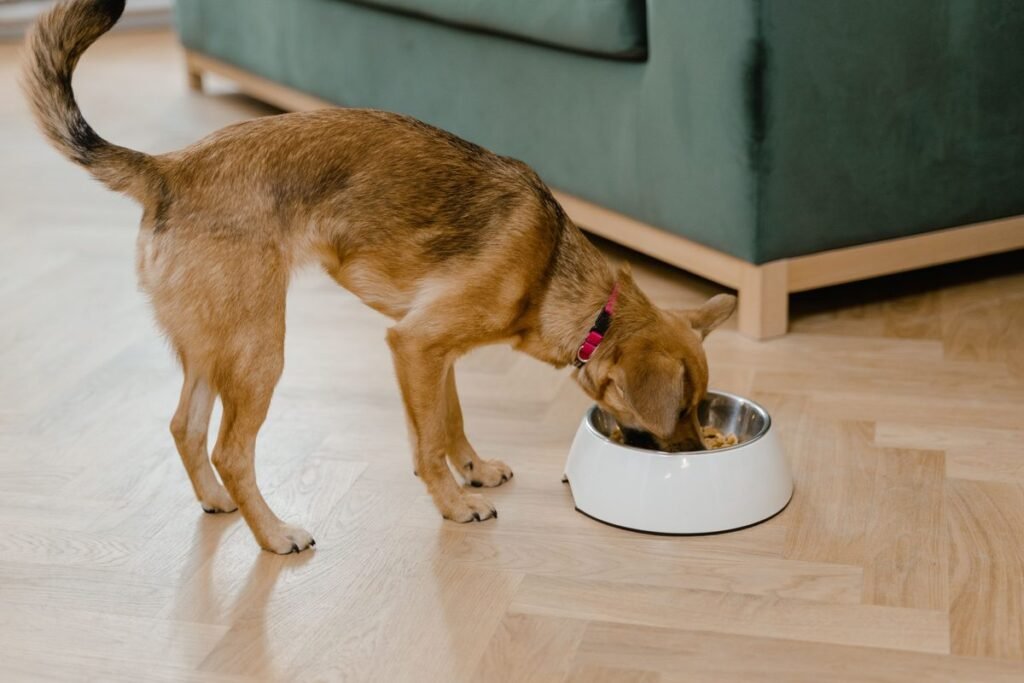
When to start puppies on solid food? At 3 to 4 weeks, with gruel first, then softened food, then dry kibble by about 7 to 8 weeks. Weaning naturally begins as soon as puppies develop teeth, typically at 3 to 4 weeks of age, as stated by VCA Canada. Start with puppy milk replacer in a flat saucer, move to canned puppy food mixed with milk replacer, decrease the liquid each day until they eat canned food with little or no moisture, ideally at 4 to 6 weeks, and let dry food take over from about 7 weeks. Puppies are usually eating solid food only by 5 to 6 weeks, and completely weaned from their mother at around 8 to 10 weeks. Those are two different ages, and this article dates both.
When to start puppies on solid food: the first tastes at 3 to 4 weeks
The start of solid food is not a single day. It is a stage that opens at 3 to 4 weeks, when the puppies' teeth begin to erupt and they can lap from a saucer, and it closes at 5 to 6 weeks, when they are eating solid food only. Puppies born on Friday 20 November 2026 start first tastes on Friday 11 December to Friday 18 December 2026, eat softened food with little liquid by Friday 25 December 2026 to Friday 1 January 2027, and reach dry kibble only from about Friday 8 January 2027 to Friday 15 January 2027. Those dates are the calendar version of the verified week ranges, and they are the dates to put on the fridge.
First food is not kibble. It is puppy milk replacer in a flat saucer, a 50 to 50 mixture of milk replacer and water, according to VCA Canada. Do not use goat milk or cow milk. Repeat 2 to 3 times a day until they drink on their own, typically in 1 to 4 days. The first tastes are laps, not meals. Expect a puppy to walk through the saucer, to sneeze milk replacer across the whelping box and to take a day or two longer than a littermate. That spread is normal. A flat saucer matters, because a deep bowl lets a small puppy inhale liquid, and a puppy that chokes on its first tastes will be wary of the saucer the next day. Use a saucer shallow enough that the puppy can lap without putting its nose under the surface.
Readiness signs help you judge whether a puppy is ready a few days before or after the calculator date. Dogo, a rival guide, lists steady standing and walking, visible puppy teeth, curiosity about food and the ability to lap without choking. Teeth begin to erupt around 2 to 3 weeks, according to the same guide. Those signs match the VCA milestones: eyes open after 1 to 2 weeks, by 2 weeks alert and trying to stand, by 3 weeks trying to climb out of the nest, by 4 weeks able to walk, run and play. A puppy that shows the signs at 3 weeks is ready at 3 weeks. A puppy that does not show them by the end of the 4 week window needs a vet look, not a forced saucer. If puppies were hand raised, weaning can begin sooner, as soon as their eyes are open, according to VCA Canada, but the vet should guide the timing for a hand raised litter.
Gruel: what it is, and how to make it
Gruel is the bridge between milk replacer and solid food. It is canned puppy food mixed with milk replacer, with the liquid decreased each day until the puppies eat canned food with little or no moisture, ideally at 4 to 6 weeks, according to VCA Canada. Feed small amounts around 4 to 6 times a day during the gruel stage. That frequency is the VCA figure, and it is higher than the 3 meals a day some rival pages give for the same stage. The rival difference is named in the next section, because a reader who follows the lower frequency may underfeed a litter that is still growing fast.
Make gruel fresh for each feed, in small amounts, and throw away what is left after the puppies have finished. Warm it to body temperature, not hot, and test it on your wrist the way you would test a baby's bottle. Offer it in a flat saucer, in a clean area away from the mother's food bowl, so the puppies learn that the saucer is theirs. Put a little gruel on a puppy's lips if it will not lap on its own, and let it lick it off, rather than pushing its nose into the saucer. A puppy that is pushed into food learns to fear the saucer. A puppy that licks food from its own lips learns to come back to it.
Rival gruel ratios are common, and they should be labelled as what they are. Houndsy gives a ratio of 1 part dry food to 3 parts warm liquid, moving to 1 to 2 at weeks 5 to 6, and dry kibble by weeks 7 to 8, and presents the ratios as the golden ratio. Those ratios are unattributed, with no veterinary source found, and this article does not present them as veterinary guidance. If you use them, label them as a common breeder method, not as a veterinary rule. The VCA method, canned puppy food mixed with milk replacer with liquid decreased daily, is the veterinary guidance this article follows, and it does not give a fixed ratio, because the right texture depends on the food, the puppy and the day. Start soupy, move to porridge, then to soft solids, and let the puppies' teeth and appetite set the pace inside the 4 to 6 week window.
Soak kibble if you use dry food for gruel rather than canned food. Winston and Porter suggests soaking kibble for 10 to 15 minutes, but it gives no source for that time, and this article reports it as a rival suggestion, not as a rule. Soak until the kibble is soft all the way through, with no hard centre, and mash it with a fork before you offer it. A kibble that is soft on the outside and hard in the middle is a choking risk for a 4 week old puppy. Test a piece by pressing it between your fingers. If it crumbles easily, it is ready. If it resists, soak it longer.
From gruel to dry kibble: 5 to 8 weeks
The move from gruel to dry kibble happens in two steps, and the two steps have different ages. Step 1 is solid food only, by 5 to 6 weeks. Puppies are usually eating solid food only by 5 to 6 weeks, according to Kim and Wakshlag 2023, a peer reviewed source. Solid food only means the puppies no longer need milk replacer in the bowl. It does not mean they no longer nurse. The mother may still let them nurse. That nursing is now social and comforting as much as nutritional. Do not take the mother away at this point. The puppies still need her. The next step is about separation, not about food.
Step 2 is dry food only, by about 7 to 8 weeks. Purina, updated 11 November 2026, gives dry food softened with water from about 4 weeks, with the water reduced gradually, and only dry food by about the 7th week, citing the Dog Owner's Home Veterinary Handbook. That timing is a secondary source, and this article labels it as such, because the 7 to 8 week dry food age comes from Purina and the Handbook, not from VCA. Dogo gives a similar finish, weaning complete by 7 to 8 weeks, while VCA gives fully weaned at about 8 to 10 weeks. The difference is the definitional split again: dry food only is not the same as fully weaned from the mother. A puppy can eat dry food only at 7 weeks and still be with its mother until 9 weeks, and that is the normal pattern. Do not use the dry food date as the separation date.
| Stage | Age | Date for puppies born Friday 20 November 2026 | Food and frequency |
|---|---|---|---|
| First tastes | 3 to 4 weeks | Friday 11 December to Friday 18 December 2026 | Milk replacer in a flat saucer, 2 to 3 times a day |
| Gruel | 4 to 6 weeks | Friday 18 December 2026 to Friday 1 January 2027 | Canned puppy food mixed with milk replacer, 4 to 6 small meals a day |
| Solid food only | 5 to 6 weeks | Friday 25 December 2026 to Friday 1 January 2027 | Canned food with little or no moisture, no milk replacer in the bowl |
| Dry kibble only | About 7 to 8 weeks | Friday 8 January to Friday 15 January 2027 | Dry food, water reduced to none, about 4 meals a day |
| Fully weaned | 8 to 10 weeks | Friday 15 January to Friday 29 January 2027 | No longer nursing, about 4 meals daily, ready to leave the mother |
On the start solid question, use the table as a plan, not as a deadline for every puppy. A litter of 8 will not move through the stages on the same day. The first puppy may eat gruel on day 21 and the last on day 26, and both are within the normal range. On the start solid question, what matters is the direction: more solid food each day, less liquid each day, less nursing each week, and steady weight gain throughout. Weigh the puppies twice a week to eight weeks, so a puppy that is falling behind shows up on the scale before it shows up in its behaviour. The weight check that belongs with this article is Puppy Weight Gain Calculator.
Meals per day: the rival disagreement
Meal frequency during the move to solid food is where rival pages disagree most, and the disagreement is worth naming because it affects how much food a puppy actually gets. VCA Canada gives 4 to 6 small meals a day during the gruel stage, then about 4 meals daily once fully weaned at about 8 to 10 weeks. By 3 months, reduce to 3 meals a day. Most breeds progress to 2 meals a day by 4 to 6 months.
On the start solid question, purina gives 3 small meals a day until older, which conflicts with VCA at 4 to 6 meals a day during weaning and is not flagged on the Purina page. Winston and Porter gives 3 to 4 small meals daily during weaning, moving to 3 meals by 3 to 6 months, and gives once a day for the first tastes, which conflicts with VCA at 2 to 3 times a day for the milk replacer stage. Houndsy gives 3 to 4 feeds a day during weaning. My Pet Math gives around 4 meals a day for the 7 to 10 week window, which matches VCA at the fully weaned stage but not the gruel stage.
That article follows VCA, because VCA is the opened veterinary source, and it names the rival figures so the reader can see that the disagreement exists. A puppy fed 3 times a day during gruel will get less food, in larger meals, than a puppy fed 5 times a day, and a small puppy with a small stomach may not finish a large meal. Small, frequent meals suit a weaning puppy better than large, infrequent ones, and that is the practical reason for the VCA frequency, not just a number on a page. If the vet gives a different frequency for your litter, follow the vet, not the page.
What not to feed, and what to watch for
Never use cow milk or goat milk for puppies, at any stage. VCA Canada states this plainly. Kim and Wakshlag 2023 agrees. On the start solid question, cow milk and goat milk do not match the nutritional needs of a puppy, and they can cause digestive upset. On the start solid question, use puppy milk replacer for the first tastes, then move to canned puppy food mixed with milk replacer, as VCA describes. Do not add calcium in pregnancy or in weaning on your own initiative, a point Kim and Wakshlag 2023 makes for pregnancy, and do not give a puppy adult dog food as its first solid food. Puppy food is formulated for growth, and adult food is not a substitute in the weaning window.
Watch the stools as solid food starts. Loose stools in the first days of gruel are common, as the puppy's gut adjusts to a new food, but persistent diarrhoea, blood in the stool, vomiting or a puppy that stops eating needs a vet call. One rival page gives a figure that 25 percent of puppies develop diarrhoea between 5 and 14 weeks, from a single non authoritative source with no study cited. That figure is unverified and is not used in this article. Do not use a percentage from a single page to decide whether diarrhoea is normal. If a puppy has diarrhoea and is not gaining weight, or is lethargic, call the vet the same day, whatever the percentage.
Watch for choking, too. A puppy that coughs, gags or struggles to swallow gruel may be eating too fast, or the gruel may be too thick, or the puppy may have a problem with its mouth or throat. Thin the gruel, offer a smaller amount and watch the next feed. If the coughing repeats, call the vet. Whelper's newborn weighing guide, opened in full in this pass, gives a related check for newborns: look in the mouth for a cleft palate, and check for milk coming from the nose. The same check applies at the start of solid food. A puppy with milk or gruel coming from its nose needs a vet look, not a thinner gruel.
What rivals get wrong about starting solid food
Rival solid food pages each have a gap worth naming. Purina, updated 11 November 2026, says start at about 4 weeks with wet or softened dry food throughout, while VCA Canada says 3 to 4 weeks, and the page does not reconcile the two. A reader who follows Purina alone will start a week later than the VCA window allows, and a puppy that is ready at 3 weeks will wait a week for food it is ready for. The page also gives 3 meals a day, which conflicts with VCA at 4 to 6 meals a day during weaning, without flagging the conflict.
Winston and Porter starts at 3 to 4 weeks with softened food once a day, porridge texture, and by 6 to 8 weeks solid food several times a day with nursing only occasionally. Its once a day for the first tastes conflicts with VCA at 2 to 3 times a day, and its 10 to 15 minute soak has no source. Houndsy gives gruel ratios of 1 to 3 moving to 1 to 2 at weeks 5 to 6, and dry kibble by weeks 7 to 8, with 3 to 4 feeds a day, but the ratios are unattributed and presented as the golden ratio. A reader who follows the ratios as a rule will think the ratio matters more than the texture and the puppy's response, which is backwards.
Dogo gives the best readiness signs in the rival set, steady standing and walking, visible teeth, curiosity about food and the ability to lap without choking, with teeth beginning to erupt around 2 to 3 weeks, but it cites Merck Neonatal Care and WSAVA feeding guidelines in a source list without page level references, and its finish of 7 to 8 weeks conflicts with VCA at 8 to 10 weeks without flagging the difference. Purina Australia gives the same 4 week start as the United States Purina page, with the same gaps. The honest article, this one, follows VCA for the start and the frequencies, Kim and Wakshlag for the solid food only age, and Purina and the Home Veterinary Handbook as a secondary source for the dry food only age, and it labels each source as it uses it.
How to use this article with the dated calculator
This article is the how to companion to the dated calculator article. The calculator article, Puppy Weaning Calculator, gives the dates from the birth date. This article gives the food, the texture, the frequency and the readiness signs for each date. Use them together: enter the birth date in the calculator, write the four dates on the fridge, then use this article to prepare the milk replacer, the canned puppy food and the flat saucers by the first date, and to know what texture to offer on each date after that.
If the puppies were born on Friday 20 November 2026, buy the milk replacer by Friday 11 December 2026, have the canned puppy food ready by Friday 18 December 2026, and have dry puppy food ready by Friday 8 January 2027. Those are preparation dates, not feeding dates, and they stop the common problem of starting gruel a day late because the milk replacer is still on order. For the feeding amounts after weaning, read Puppy Feeding Schedule Calculator by Age, which works out daily calories and cups per day from the food's energy figure.
Questions to ask your vet
Take the dated plan and this article to the vet and ask four questions. First, does your vet agree with the 3 to 4 week start for this litter, or does the litter's size, birth weights or health suggest starting a few days earlier or later? Second, what milk replacer and what canned puppy food does the vet recommend, and what texture should the gruel be at each week? Third, how many meals a day should the puppies have during gruel, and when should the frequency drop to 4, then 3, then 2 meals a day for this breed? Fourth, when should dry food take over, and when should the mother be separated, given the puppies' social development? Write the answers on the dated plan, so anyone helping with the litter follows the same food and the same dates.
A calculator gives an estimate only. It never diagnoses a puppy and never takes the place of your vet. The point of starting solid food on time is to support growth and to know when to ask. To check the date that goes with this litter, use the dog due date calculator and enter the ovulation date if you have it, so the birth date and the first food dates sit on the same clock.
Frequently asked questions
When can puppies eat solid food?
Puppies can start solid food at 3 to 4 weeks, with gruel first. According to VCA Canada, weaning naturally begins as soon as puppies develop teeth, typically at 3 to 4 weeks of age. On the start solid question, for puppies born Friday 20 November 2026, first tastes fall on Friday 11 December to Friday 18 December 2026.
When can puppies eat wet food?
Wet food, as canned puppy food mixed with milk replacer, can be offered as gruel from 4 to 6 weeks, with the liquid decreased daily until they eat canned food with little or no moisture, ideally at 4 to 6 weeks. That is the VCA method, and it is the first wet food a puppy should have.
When can puppies eat dry food?
Dry food softened with water can be offered from about 4 weeks, with the water reduced gradually, and dry food only by about 7 to 8 weeks, following the Purina and Home Veterinary Handbook timing as a secondary source. The fully weaned age, when they no longer nurse, is around 8 to 10 weeks.
What is the best first food for puppies?
Puppy milk replacer in a flat saucer is the best first food, a 50 to 50 mixture with water, 2 to 3 times a day until they drink on their own. Then canned puppy food mixed with milk replacer, with liquid decreased daily. Do not use cow milk or goat milk.
How do you make puppy gruel?
Mix canned puppy food with milk replacer, start soupy and decrease the liquid each day until the puppies eat canned food with little or no moisture, ideally at 4 to 6 weeks. Feed small amounts about 4 to 6 times a day, in a flat saucer, made fresh for each feed. Rival ratios of 1 part food to 3 parts liquid are common breeder methods, not veterinary guidance.
When are puppies fully weaned?
Puppies are typically eating solid food only by 5 to 6 weeks, and completely weaned from their mother at about 8 to 10 weeks. Those are two different ages. Puppies should ideally remain with mother and littermates until around 7 to 10 weeks old.
Sources
- VCA Canada, "Breeding for Dog Owners: Caring from Birth to Weaning." https://vcacanada.com/know-your-pet/breeding-for-dog-owners-caring-from-birth-to-weaning — Weaning begins at 3 to 4 weeks; milk replacer in a flat saucer, 50 to 50 with water, 2 to 3 times a day; canned puppy food mixed with milk replacer, liquid decreased daily, ideally at 4 to 6 weeks; 4 to 6 small meals a day; completely weaned at about 8 to 10 weeks, then about 4 meals daily; remain with mother until about 7 to 10 weeks; eyes open after 1 to 2 weeks, by 2 weeks alert and trying to stand, by 3 weeks trying to climb out of the nest, by 4 weeks able to walk, run and play; hand raised puppies can begin weaning sooner, as soon as their eyes are open. Opened and read in full.
- Kim and Wakshlag 2023, peer reviewed, via the programme verified source record — Puppies usually eating solid food only by 5 to 6 weeks; do not use cow milk or goat milk; do not add calcium in pregnancy.
- Purina, "When Can Puppies Eat Solid Food?" https://www.purina.com/articles/dog/puppy/feeding/when-can-puppies-eat-solid-food — Updated 11 November 2026; start at about 4 weeks with wet or softened dry food, dry food only by about the 7th week, citing the Dog Owner's Home Veterinary Handbook; 3 small meals a day; analysis from search excerpts in the research file.
- Winston and Porter, "How to Start Puppies on Solid Food." https://winstonandporter.com/blogs/news/how-to-start-puppies-solid-food — Start at 3 to 4 weeks with softened food once a day, porridge texture, by 6 to 8 weeks solid food several times a day; soak kibble 10 to 15 minutes; analysis from search excerpts in the research file.
- Houndsy, "When Puppies Start Eating Dog Food." https://www.houndsy.com/blogs/modern-tails/when-puppies-start-eating-dog-food-a-comprehensive-guide-to-weaning-and-nutrition — Gruel ratio 1 part dry food to 3 parts warm liquid, moving to 1 to 2 at weeks 5 to 6, dry kibble by weeks 7 to 8; analysis from search excerpts in the research file.
- Dogo, "When Can Puppies Eat Solid Food?" https://dogo.app/when-can-puppies-eat-solid-food/ — Start 3 to 4 weeks, finish weaning by 7 to 8 weeks; readiness signs, teeth begin to erupt around 2 to 3 weeks; analysis from search excerpts in the research file.
Disclaimer
This article is general information only. It cannot tell you whether a puppy is ready for solid food, diagnose any condition, or stand in for veterinary advice. Calculator results on this site are estimates. If a puppy is not eating, is losing weight, or anything in this guide worries you, speak to your veterinarian.
Keep reading

My Dog Is Pregnant: What Do I Do Now
Your dog is pregnant and it was not planned. Start here: confirm it, book the vet, work out the due date, and…

Dog Pregnancy Preparation Guide Before Due Date
Get ready before the due date in three waves: the vet plan and puppy count, the room and whelping box, and the…

How to Care for a Pregnant Dog for the First Time
Your dog is pregnant for the first time, and you have never done this before. Start with confirmation and a vet plan,…