Husky Pregnancy: How Long & How Many Puppies
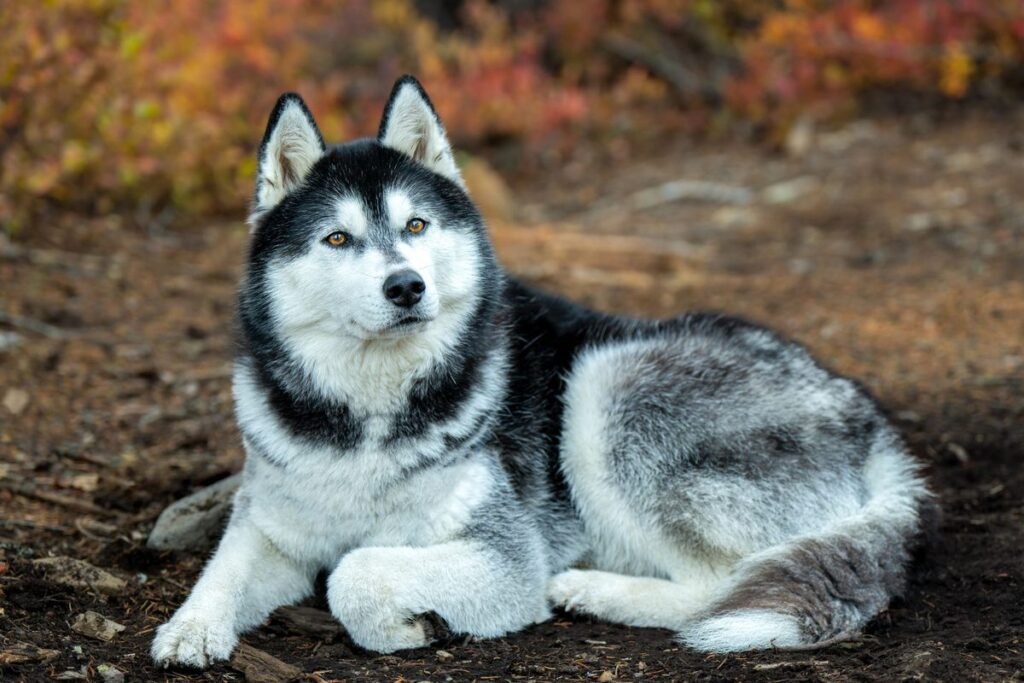
A Husky carries for about 63 days from ovulation, the same span as every other breed. What sets a Husky pregnancy apart is the litter: Huskies average about 5 puppies, in a range that runs from 1 to 14, and a first litter is usually smaller than later ones. Huskies are also one of the more reliable natural whelpers among medium-sized breeds, with a caesarean rate of about 10% according to BreedTracker, a secondary breed database. The practical challenge with a Husky is not the birth itself but everything around it: keeping a high-energy, thick-coated dog comfortable and cool in late pregnancy, and then feeding and keeping warm a litter of five or more.
The Husky litter: bigger than the toy breeds, and age matters
The best litter-size data for Huskies comes from a study by researchers at the Norwegian School of Veterinary Science, who counted the puppies in 88 Siberian Husky litters. The average was 5.1 puppies, with a range of 1 to 14. That range is wide, but most Huskies land in the middle: a typical litter is 4 to 6 puppies. The same study gives an age pattern worth knowing. A Husky conceiving through natural mating at age 2 to 6 averages about 6 puppies; at age 7 to 9 the average drops to about 5. Very young and older mothers have smaller litters, and a first litter is typically smaller than the average, a pattern the AKC notes across breeds.
| What the study found | Figure |
|---|---|
| Litters counted | 88 Siberian Husky litters |
| Average litter size | 5.1 puppies |
| Range | 1 to 14 puppies |
| Typical litter | 4 to 6 puppies |
| Average at age 2 to 6 (natural mating) | About 6 puppies |
| Average at age 7 to 9 (natural mating) | About 5 puppies |
The study also found that the method of mating matters: natural mating produces larger litters than artificial insemination on average. The season of birth and the number of previous litters did not show a significant effect. The researchers believe the results generalise to countries with similar dog management systems to Norway, which includes the US, the UK, Canada, and Australia.
For comparison, the average across all dogs is 5 to 6 puppies per litter, so a Husky sits almost exactly on the overall average. She is not a large-litter breed like a Labrador or a German Shepherd, and she is nothing like the toy breeds in this batch, where 3 puppies is a good litter. The Beagle pregnancy guide covers another medium breed with a similar average, and the Yorkie pregnancy guide shows the other end of the scale.
Husky puppies are born at a useful size. A veterinary study that weighed 15 Siberian Husky puppies at birth found an average birth weight of 556 grams (19.6 ounces), typically ranging from 497 to 593 grams. That is a solid, viable birth weight, and it is one reason Husky litters do well. Adult Huskies grow to 35 to 60 pounds and 20 to 23 inches at the shoulder, so the puppies have a lot of growing to do, and the mother needs enough food in the second half of pregnancy to support it.
How long is a Husky pregnant?
Sixty-three days from ovulation is the Husky figure, and size does not change it. CalculatorPod and CalculatorLib publish longer gestations for larger breeds, and that is wrong on the AKC and Merck evidence: a Husky is pregnant no longer than a Yorkie. A litter can shift the date by a day or two, smaller litters tending to run a little longer, but the studies cannot agree whether that is a litter effect or a breed effect, so do not move a due date for it. The counting point is what changes the number, and the hub article, How Long Are Dogs Pregnant?, sets out the four anchors and why the mating count is the widest.
Worked example
Suppose your Husky was mated on Friday 10 April 2026, and the vet's progesterone testing put ovulation at Sunday 12 April 2026.
- From ovulation: Sunday 12 April plus 63 days lands on Sunday 14 June 2026, so expect whelping a day or two either side of that Sunday.
- From the first mating only: Friday 10 April plus 58 to 72 days gives Sunday 7 June to Sunday 21 June 2026, a fortnight of uncertainty when a mating date is all you have.
- Ring the vet if: labour has not started by 64 days after the last mating, or the ovulation-timed date is a day or two past. Do not wait for day 72.
Work out your own Husky's dates on the Dog Pregnancy Calculator. It returns an estimate, not a diagnosis, and it does not replace a vet.
The only reliable count is an X-ray
Belly watching will not count a Husky litter. Only an X-ray gives a number to plan around: skeletons begin to show at about day 45 after breeding, and the count is most accurate from day 55 (Merck, AKC, VCA). Book it for about day 55 to 60. Ultrasound confirms the pregnancy and shows heartbeats from about day 25, but it cannot count, and a thick coat with five or six puppies makes it a worse counter still. The Dog Litter Size Calculator gives a breed-and-size planning guess, not a substitute for the film. Five puppies need a bigger box, more towels and more food than two, so let the count drive the preparation.
Keeping a pregnant Husky comfortable
A Husky is a cold-weather breed with a thick double coat, and pregnancy makes her less able to cope with heat. She will run warmer as the litter grows, and she cannot shed the coat to cool down. In warm weather, keep her indoors in air conditioning or shade during the hottest part of the day, give her constant access to cool water, and never exercise her hard in heat. A Husky that pants heavily, drools, or seems unsteady in warm weather needs cooling and a vet call, not more time outside.
Exercise is still important. Huskies are famously high-energy, and a pregnant Husky that is suddenly confined will be miserable and restless. Keep daily walks going, but make them shorter and gentler as the pregnancy advances, and stop if she tires. Avoid rough play, jumping, and off-lead running in the last two weeks. Mental activity helps too: a Husky that is bored will find her own entertainment, usually destructive. Short training sessions and food puzzles are a better outlet than extra miles.
The coat needs attention in the other direction. A Husky sheds heavily, and a pregnant Husky shedding in the house will fill the whelping area with hair. Brush her regularly outside the whelping room, and keep the whelping box clean. Do not clip a Husky's coat: the double coat insulates against both cold and heat, and clipping it does more harm than good. The whelping box itself should be large, in a quiet room, and warm enough for the puppies, who cannot regulate their own temperature. A litter of five or six needs space to spread out without piling on top of each other. Keep clean towels, a thermometer, the vet's number and a carrier ready by the box.
Feeding needs to rise as the litter grows, and with five or six puppies it rises a lot. Follow your vet's advice on amounts and do not change her diet suddenly. Do not add supplements or medication without asking the vet first.
Confirming a Husky pregnancy
A Husky that sleeps more and eats a little less in weeks three and four looks much like a Husky having a lazy week, so early signs are easy to miss. Her nipples grow larger and pinker, but a false pregnancy, beginning 4 to 9 weeks after a heat, copies those signs and usually clears in about 14 to 21 days. Progesterone cannot tell the two apart, because it rises in diestrus whether she conceived or not. Relaxin can, because only a truly pregnant bitch makes it. Human pregnancy tests do not work on dogs, because they look for hCG, a hormone dogs do not produce (Merck).
A vet can confirm the pregnancy by gentle palpation from about day 21, most reliably between days 28 and 35; by a relaxin blood test, possible from about day 20 to 27 after breeding, with a negative before day 27 worth repeating; or by ultrasound, which shows heartbeats from about day 25 and is most reliable after day 28. If you are unsure, book a relaxin test or an ultrasound rather than watching and waiting. An early answer changes the feeding, the exercise and the whelping plans.
When to call the vet
Huskies are independent and stoic, and one that is clearly distressed, vomiting repeatedly or collapsing is already in trouble, so call on the clock rather than on how she looks. Same-day vet calls: hard straining for 20 to 30 minutes with no puppy, more than 2 hours between puppies, and no labour by 64 days after the last mating or a day or two past an ovulation-timed due date. Emergencies: more than 4 hours with puppies still known to be inside, green discharge before the first puppy, bleeding before the first puppy, fresh bleeding that does not stop within 10 minutes, and a fever above 103°F (39.5°C) in labour. Green discharge after a birth is normal. Do not wait until day 72. If you are unsure, call: a vet would rather reassure a Husky owner on the phone than see a Husky in crisis an hour later.
The best home check in the last week is her temperature. Her normal rectal reading is 100 to 102.5°F (37.8 to 39.2°C), and it usually falls below 100°F, often to 99°F or lower, 8 to 24 hours before labour. That fall lasts only about 8 hours, so a once-a-day check can miss it; take it twice a day from day 58 onward.
The bottom line
So: about 63 days from ovulation, about 5 puppies, typically 4 to 6, and a birth that is usually straightforward for a Husky. The planning is for the size of the litter: a count by X-ray after day 55, a large whelping box, and food and warmth enough for five or six. Keep her cool in warm weather, keep the exercise gentle, and keep the vet's number close in the last week. For the same treatment of the other breeds in this batch, see the Beagle pregnancy guide, the Dachshund pregnancy guide, and the Poodle pregnancy guide.
This article is general information, not veterinary advice. The Dog Pregnancy Calculator returns an estimated due date only. It cannot confirm a pregnancy, and it is no substitute for a vet. If you are worried about your Husky at any point, call your vet.
Frequently asked questions
How long is a Husky pregnant?
Roughly 63 days from ovulation, which every breed shares. From a first mating the spread runs 58 to 72 days, because sperm live 3 to 7 days and eggs need 2 to 3 days to mature after ovulation. Where you have an ovulation date, use it; a Husky carries no longer than a smaller breed.
How many puppies do Huskies have?
On average 5.1 puppies, in a range of 1 to 14, according to a Norwegian study of 88 Siberian Husky litters. A typical litter is 4 to 6 puppies. Huskies aged 2 to 6 average about 6; aged 7 to 9 they average about 5.
Do Huskies need a caesarean?
Usually not. Huskies are relatively reliable natural whelpers, and BreedTracker, a secondary breed database, puts the caesarean rate at about 10%. A count by X-ray after day 55 helps the vet judge whether a natural birth is realistic for your Husky.
When can a Husky pregnancy be confirmed?
A relaxin blood test works from day 20 to 27 after breeding, and ultrasound from about day 25, most reliably after day 28. Palpation is possible from about day 21, most reliably on days 28 to 35.
How do I keep a pregnant Husky cool?
Keep her indoors in air conditioning or shade during the hottest part of the day, give her constant access to cool water, and never exercise her hard in heat. Do not clip her double coat. A Husky that pants heavily, drools, or seems unsteady in warm weather needs cooling and a vet call.
How do I know when my Husky is about to give birth?
Her temperature usually falls under 100°F, often to 99°F or less, 8 to 24 hours ahead of labour, and she will nest, refuse food and grow restless. Take it morning and evening from day 58, since the fall lasts only about 8 hours.
Keep reading

Maltese Pregnancy: Gestation, Litter Size, and the Singleton Risk in a Tiny Dam
A Maltese is pregnant for about 63 days from ovulation, or 58 to 72 days from a first mating. Her breed does…

Cavalier Pregnancy: How Long, Litter Size, and the Small-Litter Watch-Outs
A Cavalier King Charles Spaniel is pregnant for about 63 days from ovulation, or 58 to 72 days from a first mating.…

Boston Terrier Pregnancy: Gestation, Litter Size, and Planning for a Caesarean
A Boston Terrier is pregnant for about 63 days from ovulation, or 58 to 72 days from a first mating. That length…