Dachshund Pregnancy: How Long & How Many Puppies
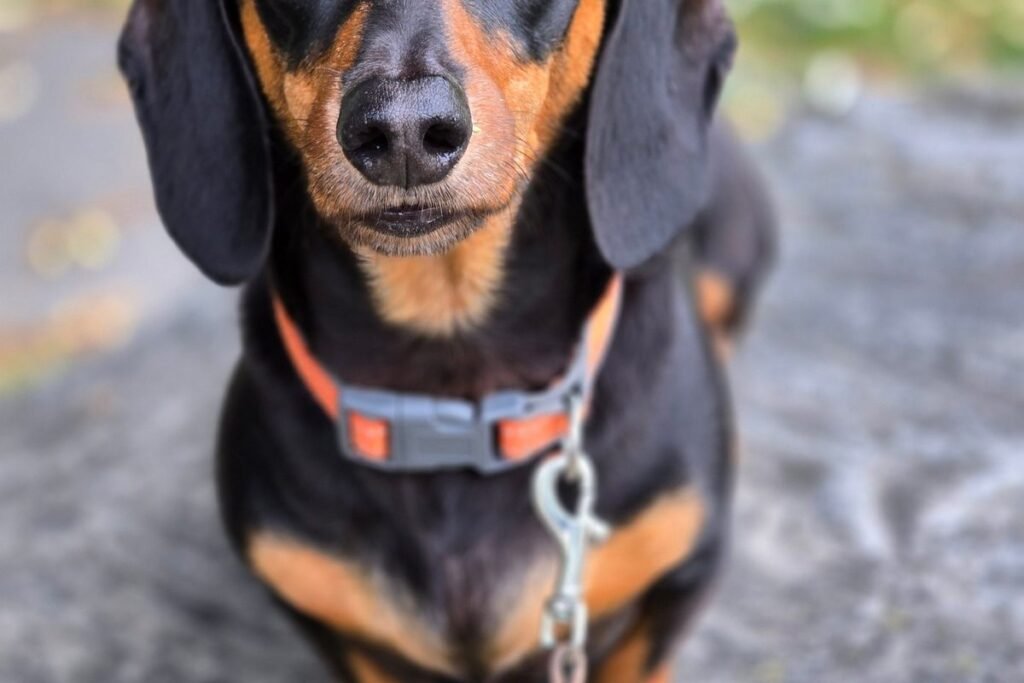
A Dachshund carries for about 63 days from ovulation, no longer and no shorter than any other breed. What makes a Dachshund pregnancy different is the shape of the dog: a long body on short legs, in two sizes, Standard and Miniature. The average litter is 5 puppies, usually 1 to 6, with Standard Dachshunds tending toward the upper end of that range and Miniatures toward the lower end. The long back is the thing to protect through the pregnancy, because it is the breed's weak point, and the whelping box needs to be long enough for a dog that cannot curl up as tightly as a rounder breed. Everything else about the pregnancy is ordinary.
Two sizes, one long back
Dachshunds come in two sizes, and the size changes the litter more than anything else about the breed. The American Kennel Club's average litter size page, based on AKC registration data, puts the Dachshund average at 5 puppies, with most litters running 1 to 6. A Norwegian School of Veterinary Science study gives a mean of 5.4. The two figures agree: expect about 5 puppies, plan for anywhere from 1 to 6, and do not be surprised by more.
| Source | Dachshund litter size |
|---|---|
| AKC registration data | Average 5 puppies, usually 1 to 6 |
| Norwegian School of Veterinary Science study | Mean 5.4 puppies |
Standard Dachshunds, the larger variety, tend to have the larger litters in that range, and Miniature Dachshunds the smaller ones. That follows the general rule in the AKC data: bigger dogs have bigger litters because size allows more puppies to be carried safely. A first litter is usually smaller than later ones, and a mother's litter size tends to stay fairly consistent from one litter to the next, so a Dachshund that had 3 puppies the first time is likely to have a small litter again. Very young mothers and older ones tend to have the smaller litters.
The long back is the care issue that no other breed in this batch has. A Dachshund's spine is long and supported by short legs, and the extra weight of a litter in the last weeks puts more load on it. Keep her at a healthy weight, avoid letting her jump on and off furniture, and use a ramp or carry her up and down stairs in the last weeks. Do not let her leap out of the car or off the bed. These are practical precautions, not medical treatment, and they cost nothing. The whelping box should be long and low-sided: long enough for her to stretch out fully, and low enough at the entrance that she can step in and out without jumping. A box built for a rounder breed of the same weight will be too short.
How long is a Dachshund pregnant?
Sixty-three days from ovulation is the Dachshund figure, and size does not shift it. A Miniature carries no longer than a Standard, and neither carries longer than a Husky. The litter can move the date a little: a one-puppy Dachshund litter may run a day or two past a five-puppy one, though studies disagree on whether litter size acts on its own or only through breed, so leave the due date where the ovulation count puts it. The other counts, from the LH surge, from diestrus and from mating, each give a different number for the same pregnancy, and the hub article, How Long Are Dogs Pregnant?, explains why the mating count is the widest of the four.
Worked example
Suppose your Dachshund was mated on Tuesday 21 April 2026, and the vet's progesterone testing put ovulation at Thursday 23 April 2026.
- From ovulation: Thursday 23 April plus 63 days lands on Thursday 25 June 2026, with whelping expected a day or two either side.
- From the first mating only: Tuesday 21 April plus 58 to 72 days gives Thursday 18 June to Thursday 2 July 2026. That span is the honest answer when a mating date is all you have.
- Ring the vet if: no labour by 64 days after the last mating, or a day or two past the ovulation-timed date. Do not sit it out until day 72.
Put your own dates into the Dog Pregnancy Calculator. The result is an estimate, not a diagnosis, and it is no substitute for a vet.
The only reliable count is an X-ray
Belly watching will not count a Dachshund litter. A long body hides puppies well, and only an X-ray gives a number you can plan around. Skeletons start to show on film at around day 45 after breeding, and the count is at its most accurate from day 55 (Merck, AKC, VCA), so book for about day 55 to 60. Ultrasound confirms the pregnancy and shows heartbeats from about day 25, but it will not count the litter. The Dog Litter Size Calculator offers a planning guess from breed and size, which is no replacement for that film. For a Dachshund the X-ray does two extra jobs: it checks puppy size against the pelvis, and it tells you when labour is finished. Four puppies delivered against a count of five means one is still inside.
Whelping: what the long body changes
Dachshunds usually whelp naturally, and there is no verified figure putting their caesarean rate above average. The whelping risks for this breed are practical rather than surgical. The first is the back: a Dachshund in labour will pace, dig, and change position, and a whelping box with high sides or a slippery floor can hurt her back or leave her unable to get comfortable. Use a long box with a low entrance, a non-slip base, and enough room for her to turn around without climbing. The second is the puppies' temperature: newborn puppies cannot regulate their own temperature, and a long-bodied mother cannot curl around a litter of five as tightly as a rounder breed can, so the room needs to be warm and draught-free, and the puppies need a warm spot to return to. The third is feeding: a litter of five needs a mother that is eating well, so follow your vet's advice on food in the second half of pregnancy and do not change her diet suddenly.
Choose a quiet, warm room for the whelping box in the final fortnight and let her sleep in it first, so it carries her scent before labour. Lay out clean towels, a thermometer, the vet's number and a carrier beside it. Stay with her in the last days rather than leaving a pregnant Dachshund on her own.
Her temperature is the home check that matters most in the last week. A Dachshund's usual rectal reading runs 100 to 102.5°F (37.8 to 39.2°C), then falls under 100°F, often to 99°F or lower, about 8 to 24 hours before labour. The fall lasts only around 8 hours, so check morning and evening from day 58, or you may miss it entirely. A reading above 103°F (39.5°C) during labour is an emergency, not a watch-and-wait sign.
Confirming a Dachshund pregnancy
Early signs in a Dachshund are easy to miss and easy to misread. She may pick at her food and sleep more in weeks three and four, and her nipples grow larger and pinker, yet a false pregnancy, starting 4 to 9 weeks after a heat, copies all of that and usually clears in 14 to 21 days. Progesterone will not separate the two, because it rises in diestrus whether she conceived or not; relaxin will, because only a pregnant bitch produces it. Human pregnancy tests are no use here: they look for hCG, a hormone dogs do not make (Merck).
The vet's three checks each have their own window. Palpation can feel puppies from about day 21, at its best on days 28 to 35, although a long body is harder to read by hand than a round one. Relaxin testing works from about day 20 to 27 after breeding; a negative taken before day 27 is worth repeating. Ultrasound picks up heartbeats from about day 25, and is at its most dependable after day 28. If you are unsure, book a relaxin test or an ultrasound instead of watching and waiting. Knowing early changes the feeding, the exercise and the whelping plans, and for a Dachshund it also changes how carefully you guard her back.
When to call the vet
Phone the vet the same day when a Dachshund strains hard for 20 to 30 minutes and produces no puppy, when 2 hours pass between puppies, or when labour has not begun by 64 days after the last mating or a day or two past the ovulation-timed date. Day 72 is not a date to wait for. An emergency is a gap beyond 4 hours with puppies still inside, green discharge before the first puppy, bleeding before the first puppy, fresh bleeding that continues past 10 minutes, or a fever over 103°F (39.5°C) in labour. Green discharge after a birth is normal. A back adds its own triggers for this breed: crying out when her back is touched, refusing to move, or being unable to settle in late pregnancy is a vet matter, not a wait-and-see. If you are unsure, phone. A vet would rather calm a worried Dachshund owner than meet a Dachshund in crisis an hour later.
The bottom line
In short: about 63 days from ovulation, about 5 puppies, usually 1 to 6. Nothing about the length is unusual; the long body is what changes the care. Guard her back, give her a long box with a low entrance, confirm the pregnancy early, count by X-ray after day 55, and keep the vet's number close in the last week. For the same treatment of the other breeds in this batch, see the Beagle pregnancy guide, the Husky pregnancy guide, and the Poodle pregnancy guide.
This article is general information, not veterinary advice. The Dog Pregnancy Calculator gives an estimated due date only; it cannot confirm that she is pregnant, and it is no substitute for a vet. If you are worried about your Dachshund at any point, call your vet.
Frequently asked questions
How long is a Dachshund pregnant?
About 63 days from ovulation, the figure every breed shares. From a first mating the range is 58 to 72 days, because sperm live 3 to 7 days and eggs need 2 to 3 days to mature after ovulation. Use the ovulation date where you have it; a Miniature carries no longer than a Standard.
How many puppies do Dachshunds have?
On average 5 puppies, usually 1 to 6, according to AKC registration data. A Norwegian study gives a mean of 5.4. Standard Dachshunds tend toward the upper end of the range and Miniatures toward the lower end.
Do Dachshunds need a caesarean?
There is no verified figure putting their caesarean rate above average, and most Dachshunds whelp naturally. An X-ray count after day 55 helps the vet judge whether a natural birth is realistic and confirms when labour is finished.
How do I protect my pregnant Dachshund's back?
Keep her at a healthy weight, stop her jumping on and off furniture, and use a ramp or carry her up and down stairs in the last weeks. Use a long, low-sided whelping box so she can step in and out without jumping.
When can a Dachshund pregnancy be confirmed?
By relaxin blood test from day 20 to 27 after breeding, or by ultrasound from about day 25, most reliably after day 28. Palpation can feel the litter from about day 21, most reliably on days 28 to 35.
How do I know when my Dachshund is about to give birth?
Her temperature usually falls under 100°F, often to 99°F or less, 8 to 24 hours before labour, and she will nest, refuse food and grow restless. Check it morning and evening from day 58, since the fall lasts only about 8 hours.
Keep reading

Maltese Pregnancy: Gestation, Litter Size, and the Singleton Risk in a Tiny Dam
A Maltese is pregnant for about 63 days from ovulation, or 58 to 72 days from a first mating. Her breed does…

Cavalier Pregnancy: How Long, Litter Size, and the Small-Litter Watch-Outs
A Cavalier King Charles Spaniel is pregnant for about 63 days from ovulation, or 58 to 72 days from a first mating.…
Boston Terrier Pregnancy: Gestation, Litter Size, and Planning for a Caesarean
A Boston Terrier is pregnant for about 63 days from ovulation, or 58 to 72 days from a first mating. That length…