How Long Is a Great Pyrenees Pregnant?
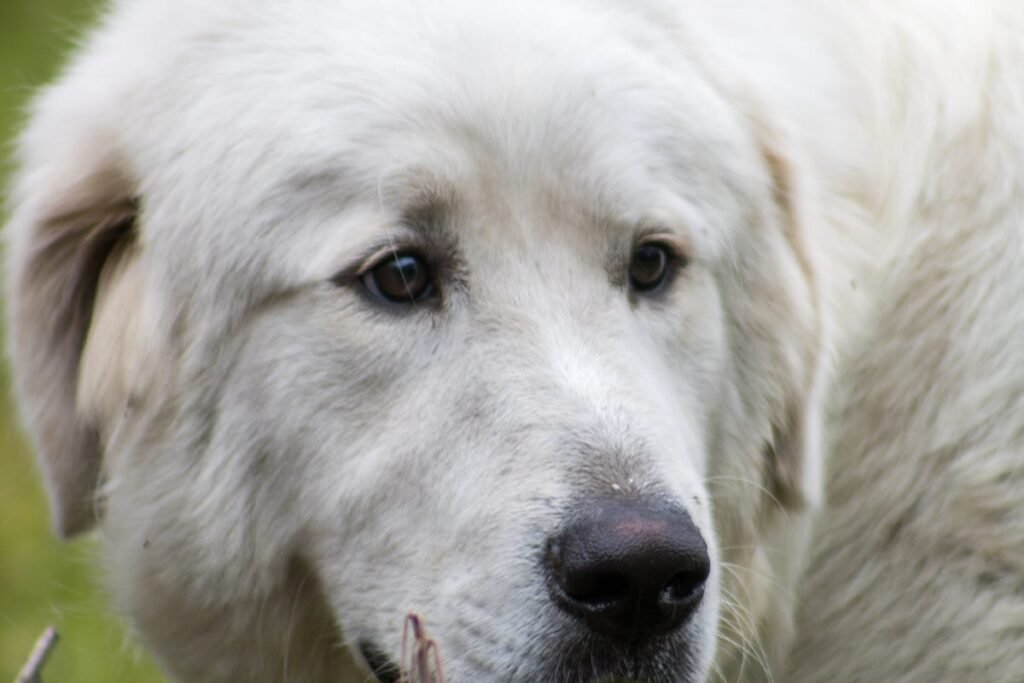
How long is a Great Pyrenees pregnant? About 63 days counted from ovulation, the same as every other breed, including the smallest. Counted from the first mating, a normal Great Pyrenees pregnancy lasts 58 to 72 days. That answer surprises owners of giant breeds, because it feels wrong that a dog this large should carry her puppies for the same length of time as a Chihuahua. It is nonetheless what the veterinary sources say, and it is the point this article is built around: a Great Pyrenees is not pregnant for longer. She has a bigger litter to plan for, a much bigger whelping box to build, and a longer labour to sit through, but the calendar is the same 63 days from ovulation that every breed shares.
How long is a Great Pyrenees pregnant? Anchor by anchor
Different sources quote different numbers for Great Pyrenees pregnancies because they start the clock at different events. Mating is not conception. According to the American Kennel Club, sperm can survive three to seven days inside the female, while Cornell University notes the eggs need another two to three days after ovulation to mature before they can be fertilised. One Great Pyrenees pregnancy can therefore be described four ways, and each one is right once you say where the clock started:
| Clock starts at | Length | Reliability |
|---|---|---|
| Ovulation | 62 to 64 days (about 63) | The standard Great Pyrenees figure |
| First mating | 58 to 72 days | Widest range, least precise |
| LH surge / first progesterone rise | 64 to 66 days | Very precise, needs vet blood tests |
| First day of diestrus | 56 to 58 days | Precise, needs vaginal cytology |
The American Kennel Club states about 62 to 64 days from ovulation, and Cornell gives an average of 63 days, or 63 days plus or minus one to two days when ovulation is known. That 58 to 72 day window is the figure Merck and UC Davis give for mating counted pregnancies. About nine weeks, whichever way you count it.
The giant breed myth, answered head on
The claim that giant breeds are pregnant for longer is the most common error in this topic, and it appears on rival calculator pages as well as on breed forums. Some rival tools give giant breeds 63 to 66 days, or add a day for giant breeds and subtract days for small ones. The figures disagree with each other, which is what you would expect from an adjustment nobody measured, and they conflict with the veterinary consensus. PetMD states the length of pregnancy is the same for all breeds and ages. Measured from ovulation, gestation is about 63 days in a Great Pyrenees just as in a Chihuahua, a Poodle and a Miniature Schnauzer.
What makes the myth feel true is that everything else about a Great Pyrenees pregnancy is bigger. The litter is bigger, the puppies are bigger, the mother is bigger, and the labour is longer. It is easy to mistake a bigger pregnancy for a longer one. But the size of the litter and the length of the pregnancy are two different things, and only the first changes with breed. A Great Pyrenees due date should never be moved because the breed is large, and a calculator that adds days for giant breeds is moving the wrong thing. The breed size guide takes the size claim apart in full, and the closest live giant breed page, How Long Are Great Danes Pregnant?, makes the same point for its breed. This article links to both rather than re-arguing the point at length, and spends its space on what genuinely differs for a Great Pyrenees: litter planning, whelping box size and labour length.
One rival claim deserves a direct answer because readers will meet it. The dog pregnancy calendar template pages give a 57 to 71 day range for this breed and say to expect birth between 63 and 65 days after two matings. The 57 to 71 day range is shifted a day earlier than the verified 58 to 72 day mating counted range, and the template names no anchor and cites no source for it. The 63 to 65 day expectation after two matings is VCA's own wording, though: VCA says to note the two mating dates and expect birth to occur between 63 and 65 days later. VCA does not say whether the count runs from the first or the second mating, and the figure sits inside the wider verified 58 to 72 day mating window rather than replacing it, so use the wider window for planning and treat the VCA figure as the narrower expectation for a planned two mating breeding. The verified figures are the ones in the table above.
Worked example: a Great Pyrenees due date
Suppose a Great Pyrenees was first mated on Monday 23 November 2026 and last mated on Wednesday 25 November 2026. Adding 63 days to the first mating gives a central due date of Monday 25 January 2027. The normal window runs from Wednesday 20 January 2027 (day 58) to Wednesday 3 February 2027 (day 72). Have the whelping box ready by 20 January, and do not assume she is overdue on 26 January. When a vet has timed ovulation with progesterone tests, the due date lands 63 days after ovulation, give or take a day or two, and those are the days to plan the final week around. In this example, if ovulation fell on Friday 27 November 2026, the ovulation timed due date would be Friday 29 January 2027.
Try your own mating date in the dog due date calculator and make sure the whelping box is ready by the start of the window it gives you. The calculator gives you an estimate, not a diagnosis, and it does not stand in for your vet.
The vet call date in this example is Thursday 28 January 2027, which is 64 days after the last mating on 25 November. That threshold comes from the American Kennel Club: call the vet if there are no signs of whelping 64 days after the last mating. It falls six days before the far edge of the mating window, 3 February. Waiting until the far edge had passed would mean six extra days beyond the point the AKC says to call. Do not wait for the far edge.
How many puppies do Great Pyrenees have?
Great Pyrenees have large litters, and the honest reporting of that fact starts with a warning about the sample size. For litter size, this site uses Borge et al. 2011, a retrospective count of 10,810 litters from 224 breeds registered with the Norwegian Kennel Club in 2006 and 2007 (Theriogenology, DOI 10.1016/j.theriogenology.2010.10.034). In that study, only 14 Great Pyrenees litters were counted. That is a small sample, and it is the smallest study count of any breed in this batch except the Bullmastiff. A mean drawn from 14 litters is less steady than a mean drawn from 200, and this article says so rather than presenting a confident figure built on thin data.
With that warning in place, the Borge et al. figures are an average of 7.3 puppies, with a range of 2 to 10 puppies across those 14 litters. The page reporting these figures, like the other breed pages in this programme, gives the average as 7 puppies in its text and 7.3 puppies in its comparison table. The text rounds the study mean down to a whole number of puppies; the table prints the mean exactly. This article gives 7.3 as the Borge et al. mean and says so, rather than repeating the rounded 7 as if that were the study result. The practical answer for an owner is that a Great Pyrenees litter is usually around seven puppies, sometimes as few as two, and occasionally as many as ten, and that the average rests on only 14 litters, so an individual litter can sit well away from it.
Two secondary litter claims appear in search results for this breed, 6 to 12 puppies and 8 to 10 puppies, and neither is published here as fact. Neither could be traced to an opened authoritative source, and the 6 to 12 claim in particular sits outside the range found in the study. The Borge et al. range of 2 to 10 is the only verified range, and the wide end of it already covers large litters.
The study also showed that litter size follows breed size more than dam age or mating method, and that neither the season of birth nor the number of earlier litters changed it. Do not assume a first Great Pyrenees litter will be smaller than later ones. That is a widespread belief, and the study found no evidence for it. A Great Pyrenees sits at the top of the size scale, so a large litter is expected, but the count for your dog is the one your vet gives you, not any published average.
Ultrasound from about day 25 confirms a Great Pyrenees pregnancy and shows heartbeats, but it cannot number a litter reliably, so do not plan the box from it. The reliable count comes from an X-ray after day 55, once the puppies skeletons have mineralised, and the litter size estimator is only a rough planning aid. Leave the X-ray count by the whelping box, so you can check how many puppies are still to come. Litter ranges by breed and size are set out in the how many puppies to expect guide and the average dog litter sizes guide. With seven or more puppies expected, that X-ray count matters more than in a small breed, because a long labour with an unknown number still inside is where owners most often lose track of whether whelping is finished.
A large litter has one small timing effect worth knowing about. Larger litters may finish a day or two earlier than smaller ones. At most it moves the date by a day or two, which is too small to matter, and no source gives a per puppy adjustment for a calculator. Do not shift a Great Pyrenees due date because the litter looks large.
Great Pyrenees whelping and caesarean planning
No verified breed specific caesarean rate could be found for the Great Pyrenees. For caesarean rates, this site uses Evans and Adams 2010, published in the Journal of Small Animal Practice (DOI 10.1111/j.1748-5827.2009.00902.x). It reported breed by breed rates from the 2004 Kennel Club and BSAVA Purebred Dog Health Survey, which covered 13,141 bitches that had whelped 22,005 litters across 151 breeds. The published abstract names only the ten breeds with the highest rates, and the Great Pyrenees is not among them. The survey's highest rates belonged to the Boston terrier at 92.3 percent, and the bulldog and French bulldog, both over 80 percent, as the breeds that need a c-section guide shows in full. No Great Pyrenees figure from that study could be verified from the sources opened for this article, so none is quoted here, and no figure from another giant breed has been borrowed.
There is no dedicated Great Pyrenees due date article among the rivals at all. What ranks for this breed's pregnancy questions is a litter size calculator page, a week by week calendar page, and question threads. Neither template offers a vet call threshold, a worked example, or an anchor comparison. No dedicated due date article for this breed existed before this one, and its gaps are not filled with borrowed numbers.
The practical point is timing, not alarm. Talk the whelping plan through with your vet before the due date, including how fast you can reach an emergency clinic at night, and whether a planned caesarean has been discussed for your individual dog. The American Kennel Club lists a planned caesarean among the things to talk through at regular pregnancy vet visits, together with expected due dates, litter size estimates and emergency care plans. A Great Pyrenees owner who has had that conversation, and who knows the vet call triggers in the section below, is in a far better position than one who first thinks about a caesarean when labour has already stalled.
What is different about a Great Pyrenees pregnancy?
The American Kennel Club describes the Great Pyrenees as a large, thickly coated and immensely powerful working dog, bred to deter wolves and other predators on snowy mountaintops, and today a mellow companion and vigilant guardian of home and family. An adult stands 25 to 32 inches at the shoulder and weighs around 85 to 160 pounds. That size shapes every practical part of a pregnancy, from the box to the labour, while the calendar stays the same.
The whelping box. This is the single biggest planning difference for a Great Pyrenees, and it needs settling weeks before the due date, not days. A box that fits a medium breed will not fit a Great Pyrenees stretched out with seven puppies. She needs room to lie fully extended, turn around without stepping on a puppy, and nurse a large litter without crowding. Build or buy the largest box you can house, with a pig rail fitted so puppies cannot be trapped against the side when she lies down, and test it with her in it well before the due date. The whelping box size calculator works out a size from her measurements, and the DIY whelping box guide covers the setup. A Great Pyrenees who has never seen her box before labour starts may refuse it entirely, and there is no good second choice once labour has begun.
Food and weight. Feed a Great Pyrenees her normal adult food for the first two-thirds of pregnancy, then increase it gradually in the last weeks. In the last weeks, vets recommend building her food up until she eats about 35 to 50 percent more than usual, the American Kennel Club notes, fed as small frequent meals because a uterus full of puppies leaves little room for a full stomach. Weigh her once a week through the second half of pregnancy to see the trend, and ask your vet about amounts for your individual dog. A giant breed carrying seven puppies needs a lot of food in the last weeks, and small frequent meals count for more with her than with a small breed, because so little room is left in her abdomen.
Exercise. Walk a pregnant Great Pyrenees gently and regularly through most of the pregnancy. Short walks several times a day keep her fitter and calmer than one long, tiring outing. In the last two weeks, leave out rough play, jumping and long runs. A tired, overworked mother is more likely to struggle in labour than a fit, rested one, and a giant breed mother has further to fall if she overtires herself.
A quiet whelping area. Great Pyrenees are vigilant guardians, and a pregnant Great Pyrenees can become protective of her whelping area in the last days before birth. Set the box up in a quiet room that only one or two familiar people will enter, and keep visitors away until the puppies are a few days old. Let her get used to the box a week or two before the due date so it smells familiar, and keep the room warm and free of drafts. Her thick coat keeps her warm, but newborn puppies chill quickly away from her body.
Labour length. A Great Pyrenees litter of seven or more puppies takes a long time to arrive, so judge the labour by its gaps, not by the clock alone. Cornell notes each puppy is usually born within 0 to 30 minutes, and that up to two hours between puppies is still normal. The American Kennel Club adds that a normal whelping generally lasts about as many hours as there are puppies, so eight puppies should mean about eight hours. Expect a long night, keep water and towels within reach, and stay with her throughout. If a Great Pyrenees strains hard for 20 to 30 minutes and no puppy appears, or more than two hours pass between puppies, call your vet. Fatigue is the main risk in a long giant breed labour, and a tiring mother needs the vet involved early, before she stops pushing.
After the birth. A Great Pyrenees mother is usually calm and attentive with her puppies, but give her space all the same, keep the room quiet, and check from a distance that every puppy is nursing and keeping warm. In a large litter, make sure the smallest puppies are reaching a teat, since the strongest can push them aside. A mother who will not settle, keeps leaving the box, or ignores a puppy is a reason to call the vet at once, not to wait and see. For the first weeks after birth, the newborn care week by week guide is the place to look.
Great Pyrenees pregnancy week by week in brief
| Week | What is happening | What you may notice |
|---|---|---|
| Weeks 1 to 2 | Fertilisation and the embryos travelling to the uterus | Nothing to see yet, and no home test could help |
| Week 3 | Implantation at about 15 to 18 days | Her appetite may dip a little and she may seem tired for a few days |
| Weeks 4 to 5 | Placenta forms, heartbeat detectable on ultrasound, puppies growing | Her nipples pinken and a vet can confirm the pregnancy from about day 25 |
| Weeks 6 to 7 | Fast puppy growth, with skeletons showing on X-ray from about day 45 | Her belly rounds out, and the day 55 X-ray count shows the number to expect |
| Weeks 8 to 9 | Puppies nearly fully developed, then ready for birth | She begins nesting and her rectal temperature falls below 100°F, usually 8 to 24 hours before labour |
All these day counts are approximate, counted from mating, so expect them to shift a few days from dog to dog. Dog Pregnancy Week by Week carries the full week by week timeline. For how the four gestation clocks relate to each other, see the hub guide How Long Are Dogs Pregnant?. How to Calculate a Dog's Due Date covers the calculation method in full. The other giant breed page in this batch, How Long Is a Bullmastiff Pregnant?, covers the same 63 day calendar with a mastiff litter profile.
When to call the vet
Call your vet or an emergency clinic right away if your Great Pyrenees:
- Strong straining for 20 to 30 minutes brings no puppy.
- Over two hours pass between puppies when you know more puppies are still to come.
- Green discharge appearing before the first puppy is born.
- Her temperature fell more than 24 hours ago and she shows no signs of labour.
- There are still no signs of whelping 64 days after the last mating.
- Heavy bleeding, fever over 103°F, shaking, weakness, collapse, or she seems very unwell.
The 64 days after the last mating threshold is the American Kennel Club's figure, and it is the number to use. In the worked example above, the last mating was Wednesday 25 November 2026, so the threshold falls on Thursday 28 January 2027. If ovulation was timed, Cornell's guidance is to call one to two days past the ovulation timed due date instead, which in the example means Saturday 30 or Sunday 31 January 2027. Use whichever threshold comes first. For the signs that labour is starting, see the signs of labor in dogs guide. If you have an X-ray count of the litter, keep it where you can see it from the whelping box, so you know how many puppies are expected and when she has finished. If the due date has gone by with no signs of labour, Dog Past Due Date is the guide to read, rather than waiting it out.
Frequently asked questions
How long is a Great Pyrenees pregnant for?
Around 63 days when ovulation is the starting point, and 58 to 72 days when only the first mating date is known. The mating range stays wide because a Great Pyrenees mating and a Great Pyrenees conception can sit days apart.
Are Great Pyrenees pregnant for longer than smaller dogs?
No. That is the giant breed myth, and it is wrong. Gestation from ovulation runs about 63 days for a Great Pyrenees just as for a small dog. The litter is larger and the labour lasts longer, but the pregnancy itself is no longer. Do not let a calculator add days because the breed is giant.
How many puppies do Great Pyrenees usually have?
Usually around seven puppies. Borge et al. 2011 found a mean of 7.3 puppies, with a range of 2 to 10, but that average rests on only 14 litters, so treat it as a rough guide rather than a firm figure. Trust the X-ray taken after day 55 for your own dog's count.
Do Great Pyrenees often need a caesarean?
No verified breed specific caesarean rate could be found for Great Pyrenees, so none is quoted here. The breed is not among the ten highest rate breeds in Evans and Adams 2010, a group in which the Boston terrier, bulldog and French bulldog all exceed 80 percent. Raise the whelping plan and emergency options with your vet well before the due date.
How can you tell if a Great Pyrenees is pregnant?
In a Great Pyrenees the early signs are easy to miss under a thick coat: she may eat a little less around week three, seem tired, and her nipples may look pinker and larger. Those signs alone confirm nothing, so ask a vet for an ultrasound from about day 25, a relaxin blood test from about day 28, or palpation at 28 to 35 days.
How long after mating will a Great Pyrenees give birth?
Birth normally falls between 58 and 72 days after the first mating, with day 63 at the centre of that window. When the vet timed ovulation, birth is expected about 63 days after ovulation, give or take a day or two.
Calculator results are estimates. A calculator result never confirms a Great Pyrenees pregnancy and never replaces a vet's diagnosis or advice. If you think your Great Pyrenees may be pregnant, book a vet check.
Disclaimer
This article is general information only. It cannot tell you whether a dog is pregnant, diagnose any condition, or stand in for veterinary advice. Calculator results on this site are estimates. If you think your dog may be pregnant, or if anything in this guide worries you, speak to your veterinarian.
Keep reading

My Dog Is Pregnant: What Do I Do Now
Your dog is pregnant and it was not planned. Start here: confirm it, book the vet, work out the due date, and…

Dog Pregnancy Preparation Guide Before Due Date
Get ready before the due date in three waves: the vet plan and puppy count, the room and whelping box, and the…

How to Care for a Pregnant Dog for the First Time
Your dog is pregnant for the first time, and you have never done this before. Start with confirmation and a vet plan,…