Large Breed Dog Due Date Calculator: What Changes for Big Dogs
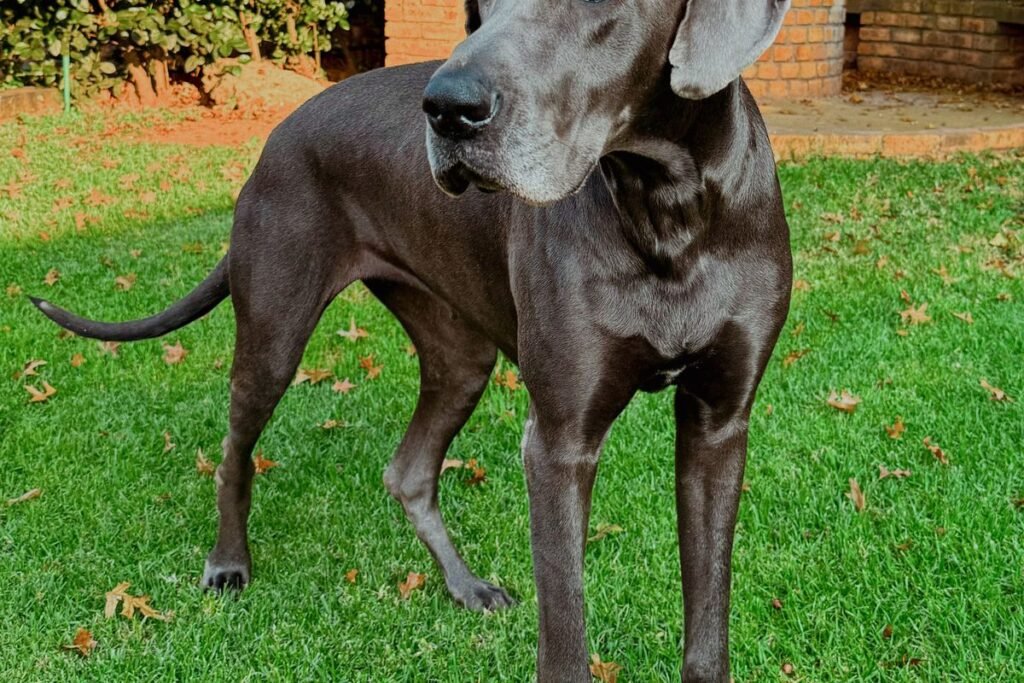
A large breed dog due date calculator gives the same answer as any other dog due date calculator, because gestation from ovulation is about 63 days for all breeds, and a large dog is pregnant for the same length of time as a small one. If your Labrador was mated on Friday 20 February 2026, her due midpoint is Friday 24 April 2026, and her normal window from the mating date is Sunday 19 April to Sunday 3 May 2026. Those dates come from that same 58 to 72 day mating range and the same 63 day midpoint that apply to every breed. What changes for a large dog is not the date. It is the plan around the date: a big litter, a long labour, and a whelping plan that needs the puppy count, the vet's number, and a clear idea of when a long labour has gone on too long.
Large breed dog due date calculator: the correction first
The question behind this calculator is usually "do large breeds carry longer than small breeds", and the honest answer is no, not in any way that changes a due date. A Great Dane and a Chihuahua are both pregnant for about 63 days from ovulation, in a range of about 62 to 64 days, according to the Merck Veterinary Manual, the American Kennel Club and Cornell University. The Merck manual notes qualitatively that pregnancy length can vary with breed and litter size, yet it gives no magnitude for that variation and no breed table at all. On the large breed question, CalculatorLib states this plainly on its own page: Merck gives no separate figures by breed size, so the calculator does not shift them. Dogpregnancycalculator.com says that same thing, calling the idea that breed changes pregnancy length the single most common myth about dog pregnancy.
On the large breed question, several ranking calculator pages do adjust by breed size, and their tables disagree with each other, which is the clearest sign that none of them is a veterinary figure. NumbrWiz gives large breeds of 50 to 100 lb a range of 58 to 68 days and giant breeds over 100 lb a range of 60 to 70 days, with no source for either. CleverCalculator gives large breeds of 50 to 90 lb a gestation of 63 to 65 days and giant breeds over 90 lb a gestation of 63 to 68 days, also with no source tying a breed to a gestation range. PastureAndPaw gives large or giant breeds an average of 64 days and a window of 59 to 69, but the adjustment is the product's own model, not a veterinary figure, and it is not labelled as such. Freetooler gives a linear model of its own, toy 60 days, small 61 to 62, medium 62 to 63, large 64, giant 65, and claims whelping more than 66 days after mating is overdue and needs immediate vet evaluation, which conflicts with both the AKC 64 days after last mating trigger and the Merck 58 to 72 day range. Teamzlab claims small breeds whelp on day 58 to 62, large breeds go the full 63 to 65 days, and giant breeds occasionally reach 66 to 68, and it contradicts itself by also saying litters of 8 or more often deliver on day 60 to 62 while single puppy litters may extend past day 68. That article does not reproduce any of those tables as fact, because none of them is one. The due date for a large dog is worked out exactly as it is for any dog, and the rest of this article is about what is genuinely different.
How to work out the date for a large dog
The method is the same as for any dog. If you know the first mating date, add 63 days for the midpoint and plan around the window of 58 to 72 days from that date, as stated by the Merck Veterinary Manual and UC Davis. If you know the last mating date as well, the window runs from the initial mating plus 58 days to the last mating plus 72 days. If the vet timed ovulation, add 63 days to the ovulation date, in a window of 62 to 64 days. If the vet found the LH surge, add 65 days, in a window of 64 to 66 days. If the vet found the first day of diestrus, add 57 days, in a window of 56 to 58 days. The first mating guide and the last mating guide work the mating counts through in full. The ovulation guide, the LH surge guide and the first day of diestrus guide cover the tight anchors.
Take a Labrador mated on Friday 20 February 2026. Add 58 days and you get Sunday 19 April 2026, the earliest normal whelping day. Add 63 days and you get Friday 24 April 2026, the midpoint. Add 72 days and you get Sunday 3 May 2026, the latest normal whelping day. The full window is 19 April to 3 May, fifteen days from end to end. This is the same example NumbrWiz uses, and the midpoint of 24 April is verified. What this article does not copy is NumbrWiz's range of 19 to 29 April, which comes from its own 58 to 68 day window. The honest window for this Labrador is 19 April to 3 May, on the Merck 58 to 72 day range, and any calculator that tells you she is overdue on 30 April is wrong. For the full audit of the tools that shift the date by breed size, read the dog due date calculator by breed comparison in this series.
The preparation dates fall out of the same anchor. Have the whelping area ready about a week before the midpoint, by Friday 17 April 2026. Start twice daily temperature checks from about day 56, which is also Friday 17 April 2026. Book an ultrasound from about day 25, which is Tuesday 17 March 2026, and an X-ray count from about day 45, which is Monday 6 April 2026, with the best count from day 55, which is Thursday 16 April 2026. For a large dog, the X-ray count matters more than it does for a small dog, because the litter is bigger and the labour is longer, and the next sections explain why.
What breed size does change: litter size
Breed size does not change gestation length, but it does change litter size, and litter size changes the labour. Large and giant breeds have larger litters than small breeds. MyPetMath reports a study of 10,810 purebred litters, Borge and colleagues 2011, which found an average of 3.5 puppies in miniature breeds and around 7 in large and giant breeds. That figure is reported on the rival page with the study cited. This article presents it as a reported study finding, not as a figure verified against the study itself. DexoCalc gives typical litter ranges of 6 to 9 puppies for large breeds and 7 to 12 for giant breeds, as its own estimates. CleverCalculator gives 6 to 10 puppies for large breeds and 8 to 12 or more for giant breeds, also as its own estimates. Those ranges are consistent with the direction of the study finding, yet they are the calculators' estimates, not veterinary figures.
A large litter changes the delivery in two ways. First, the labour is longer. Puppies usually arrive every 30 to 60 minutes, and a litter of ten can take many hours to deliver even when everything goes well. Second, the mother tires. Uterine inertia, where the contractions weaken and stop before the litter is delivered, becomes more likely as puppy numbers rise, and maternal exhaustion in a prolonged labour is a recognised risk with large litters. That is why the puppy count matters so much for a large dog: if you know there are ten puppies and only seven have arrived, you know the labour is not finished, and you know when to call the vet. Without the count, a pause in contractions looks like the end of labour when it is only exhaustion.
Litter size may shift gestation by a day or two, with smaller litters tending slightly longer and larger litters slightly shorter, yet studies disagree on whether that effect is independent of breed, so it is not a reason to adjust a due date. On the large breed question, the honest position is that the mating date window already contains all of that variation. The window is wide because ovulation timing varies, and that variation swamps any small effect from litter size. Do not move the due date earlier because the litter is large, and do not move it later because the litter is small.
What breed size does change: long labours and when to call
The whelping red flags that matter most for a big litter are the time based ones, and they come from the VCA, Cornell and Merck. Call the vet or an emergency clinic at once if she strains hard for more than 30 minutes without producing a puppy, if more than two hours pass between puppies and you know more are inside, or if stage 1, the restless nesting stage with no visible pushing, lasts longer than 24 hours. Those thresholds apply to all dogs, but they bite hardest with a large litter, because a large litter has more chances to hit them. A ten puppy litter that averages 45 minutes between puppies takes over seven hours to deliver, and a two hour gap in the middle of it is a reason to call, not a reason to wait and see.
The temperature drop is the other signal to watch. Her temperature drops below 100 degrees Fahrenheit, often to 99 or lower, usually 8 to 24 hours before labour, according to Cornell, the AKC and the VCA. Start twice daily temperature checks from about day 56, and take the readings at the same times each day so the trend is visible. A single low reading on its own is less useful than a drop from her normal range, which is about 100.5 to 102.5 degrees. If her temperature dropped more than 24 hours ago and labour has not started, call the vet. That rule matters for a large dog, because a long stage 1 in a big litter can look like nothing is happening when the mother is already tiring.
Three figures about large breed risk circulate online and need care. BreedTracker gives C-section rates of about 35 percent for Newfoundlands, 40 percent for Saint Bernards and 22 percent for Leonbergers, with average litter sizes of 8, 7 and 8 puppies. Those are breeder site figures with no primary source shown in the extract, and they are unverified, so this article does not publish them as facts. Teamzlab claims that litters of 8 or more often deliver on day 60 to 62 and that single puppy litters may extend past day 68, and it wrongly attributes a "more than 80 percent C-section rate for flat faced breeds" to the Merck Veterinary Manual. None of those claims is verified, and the Merck attribution is wrong, so none of them is repeated here. What is verified is the direction: large litters mean longer labours, a higher chance of uterine inertia and exhaustion, and a greater need for the puppy count and the vet's number before the window opens.
The large dog plan around the due date
The due date is the same as for any dog, but the plan around it is built for a long labour. Book the pregnancy confirmation early: a relaxin test from around 22 to 27 days after breeding, an ultrasound from about day 25, most reliable after day 28. On the large breed question, book the X-ray count from about day 45, with the best count from day 55 onward, and use it to confirm the number of puppies and their size relative to the birth canal. For the Labrador in the worked example, that means an X-ray from Monday 6 April 2026 and the best count from Thursday 16 April 2026. Discuss the delivery plan at that visit, including what to do if the labour stalls, and agree on the vet call thresholds in advance. Write down the number of puppies, the vet's number, and the emergency clinic address, and keep them beside the whelping box.
Set up the whelping area early, in a warm, quiet room, with a box large enough for the mother to stretch out fully and turn around, with low sides she can step over and pig rails if you use them. A large dog needs more space than the box most owners buy first, and a box that is too small makes a long labour harder. Have clean towels, a digital thermometer, a small scale for weighing puppies. A notebook for times and weights ready before the window opens. Plan for help: a large litter delivered over many hours is a two person job, and someone should be with her throughout the labour, not checking in from another room.
Feed her as your vet advises. On the large breed question, a quality puppy or growth diet from about week 5 supplies the extra energy and minerals she needs without separate supplements, and extra calcium during pregnancy can blunt her own calcium regulation. Keep her routine normal in the first five weeks, avoid rough play and stress in the later weeks, and keep exercise gentle as the belly grows. A large pregnant dog can become uncomfortable and reluctant to move in the last week, and that is normal, but a dog that will not move at all, will not eat, or seems weak needs a vet call, not reassurance.
Which large breeds this covers
There is no single veterinary weight line that separates large from giant, and rival pages draw it in different places: NumbrWiz puts large breeds at 50 to 100 lb and giant over 100 lb, CleverCalculator puts large at 50 to 90 lb and giant over 90 lb. That article does not adopt any of those lines as a veterinary definition, because none of them is one. In practice, the breeds owners mean by large and giant are the same ones the live breed articles on this site cover: Labrador Retriever, German Shepherd, Golden Retriever, Great Dane, Rottweiler, Doberman, Husky, Cane Corso, Great Pyrenees and their crosses. The Great Dane pregnancy guide and the Cane Corso pregnancy guide each cover one breed in full, and the breed size gestation guide answers the gestation question directly. That article is the calculator landing page for the group, not a breed profile, and it links to the breed guides rather than repeating them.
If your dog is a cross of a large breed and a smaller one, use the same dates. Gestation from ovulation is around 63 days for mixed breeds too, and the mixed breed due date guide covers crosses in full. The labour plan should be based on her size, the expected litter size and the expected puppy size, which the X-ray count and your vet can assess, not on a breed label. A large cross with a small litter can still have a long labour, and a giant breed with a small litter can still need help, so the plan should follow the count, not the breed.
Questions to ask your vet
Take the mating dates to the first vet visit, written down, and ask which anchor your vet is using for the due date. Ask when to book the relaxin test, the ultrasound and the X-ray count, and what the vet wants you to do if the count is large. Ask what the vet wants you to do if more than two hours pass between puppies, if stage 1 lasts longer than 24 hours, or if she strains for more than 30 minutes without a puppy. Find out whether a planned caesarean is worth discussing for this breed and this litter, and if so, when the decision needs to be made. Ask when to start temperature checks, what temperature drop to watch for, and what your vet wants you to do if there are no signs of whelping 64 days after the last mating. On the large breed question, ask about feeding in the last weeks, and whether any supplement or medicine she is already taking needs to change. On the large breed question, if anything in this guide worries you, or if the dates do not line up with what your vet is telling you, trust your vet.
A calculator gives an estimate only. It never diagnoses a pregnancy and never takes the place of your vet. The point of getting the date right is to know when to be home, when to start watching, and when to call, and for a large dog with a big litter the call should come as soon as the labour stalls, not after hours of waiting. To verify the date you have, enter the mating date in the dog due date calculator and note the full window, not just the central date. On the large breed question, the step by step method is in How to Calculate a Dog's Due Date, and How Accurate Is a Dog Due Date Calculator? explains how much weight to give each kind of result. The labour stages guide explains what each stage should look like and when it has gone on too long.
Frequently asked questions
How long are large dogs pregnant?
About 63 days from ovulation, the same as all dogs, in a range of around 62 to 64 days. The normal range is 58 to 72 days counted from a mating date. Large dogs are not pregnant for longer than small dogs. What changes is litter size and labour length, not gestation length.
Do large breeds carry longer than small breeds?
On the large breed question, no, not in any way that changes a due date. Several calculator pages give large breeds a longer gestation range, commonly 63 to 65 days or 63 to 68 days for giant breeds, but those tables have no veterinary source and they disagree with each other. The Merck Veterinary Manual gives no breed size table, and gestation from ovulation is around 63 days for all breeds.
How many puppies do large dogs have?
More than small dogs. A study of 10,810 purebred litters, Borge and colleagues 2011, as reported by MyPetMath, found an average of 3.5 puppies in miniature breeds and around 7 in large and giant breeds. On the large breed question, only an X-ray from about day 45, best from day 55 onward, can give the count for a particular dog.
How long does labour last with a big litter?
Longer than with a small litter. Puppies usually arrive every 30 to 60 minutes, so a litter of ten can take many hours even when everything goes well. Call the vet at once if she strains hard for more than 30 minutes without a puppy, if more than two hours pass between puppies and you know more are inside, or if stage 1 lasts longer than 24 hours.
Do giant breeds need a C-section?
Not always. Whether a planned caesarean is appropriate depends on the individual dog, the litter size and the puppy size on X-ray, and it is a decision for the vet, made well before the due date. C-section rates for individual giant breeds circulate on breeder pages without a primary source shown, so this article gives no rate figure. If your dog has already had a caesarean, the previous caesarean guide covers the timing.
When should a large dog have her first litter?
That is a decision for your vet and, where relevant, your breed club, based on her age, size, health and breed. This article gives no age recommendation, because the right age depends on the individual dog and the breed. Ask your vet before breeding, not after the mating has happened.
Sources
- American Kennel Club, "Dog Pregnancy: Signs, Care, and Preparing for Puppies." https://www.akc.org/expert-advice/health/dog-pregnancy-care-prep/: Gestation about 62 to 64 days from ovulation; no signs of whelping 64 days after the last mating is a reason to call the vet; ultrasound 25 to 35 days; X-ray best at 55 days or more.
- Cornell University College of Veterinary Medicine, Riney Canine Health Center, "The normal whelping process." https://www.vet.cornell.edu/departments-centers-and-institutes/riney-canine-health-center/canine-health-topics/normal-whelping-process: Average 63 days from ovulation; 63 plus or minus 1 to 2 days from a known ovulation date; temperature drop below 100 F, often to 99 F or lower, usually 8 to 24 hours before labour; more than 2 hours between puppies is a reason to call the vet.
- Merck Veterinary Manual, Dog Owners, "Management of Reproduction in Dogs." https://www.merckvetmanual.com/dog-owners/reproductive-disorders-of-dogs/management-of-reproduction-in-dogs?query=reproductive: Pregnancy about 62 to 64 days from ovulation; pregnancy length can also vary with breed and litter size, with no magnitude and no breed table given.
- Merck Veterinary Manual, "Approximate Gestation Periods" table. https://www.merckvetmanual.com/multimedia/table/approximate-gestation-periods: Dog gestation 58 to 72 days from a breeding at an unknown stage of heat; 62 to 64 days from ovulation.
- UC Davis School of Veterinary Medicine, "Normal Whelping in the Bitch." https://healthtopics.sf.ucdavis.edu/sites/g/files/dgvnsk6721/files/inline-files/cenormalwhelp.pdf: 64 to 66 days from the LH surge; 58 to 72 days from first mating; 56 to 58 days from the first day of diestrus.
- VCA Animal Hospitals, "Breeding for Dog Owners: Problems at Birth." https://vcahospitals.com/know-your-pet/breeding-for-dog-owners-problems-at-birth: Strong straining over 30 minutes without a puppy, more than 2 hours between puppies, and stage 1 longer than 24 hours are reasons to call the vet.
- VCA Animal Hospitals, "Breeding for Pet Owners: Pregnancy in Dogs." https://vcahospitals.com/know-your-pet/breeding-for-pet-owners-pregnancy-in-dogs: Gestation 57 to 65 days from breeding.
- VCA Animal Hospitals, "Pregnancy Testing in the Dog." https://vcahospitals.com/know-your-pet/pregnancy-testing-in-the-dog: Relaxin positive in most dogs 22 to 27 days after breeding.
- MyPetMath, "Dog Pregnancy Calculator." https://www.mypetmath.com/dog/pregnancy-calculator/: Opened in full 20 Nov 2026. Reports a study of 10,810 purebred litters, Borge and colleagues 2011, finding an average of 3.5 puppies in miniature breeds and about 7 in large and giant breeds. Cited here as a rival page reporting a study, not as a verified reading of the study itself.
- CalculatorLib, "Dog Pregnancy Calculator." https://calculatorlib.com/dog-pregnancy-calculator: Opened in full 20 Nov 2026. Mating plus 63, window 58 to 72, explicitly states Merck gives no separate range by breed size. Cited here as a rival page, not as a veterinary source.
- dogpregnancycalculator.com, "Dog Pregnancy Calculator." https://www.dogpregnancycalculator.com/: Opened in full 20 Nov 2026. States breed does not change pregnancy length and calls it the single most common myth about dog pregnancy. Cited here as a rival page, not as a veterinary source.
- NumbrWiz, "Dog Due Date Calculator." https://www.numbrwiz.com/pet-calculators/dog-due-date-calculator.html: Large breeds (50 to 100 lb) range 58 to 68 days; giant (over 100 lb) 60 to 70 days; worked Labrador example (mated 20 Feb 2026, due 24 Apr 2026, range 19 to 29 Apr). Extract based; the giant 60 to 70 range has no source. Cited here as a rival page, not as a veterinary source.
- CleverCalculator, "Dog Pregnancy Calculator." https://clevercalculator.com/science/dog-pregnancy: Large breeds (50 to 90 lb) gestation 63 to 65 days, 6 to 10 puppies; giant (over 90 lb) 63 to 68 days, 8 to 12 or more puppies. Extract based; the breed table has no source tying a breed to a gestation range. Cited here as a rival page, not as a veterinary source.
- Freetooler, "Dog Pregnancy Calculator." https://www.freetooler.com/biology/dog-pregnancy/: Toy breeds 60 days, small 61 to 62, medium 62 to 63, giant 64 to 65; claims whelping more than 66 days after mating is overdue. Extract based; the breed table is the tool's own linear model and its day 66 overdue trigger conflicts with the AKC 64 days after last mating trigger and with Merck's 58 to 72 range. Cited here as a rival page, not as a veterinary source.
Where sources disagree, the disagreement is stated in the article rather than picking one figure silently: rival breed size gestation tables (large 63 to 65, giant 63 to 68 or 60 to 70, large and giant average 64) conflict with the verified position that Merck gives no breed size table and gestation from ovulation is about 63 days for all breeds; the day 66 overdue trigger on Freetooler conflicts with the AKC 64 days after last mating trigger; C-section rates for Newfoundland, Saint Bernard and Leonberger and the "litters of 8 or more deliver day 60 to 62" claim are secondary or rival reporting and are not published here as facts.
Disclaimer
This article is general information only. It cannot tell you whether a dog is pregnant, diagnose any condition, or stand in for veterinary advice. Calculator results on this site are estimates. If you think your dog may be pregnant, or if anything in this guide worries you, speak to your veterinarian.
Keep reading

My Dog Is Pregnant: What Do I Do Now
Your dog is pregnant and it was not planned. Start here: confirm it, book the vet, work out the due date, and…

Dog Pregnancy Preparation Guide Before Due Date
Get ready before the due date in three waves: the vet plan and puppy count, the room and whelping box, and the…

How to Care for a Pregnant Dog for the First Time
Your dog is pregnant for the first time, and you have never done this before. Start with confirmation and a vet plan,…