Whelping Box Ideas: DIY Plans, Sizes and Safe Setups
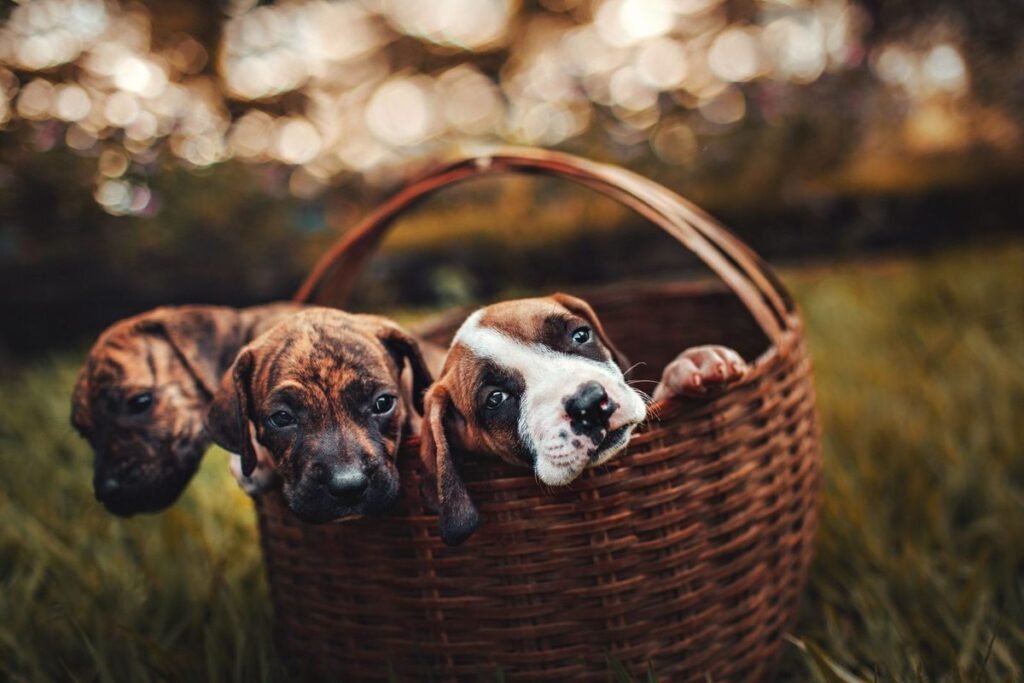
A whelping box is a low sided, enclosed pen where your dog gives birth and nurses her puppies for the first few weeks. The best ones give her room to stretch out fully with her puppies beside her, sides low enough for her to step in and out but high enough to keep newborn puppies inside, a flat floor that is easy to clean, and a safety rail around the inside edge that stops her accidentally lying on a puppy.
You can build one from plywood in an afternoon, adapt a plastic kiddie pool, or make a simple no tool version from a large cardboard box for one litter. Whichever route you choose, set it up by about day 55 of pregnancy, so your dog has a week or two to get used to it. Gestation is about 63 days from ovulation (62 to 64 days, Merck, Cornell and the AKC), or 58 to 72 days from a first mating (Merck and UC Davis).
When to set up the whelping box
A whelping box that appears on the day labour starts is a strange object in a strange place, and a dog in early labour is not in the mood to investigate it. Set the box up by about day 55 of pregnancy, roughly a week before the expected due date when the date is counted from ovulation. If you only know the mating date, the window is wider, 58 to 72 days from a first mating, so have the box ready from the early edge of that window. If you are unsure of your dog's dates, check them with the dog due date calculator.
Once the box is in place, let your dog explore it on her own terms. Leave the entry open, put a familiar blanket inside, and let her sniff it and lie down without any pressure. Many dogs start sleeping in the box within a day or two. What matters is that she chooses the box herself, because a dog that has chosen it is far more likely to stay in it when the puppies arrive.
What makes a good whelping box
A good whelping box does four jobs at once: it keeps the puppies contained, it gives the mother room to move, it protects the puppies from being accidentally crushed, and it is easy to clean. The floor should be flat, firm and waterproof under the bedding, so puppies can move toward their mother without getting stuck in dips or folds. Bedding should be soft, washable and flat, not a deep loose pile that can trap a small puppy underneath it.
The sides should be tall enough to contain crawling puppies but low enough for the mother to step over without jumping, with one side lower as an entry. The safety rail, often called a pig rail, is the feature that matters most and the one most often left out. It is a rail fixed a few inches above the floor and a few inches out from the walls, so that when the mother lies against the wall, a puppy behind her has space to breathe instead of being pressed against the side. The exact spacing depends on the size of your dog.
How big should a whelping box be
Size is the question most owners get wrong, and it is usually because they build too small. A whelping box needs room for your dog to lie stretched out on her side at full length, with space beside her for a row of nursing puppies, plus room to turn around without stepping on anyone. A box that only just fits her curled up will be cramped within a week, because the puppies grow fast.
As a general guide, the inside should be at least as long as your dog stretched out, plus a margin for the puppies, and at least as wide as her stretched out length. If you are choosing between two sizes, choose the larger one. A box that is too big is a minor inconvenience; a box that is too small is a safety problem. For a size matched to your own dog, use the whelping box size calculator on this site. The table below gives general guidance, but a calculator result based on your dog's actual measurements is more useful than a breed average.
| Dog size | Typical adult weight | Suggested inside length | Suggested inside width | Suggested wall height |
|---|---|---|---|---|
| Small (for example Chihuahua, Yorkshire Terrier) | Up to about 10 kg | About 75 to 90 cm | About 75 to 90 cm | About 30 cm, with a lower entry side |
| Medium (for example Beagle, Border Collie) | About 10 to 25 kg | About 90 to 120 cm | About 90 to 120 cm | About 35 to 40 cm, with a lower entry side |
| Large (for example Labrador, German Shepherd) | About 25 to 40 kg | About 120 to 150 cm | About 120 to 150 cm | About 40 to 45 cm, with a lower entry side |
| Giant (for example Great Dane, Mastiff) | Over about 40 kg | About 150 cm or more | About 150 cm or more | About 45 to 50 cm, with a lower entry side |
These are starting points, not rules. Measure your dog lying stretched out on her side and compare that with the table. If she is longer than the guide for her weight band, size the box to her length. Remember that the box will be in use for three to four weeks after the birth, by which time a large litter will be moving around and needing room to play.
Materials: what to use and what to avoid
Plywood is the usual choice for a box that will be used more than once. Use smooth plywood thick enough not to flex, with cut edges sanded so there are no splinters. Seal the inside with a dog safe, non toxic finish so fluids do not soak into the wood and surfaces can be wiped down. Avoid pressure treated timber and any finish not labelled safe once dry, and leave plenty of time for it to dry and air out.
A rigid plastic kiddie pool makes a good round whelping area with no corners for a puppy to get wedged into, and it is waterproof by design. Its weakness is the safety rail, which is harder to fit to a curved wall, and the low sides, which may not contain puppies as they grow. It works best for small to medium dogs and for a single litter. Line the bottom with a non slip mat so it does not slide on a hard floor.
Cardboard is a fair temporary option. A large, double walled box with a cut down entry side can serve for one litter if it stays dry and the dog does not chew it. It soaks up fluids, cannot be properly cleaned, and collapses when wet, so line it with a waterproof layer, change the bedding often, and keep a spare box ready. For bedding, use washable layers such as old towels, fleece blankets or vet bedding, so a soiled top layer can be lifted off. Avoid loose straw or shredded paper, which can tangle around a puppy, and bedding with loops or loose threads.
How to build a whelping box: a simple plywood plan
This is a straightforward build for a medium to large dog. Adjust the dimensions to your dog using the size calculator linked above. You need one sheet of plywood, a saw, screws, a drill, sandpaper, and a length of timber for the safety rail. The whole job usually takes an afternoon.
Cut the base to your chosen inside dimensions, plus the thickness of the walls, then cut four wall panels. Make three walls the full height and cut the fourth, the entry wall, lower by about a third so your dog can step in and out easily. Sand every cut edge smooth and round off the top corners. Screw the walls to the base from underneath, join the corners with screws or small brackets, and check that the box sits flat and does not rock.
Then fit the safety rail: fix smooth timber horizontally around the inside of the three full height walls, a few inches out from the wall and a few inches above the floor, and across the entry wall if there is room. Fix it firmly, since a loose rail is worse than no rail. Finally, seal the inside with a dog safe finish, leave it to dry and air out for at least a day, then add a non slip mat and washable bedding. Run your hand over every inside surface before you call it finished. If it catches your skin, it can catch a puppy.
No tool and budget alternatives
Not everyone has a saw and a drill, and a whelping box does not have to be a woodwork project. A large plastic storage container with one side cut down can work for a small breed, a rigid kiddie pool with a folded blanket rail tucked around the inside edge can work as a low cost version, and a puppy playpen with a waterproof base and a low entry panel folds away afterwards.
The cheapest reliable option is a large cardboard box with a waterproof liner and layered bedding, replaced as needed. A second hand or borrowed wooden box is also worth considering, provided you clean it thoroughly and check for loose fixings and splinters. Whatever you spend, spend it on bedding rather than decoration. Several sets of washable bedding and a spare box for cleaning days will do more for the puppies than an expensive shell.
Where to place the whelping box
Place the box in a quiet, warm, draft free room where your dog already feels comfortable, and where you can reach it easily day and night. A spare bedroom, a quiet corner of a living room, or a utility room with a door you can close all work well. Avoid busy hallways and anywhere with a cold draft from a door or window.
The room should be warm but not hot. Newborn puppies cannot regulate their own temperature well in the first days, so the room needs to stay comfortably warm and free of drafts, while the mother needs to be able to move away from the heat if she gets too warm. Do not place the box hard against a radiator or under a heat lamp with no cooler area nearby. Keep the area tidy, with a small table beside the box for supplies, a chair for yourself, and good lighting. Keep other pets out of the room from a few days before the due date until the puppies are a few weeks old.
Introducing your dog to the box
Let your dog choose the box, and she will use it. Put the box in its final place, add a blanket that smells of her and of the house, and leave the entry open. Encourage her to investigate with a treat placed just inside the entrance, then another a little further in, but do not lure her in and then shut her in. She needs to learn that the box is a safe place she can leave whenever she wants.
Feed her near the box for a few days, then move her meals closer, then inside the box if she is happy with that. Many dogs start napping in the box within a few days. If your dog prefers another spot, try moving the box there rather than arguing with her. If she still will not use it as the due date approaches, do not panic. Some dogs ignore the box until labour starts and then go straight to it, and some give birth in their favourite spot and move into the box with the puppies afterwards. If she gives birth elsewhere, move the puppies gently into the warmed box and she will usually follow them.
Keeping the box clean between litters
In the first days after birth, change the top layer of bedding daily, or more often if it is soiled, and wash soiled bedding promptly. Wipe the walls and floor with warm water and a dog safe cleaner, and let surfaces dry fully before putting fresh bedding down. A damp box chills puppies, so dry matters as much as clean.
Between litters, empty the box completely, wash every surface, and leave it to dry in the sun or a well ventilated room. Check the safety rail fixings, tighten loose screws, sand rough patches, and reseal bare wood that has become stained or rough. Store the box somewhere dry, without damp bedding inside. A box cleaned and checked between litters will last for years.
Pinterest friendly ideas for a tidy setup
A whelping box can be practical and still look tidy in photographs, which is why whelping box ideas are so popular on Pinterest. A clean plywood box in a soft neutral colour, with neatly folded washable bedding in a plain cream or sage, photographs far better than a cluttered corner, and it is also easier to keep clean. Choose bedding in one or two calm colours, keep spare bedding folded on a nearby shelf, and keep the supply table organised. Avoid patterned bedding that hides stains and dark colours that make it hard to see whether a puppy is clean and warm. The tidy look and the safe look are the same thing: clear surfaces, flat bedding, nothing loose, and everything within reach.
Plan ahead: use the whelping calculator to work out your dog's expected whelping date, then set the box up by about day 55 so she has time to settle in before the puppies arrive.
A note on labour and when to call the vet
A whelping box is preparation, not a substitute for veterinary care. Know the signs that mean you should call your vet before labour starts. In stage 1, contractions begin and the cervix opens but there is no visible pushing; it usually lasts 6 to 12 hours, commonly up to 24 hours, and occasionally up to 36 hours in a first time mother. In stage 2 each puppy is typically born within 10 to 60 minutes of visible straining, and up to 2 hours between puppies is normal.
Call your vet if your dog strains strongly for 20 to 30 minutes with no puppy, if more than 2 hours pass between puppies, if there is green discharge before the first puppy is born, if her temperature dropped more than 24 hours ago with no labour, if her temperature goes over 103F, or if bleeding continues for more than 10 minutes. If more than 4 hours pass between puppies and you know more puppies are still inside, treat that as an emergency. Also call the vet if there are no signs of whelping by 64 days after the last mating (AKC). Do not wait until day 72 from the first mating, which is the top of the mating counted range rather than a safe deadline. A drop in rectal temperature to below 100F (37.8C), often to 99F or lower, usually happens 8 to 24 hours before labour, but it lasts only about 8 hours, so it can easily be missed. A normal temperature is 100 to 102.5F.
Disclaimer
The due date calculator on this site gives an estimate only. It cannot confirm pregnancy and it does not replace veterinary advice. This article is general information only. If you are worried about your dog at any point in pregnancy or labour, call your veterinarian.
Related guides
Frequently asked questions
How early should I set up a whelping box?
Set it up by about day 55 of pregnancy, so your dog has a week or two to get used to it before her due date. Gestation is about 63 days from ovulation, or 58 to 72 days from a first mating, so day 55 is close to the end but still leaves time for her to settle in. If you only know the mating date, set the box up from the early edge of that wider window.
What size should a whelping box be?
It should be big enough for your dog to lie stretched out on her side at full length, with room beside her for the puppies to nurse and room for her to turn around without stepping on them. As a general guide, the inside should be at least as long and as wide as her stretched out length, plus a margin for the litter. Use the whelping box size calculator for dimensions matched to your own dog.
Do I really need a pig rail in a whelping box?
Yes, a safety rail is one of the most important features of a whelping box. It is a rail fixed a few inches above the floor and a few inches out from the walls, and it creates a gap that stops the mother accidentally pressing a puppy against the wall when she lies down. A box without a safety rail is a weaker box, and this is the feature most often left out of simple plans.
Can I use a kiddie pool as a whelping box?
Yes, a rigid plastic kiddie pool can work well, especially for small to medium dogs and for a single litter. It is waterproof, has no corners for a puppy to get wedged into, and is easy to clean. Its weakness is that a safety rail is harder to fit to a curved wall, and the low sides may not contain puppies as they grow, so it is best as a simple or budget option rather than a long term box.
Is a cardboard whelping box safe?
A large, double walled cardboard box can work as a temporary box for one litter, provided it stays dry and the dog does not chew it. It cannot be properly cleaned, it soaks up fluids, and it collapses if it gets wet, so line it with a waterproof layer, change the bedding often, and have a spare box ready. For repeated use, plywood or rigid plastic is a better choice.
What if my dog refuses to use the whelping box?
Let her choose rather than forcing her. Move the box to the spot she prefers, add a familiar blanket, and feed her near it so she associates it with comfort. Some dogs ignore the box until labour starts and then go straight to it, and some give birth in their favourite spot and move into the box with the puppies afterwards. If she gives birth elsewhere, move the puppies gently into the warmed box and she will usually follow them.
Sources
- American Kennel Club, Dog Pregnancy: Signs, Care, and Preparing for Puppies: https://www.akc.org/expert-advice/health/dog-pregnancy-care-prep/
- Merck Veterinary Manual, Management of Reproduction in Dogs: https://www.merckvetmanual.com/dog-owners/reproductive-disorders-of-dogs/management-of-reproduction-in-dogs?query=reproductive
- Cornell University College of Veterinary Medicine, Riney Canine Health Center, The Normal Whelping Process: https://www.vet.cornell.edu/departments-centers-and-institutes/riney-canine-health-center/canine-health-topics/normal-whelping-process
- UC Davis School of Veterinary Medicine, Normal Whelping in the Bitch: https://healthtopics.sf.ucdavis.edu/sites/g/files/dgvnsk6721/files/inline-files/cenormalwhelp.pdf
- VCA Animal Hospitals, Breeding for Dog Owners: Problems at Birth: https://vcahospitals.com/know-your-pet/breeding-for-dog-owners-problems-at-birth
Keep reading
How Long Do Dogs Bleed After Giving Birth?
Dogs bleed after giving birth for usually about three weeks, though it may last up to eight weeks, and the discharge, called…
Caring for a Mother Dog After Giving Birth
Caring for a mother dog after giving birth means three things: feeding her well, checking her every day for the first two…
Signs a Dog Is Done Giving Birth: How to Tell
A dog is likely done giving birth when she settles and rests calmly, nurses her puppies without straining, has had no contractions…