Rottweiler Pregnancy: How Long, How Many Puppies, and the Whelping Plan
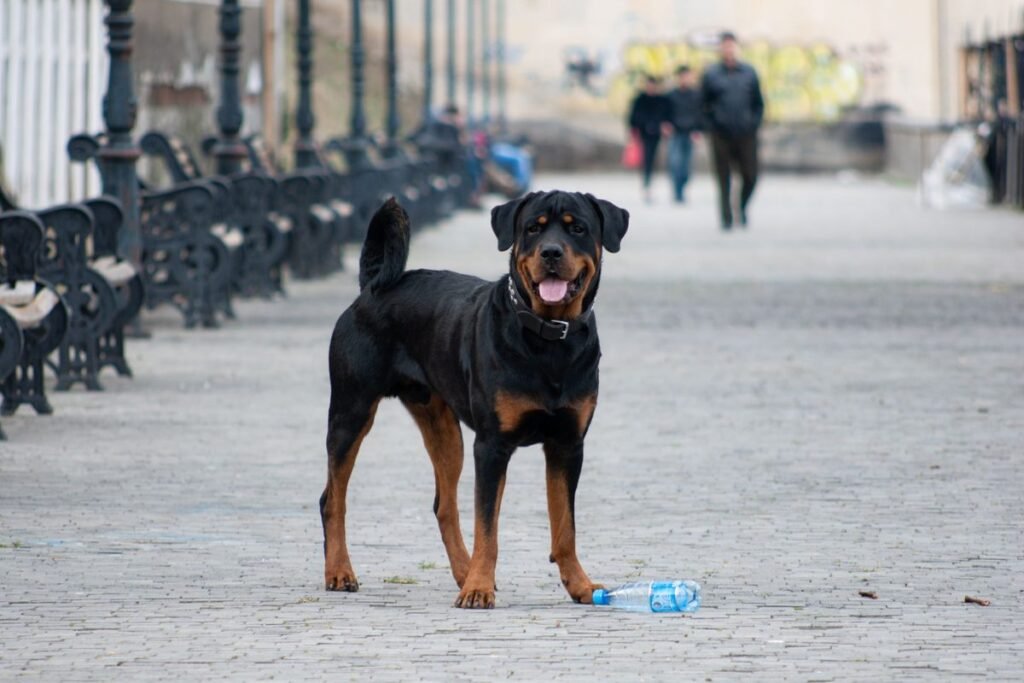
A Rottweiler is pregnant for about 63 days from ovulation, or 58 to 72 days from a first mating. Her breed makes no difference to the length of the pregnancy: the 63-day figure from ovulation applies to Rottweilers exactly as it applies to every other breed. What is particular to the Rottweiler is the litter. Expect 6 to 8 puppies on average, in a normal range of about 4 to 12, with first litters usually smaller. This page gives the due-date maths, the litter-size evidence, and the whelping preparation that fits a strong, heavy dam.
A Rottweiler pregnancy, counted from the anchor that fits
How long a pregnancy lasts depends on the starting point you count from, not on the breed. Ovulation is the anchor that gives the tightest date: 62 to 64 days, averaging about 63 (Merck; AKC; Cornell). A mating date is a looser anchor, because sperm can survive in the bitch for several days (AKC: 3 to 7 days for healthy sperm) and the egg still needs 2 to 3 days after ovulation to mature before fertilisation (Cornell). That is why the mating-counted range is so wide.
A Rottweiler's litter of 6 to 8 makes the choice of anchor a practical one: the vet needs to know which end of the window the dam is in. The tight counts are 62 to 64 days from ovulation, about 63, and 64 to 66 days from the LH surge or first progesterone rise; the first day of diestrus gives 56 to 58 days, and a first mating gives the widest span, 58 to 72 days (Merck, AKC, Cornell, UC Davis). The hub article on how long dogs are pregnant compares the four anchors in detail, including Cornell's version of the mating count as 63 days plus or minus 7.
If the breeding was timed with progesterone blood tests and the ovulation day is known, Cornell gives the due date as 63 days plus or minus 1 to 2 days. That is the figure to plan around. A mating date alone can only give a window, and for a Rottweiler with a litter of 6 to 8 puppies, knowing which end of the window you are in matters: the last puppies in a large litter are born to a tired dam, and the vet needs to know the dates before labour starts, not after it stalls.
Worked example: a Rottweiler due date
Suppose a Rottweiler is mated on Saturday 14 March 2026. Counting from that mating date:
| Date | |
|---|---|
| Mating | Saturday 14 March 2026 |
| Earliest expected whelping (mating + 58 days) | Monday 11 May 2026 |
| Central due date (mating + 63 days) | Saturday 16 May 2026 |
| Latest expected whelping (mating + 72 days) | Monday 25 May 2026 |
The calculator on the homepage returns the same window from those same dates. If progesterone testing identified the ovulation day, use that date instead: 63 days from ovulation is a far narrower target. The calculator's answer is an estimate. It does not confirm that the bitch is pregnant, and it is not a substitute for veterinary care.
How many puppies do Rottweilers have?
Rottweilers have large litters by dog standards. The average is 6 to 8 puppies, and the normal range runs from about 4 to 12. The best evidence for that average comes from a 2011 Theriogenology study of more than 10,000 litters across 224 breeds (Borge et al.), which put the mean for the large-breed class at about 6.9 puppies. Breed guides commonly describe litters of 6 to 12. First litters are often smaller, sometimes as few as 1 to 4 puppies, and later litters tend to be larger.
A Rottweiler puppy weighs about 1 lb at birth (breed guides, secondary), so a litter of 8 means roughly 8 lb of puppies, plus placentas and fluids, carried by the dam in the last weeks. That weight is the reason feeding and condition matter: she needs enough reserves to whelp for hours and then to nurse a large litter, but excess weight of her own makes labour harder. Keep her at a healthy condition through pregnancy, with the amount of food guided by her body shape and the vet's advice rather than by a fixed rule.
Confirm the count before the due date. Skeletons first appear on X-ray at about day 43 to 45, and the best count comes from an X-ray taken after day 55 (Merck; AKC; VCA). An ultrasound can confirm pregnancy from 25 to 35 days, most reliably after day 28, though it cannot give a reliable puppy count. The count matters because the vet-call thresholds depend on it: if you know 8 puppies are expected and only 5 have arrived, a long pause means something different than if the litter was 5 all along. Once you know the count, the litter-size calculator converts it into a space and workload plan.
What is different about a Rottweiler pregnancy?
The honest answer starts with what is not known. No breed-specific dystocia or caesarean rate for Rottweilers was found in an authoritative source during the research for this page, and none is given here. That matters, because many breed pages online quote a percentage for every breed whether or not one exists. A Rottweiler is a large, strongly built dog with a broad head, and large litters are the norm, so the whelping risks are the general large-breed ones rather than a breed-specific figure: a long second stage, a tiring dam, and the possibility that a puppy is slow to arrive late in the litter.
The practical preparation follows from the dam's size and strength. Females run 80 to 100 lb and 22 to 25 inches at the withers. The whelping box needs to be large enough for her to lie fully stretched out on her side, with pig rails fitted so the puppies have a safe gap when she shifts her weight. Set the box up at least a week before the due date, in a quiet, warm, draught-free spot she already likes, so she chooses it herself rather than being shut into it at the last minute.
Exercise through pregnancy should stay regular and gentle: daily walks at her normal pace, easing off in the final two weeks as the weight of the litter slows her down. Avoid rough play, jumping, and stairs taken at speed in late pregnancy. Feeding follows the usual pattern: her normal adult food for the first two-thirds, then a gradual move to a more energy-dense food in the last third, with the amount set by her condition and the vet's judgement. Do not add calcium or other supplements unless the vet says to.
One more Rottweiler-specific point: she is a protective breed, and a dam with newborn puppies is more protective still. Keep visitors away in the first days, let her settle with the litter, and handle the puppies calmly and briefly. A stressed dam is more likely to lie awkwardly or to move the puppies, and a litter of 8 needs her calm more than it needs company.
Rottweiler pregnancy week by week in brief
A Rottweiler's large litter makes itself known from about week 6, and the last fortnight is about a tired dam and a ready box. Fertilisation and early embryo travel take up weeks 1 to 2 with no visible signs, implantation comes at about 15 to 18 days after ovulation, and palpation is possible from about day 21, most reliable at 28 to 35 days, with ultrasound reliable from 25 to 35 days and most reliable after day 28. Appetite and weight rise in week 5 as a relaxin blood test turns positive from about 22 to 27 days after breeding, the belly clearly enlarges in week 6 as a large litter starts to show, and week 7 brings the first X-ray skeletons at about day 43 to 45, when the whelping box should be ready. The best X-ray count follows after day 55 in week 8, with twice-daily temperature checks, and week 9 brings nesting and a temperature drop below 100°F, often to 99°F or lower, usually 8 to 24 hours before labour. The full stages are covered in dog pregnancy week by week.
When to call the vet
Phone the vet without delay if any of the following happens. The first three are the ones most likely to matter with a large Rottweiler litter.
- She strains hard for 20 to 30 minutes and no puppy appears (VCA).
- Over 2 hours since the last puppy, or over 4 hours when more puppies are known to be inside.
- The dam is clearly tiring late in a large litter, with contractions weakening rather than strengthening.
- Green discharge before the first puppy. After the first puppy, green discharge is expected and normal.
- More than 24 hours since the temperature drop, with no labour following.
- Nothing happening by 64 days after the last mating (AKC), or 1 to 2 days past an ovulation-timed due date (Cornell). Day 72 from a first mating is not the moment to start worrying; it is far too late.
- Fever over 103°F while in labour, fresh bleeding for more than 10 minutes, trembling, collapsing, or the dam going listless or unresponsive.
Before the due date, stick the vet's number and the nearest emergency clinic's number on the wall by the whelping box, and check there is a vehicle she can lie in if labour means a trip to the clinic.
The due date tool gives an estimate from the dates entered. It cannot confirm a pregnancy, and it cannot stand in for veterinary care. When in doubt about the bitch or the labour, the vet's phone number matters more than any date on a screen.
Frequently asked questions
What is the gestation period of a Rottweiler?
Sixty-three days from ovulation is the figure to use (62 to 64 days), or 58 to 72 days from a first mating. Her breed does not alter the length. If the ovulation date was timed with progesterone, expect whelping at 63 days plus or minus 1 to 2 days.
How many puppies do Rottweilers usually have?
An average of 6 to 8, in a normal range of about 4 to 12. First litters are often smaller, sometimes 1 to 4 puppies. A 2011 study of more than 10,000 litters put the large-breed mean at about 6.9. Confirm the count by X-ray after day 55.
Do Rottweilers often need a C-section?
There is no verified breed-specific caesarean rate for Rottweilers, and this page does not invent one. The risks are the general large-breed ones: a long labour with a large litter, and a dam tiring before the last puppies arrive. Give the vet the breeding dates and the X-ray count before the due date, so help is planned and not improvised.
How big should the whelping box be for a Rottweiler?
Big enough for a 80 to 100 lb dam to lie fully stretched out on her side, with pig rails so the puppies have a safe gap when she moves. Set the box up at least a week before the due date in a quiet, warm spot she already likes.
Can a Rottweiler get pregnant on her first heat?
A Rottweiler can get pregnant on her first heat, but breeding that early is not advised: she is still growing into a heavy frame, and a pregnancy at that age carries higher risks for dam and puppies. Speak to the vet and the breed club before planning any breeding.
How can you tell if a Rottweiler is pregnant?
The signs at home are usually a stronger appetite, weight going up, nipples growing larger, a belly that swells, and nesting. None of that confirms a pregnancy, and a false pregnancy brings the same signs. Confirmation belongs to the vet: palpation from about day 21 (most reliable at 28 to 35 days), a relaxin blood test from about 22 to 27 days after breeding, or ultrasound from 25 to 35 days.
Keep reading

Maltese Pregnancy: Gestation, Litter Size, and the Singleton Risk in a Tiny Dam
A Maltese is pregnant for about 63 days from ovulation, or 58 to 72 days from a first mating. Her breed does…

Cavalier Pregnancy: How Long, Litter Size, and the Small-Litter Watch-Outs
A Cavalier King Charles Spaniel is pregnant for about 63 days from ovulation, or 58 to 72 days from a first mating.…

Boston Terrier Pregnancy: Gestation, Litter Size, and Planning for a Caesarean
A Boston Terrier is pregnant for about 63 days from ovulation, or 58 to 72 days from a first mating. That length…