Corgi Pregnancy: How Long, Litter Size, and the Delivery Risks of a Long, Low Breed
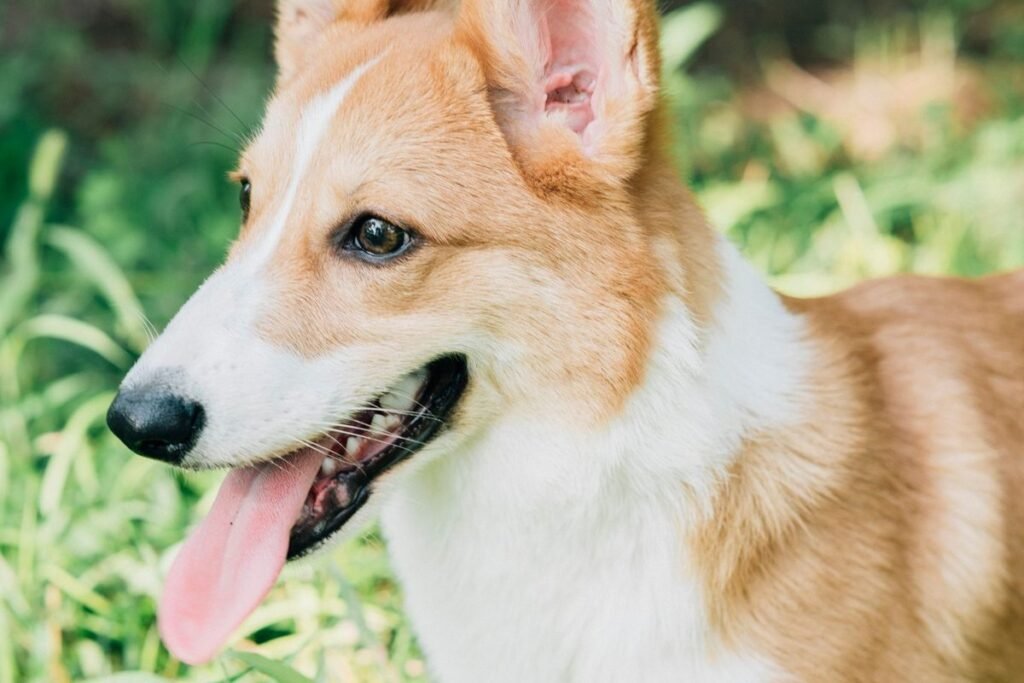
A Corgi is pregnant for about 63 days from ovulation, or 58 to 72 days from a first mating. The breed does not change the gestation length: a Corgi carries her puppies for the same time as any other dog. What the breed does change is the delivery. Corgis usually have 5 to 8 puppies, about 6 most often, and they have one of the higher caesarean rates among common breeds, at about 25% of litters according to secondary breed data. This page covers the due date, the litter size, and why the vet should be involved early in a Corgi pregnancy.
Which Corgi does this page cover?
Most searches for "corgi pregnancy" mean the Pembroke Welsh Corgi, and this page is about the Pembroke. The Cardigan Welsh Corgi is a separate breed, slightly larger and heavier, with its own standard. The AKC standard puts the Pembroke at 10 to 12 inches tall and up to 30 lb for males and 28 lb for females; the Cardigan is 10.5 to 12.5 inches, with males at 30 to 38 lb and females at 25 to 34 lb. The gestation length is the same for both, and the delivery risks described below apply in general to both, but the litter figures and the size figures here are the Pembroke's. If your dog is a Cardigan, check the size figures against her own measurements and ask the vet about the litter-size expectation for her.
What sets the length of a Corgi pregnancy
As with every breed, the answer depends on which starting point you count from. The 63-day figure is counted from ovulation. A mating date gives a wider range, because the two events are days apart: sperm can wait in the bitch for several days (AKC: 3 to 7 days for healthy sperm), and the egg still needs 2 to 3 days after ovulation to mature before fertilisation (Cornell).
The Corgi's dates work like any dog's, and the anchor is what decides how wide the window is. A mating date alone leaves 58 to 72 days to watch; the first day of diestrus narrows that to 56 to 58 days; ovulation gives 62 to 64 days, about 63; and the LH surge with its first progesterone rise gives 64 to 66 days (Merck, AKC, Cornell, UC Davis). Read the four anchors compared in full in the hub article on how long dogs are pregnant before deciding which date to give the vet.
Cornell puts the same mating-counted figure at 63 days plus or minus 7. Progesterone testing can identify the ovulation day, narrowing the due date to 63 days plus or minus 1 to 2 days (Cornell). That precision is worth having for a Corgi, because a planned caesarean is a real possibility for this breed, and a planned section is scheduled from the ovulation date. A mating date alone cannot schedule one safely.
Worked example: a Corgi due date
Suppose a Pembroke Welsh Corgi is mated on Sunday 22 March 2026. Counting from that mating date:
| Date | |
|---|---|
| Mating | Sunday 22 March 2026 |
| Earliest expected whelping (mating + 58 days) | Tuesday 19 May 2026 |
| Central due date (mating + 63 days) | Sunday 24 May 2026 |
| Latest expected whelping (mating + 72 days) | Tuesday 2 June 2026 |
Enter that mating date in the dog due date calculator and the window it returns matches the one above. If progesterone testing identified the ovulation day, enter that instead: the target narrows sharply. What the calculator gives you is an estimate, not a diagnosis, and no substitute for veterinary care.
How many puppies do Corgis have?
A Pembroke Welsh Corgi usually has 5 to 8 puppies, with about 6 most common. Breed data puts the average at 6, in a range of 1 to 9 (BreedTracker, secondary), and the dogpregnancycalculator.com breed page gives the same 5 to 8 range with about 6 typical. First-time dams often have fewer, commonly 3 to 5 puppies.
That matters in this breed for a reason that runs against intuition: a small litter can be harder to deliver than a medium one. Fewer puppies mean weaker hormonal signals to start labour and less pressure on the cervix, and in a breed already prone to weak contractions, a litter of 2 or 3 deserves as much veterinary attention as a litter of 8. Newborn Corgi puppies are often small, around 6 to 12 oz at birth, which helps, but their heads are relatively large compared with the dam's pelvic opening, and that is one of the reasons the caesarean rate is high.
Confirm the count with an X-ray. Skeletons first show on X-ray at about day 43 to 45, and the count is most accurate from an X-ray taken after day 55 (Merck; AKC; VCA). For a Corgi, an X-ray near day 45 to 50 is worth discussing with the vet as well, because knowing whether the litter is small, average, or large changes the delivery plan. Ultrasound confirms pregnancy from 25 to 35 days and is most reliable after day 28, but it will not count the puppies reliably. With the count in hand, the litter-size calculator turns it into a plan for space and workload.
What is different about a Corgi pregnancy?
The Corgi's shape is the story. She is long and low, with short legs and a relatively large head on her puppies compared with the size of her pelvic opening. Three things follow from that, and they are the reasons this breed's delivery needs more planning than most.
First, the reported caesarean rate is about 25% of litters (BreedTracker, secondary; the same figure places the breed among the highest for caesareans in AKC breeds). That is a breed-data figure, not a veterinary statistic: read it as 'plan for the possibility', not 'expect a section'. Second, Corgis are prone to primary uterine inertia: contractions that are weak from the start, or that fade before the litter is delivered. Breeders report that the tendency runs in some lines, and research lists genetic inheritance as one postulated predisposing factor among several, with the cause still not settled, so treat a family history of weak labour as a reason to ask the vet about it, not as a prediction. Third, breeders also point to the bobtail carried by many Pembrokes as a possible contributor to delivery problems, which is another reason to discuss the breeding with the vet before the mating rather than after the due date.
None of this changes the pregnancy itself. The gestation length, the signs, the diagnosis timing, and the feeding pattern are the same as for any dog. What changes is the plan around the delivery: the vet should know the breeding dates and the ovulation date if one was timed, the X-ray count should be done, and there should be an agreed plan for what happens if contractions are weak or a puppy is slow to arrive. A planned caesarean, arranged calmly from timed dates, is a very different experience from an emergency section at 2 a.m.
Day to day, keep her active with regular gentle walks, easing off in the last two weeks as she gets heavy. Her long back means she should not be jumping on and off furniture or climbing stairs at speed in late pregnancy; a ramp or a lift is worth arranging. Feed her normal adult food for the first two-thirds of pregnancy, then move gradually to a more energy-dense food in the last third, with the amount guided by her condition and the vet's advice. Leave supplements out unless the vet recommends them. The whelping box should be low-sided so she can step in and out without jumping, with pig rails so the puppies have a safe gap when she lies down, and set up well before the due date so she is used to it.
Corgi pregnancy week by week in brief
In a Corgi the weeks show up along a long, low body, and the belly starts to tell the story from about week 6. Weeks 1 to 2 bring fertilisation and early embryo travel with no visible signs, week 3 brings implantation at about 15 to 18 days after ovulation with a vet able to feel the pregnancy from about day 21, and week 4 is when palpation is most reliable at 28 to 35 days and ultrasound is reliable from 25 to 35 days, most reliable after day 28. Week 5 sees appetite and weight rising and a relaxin blood test positive from about 22 to 27 days after breeding, week 7 is for the first X-ray skeletons at about day 43 to 45 and a talk with the vet about the count and the delivery plan, and week 8 gives the best X-ray count after day 55 with twice-daily temperature checks starting. Week 9 closes with nesting and a temperature drop below 100°F, often to 99°F or lower, usually 8 to 24 hours before labour. The stages in full are in dog pregnancy week by week.
When to call the vet
Call the vet straight away if any of the following happens. For a Corgi, the first two are the ones to watch hardest, because weak contractions are this breed's particular risk.
- Weak, infrequent, or fading contractions, or a first stage that drags on without progress. Stage 1 usually lasts 6 to 12 hours, commonly up to 24 hours, and occasionally up to 36 hours in a first-time mother, but a Corgi whose contractions are weakening rather than strengthening should be seen sooner.
- Strong contractions for 20 to 30 minutes with no puppy delivered (VCA).
- More than 2 hours have passed since the last puppy, or more than 4 hours with puppies still to come.
- Any green discharge before the first puppy arrives. Green discharge after the first puppy is normal.
- The temperature fell more than a day ago and there are still no signs of labour.
- No signs of whelping 64 days after the last mating (AKC), or 1 to 2 days past the ovulation-timed due date (Cornell). Do not let the calendar run to day 72 from a first mating before calling.
- A fever above 103°F during labour, fresh bleeding lasting over 10 minutes, trembling, collapse, or the dam becoming listless or unresponsive.
Have the vet's number and the emergency clinic's number within reach of the whelping box before the due date.
Treat the calculator result as a rough guide. It turns your dates into a window; it does not diagnose pregnancy and it does not replace the vet. Anything that worries you about the pregnancy or the whelping is a reason to call the vet, not to re-check the calculator.
Frequently asked questions
How many days does a Corgi pregnancy last?
Around 63 days from ovulation (62 to 64 days), or 58 to 72 days from a first mating. That length is the same for this breed as for any other. With the ovulation date timed by progesterone, whelping is expected at 63 days plus or minus 1 to 2 days.
How many puppies do Corgis usually have?
Usually 5 to 8, with about 6 most common. First-time dams often have 3 to 5. Have the count confirmed with an X-ray after day 55, which is the most accurate way to count puppies.
Do Corgis need a C-section?
Often enough that it should be planned for. The reported caesarean rate is about 25% of litters (BreedTracker, secondary), driven by relatively large puppy heads, the dam's pelvic size, and a tendency to weak contractions. Discuss the delivery plan, the X-ray count, and the ovulation date with the vet well before the due date.
Is a Pembroke Welsh Corgi pregnancy different from a Cardigan's?
The gestation length is the same, and the delivery risks are similar, but they are separate breeds with different standards: the Pembroke is 10 to 12 inches tall and up to 30 lb for males and 28 lb for females, while the Cardigan is slightly taller and heavier. This page covers the Pembroke, the breed most searches mean by "corgi".
Why are small Corgi litters a concern?
Because fewer puppies mean weaker signals to start labour and less pressure on the cervix, and Corgis are already prone to weak contractions. A litter of 2 or 3 can stall more easily than a litter of 6, so a small count on the X-ray is a reason for closer veterinary monitoring, not reassurance.
How can you tell if a Corgi is pregnant?
Look for eating more than usual, steady weight gain, nipples that enlarge, a belly that swells, and nesting. Those signs suggest a pregnancy but never prove one, and a false pregnancy copies them exactly. A vet's check settles it: palpation from about day 21 (most reliable at 28 to 35 days), a relaxin blood test from about 22 to 27 days after breeding, or ultrasound from 25 to 35 days.
Keep reading

Maltese Pregnancy: Gestation, Litter Size, and the Singleton Risk in a Tiny Dam
A Maltese is pregnant for about 63 days from ovulation, or 58 to 72 days from a first mating. Her breed does…

Cavalier Pregnancy: How Long, Litter Size, and the Small-Litter Watch-Outs
A Cavalier King Charles Spaniel is pregnant for about 63 days from ovulation, or 58 to 72 days from a first mating.…

Boston Terrier Pregnancy: Gestation, Litter Size, and Planning for a Caesarean
A Boston Terrier is pregnant for about 63 days from ovulation, or 58 to 72 days from a first mating. That length…