Pregnant Dog Not Eating
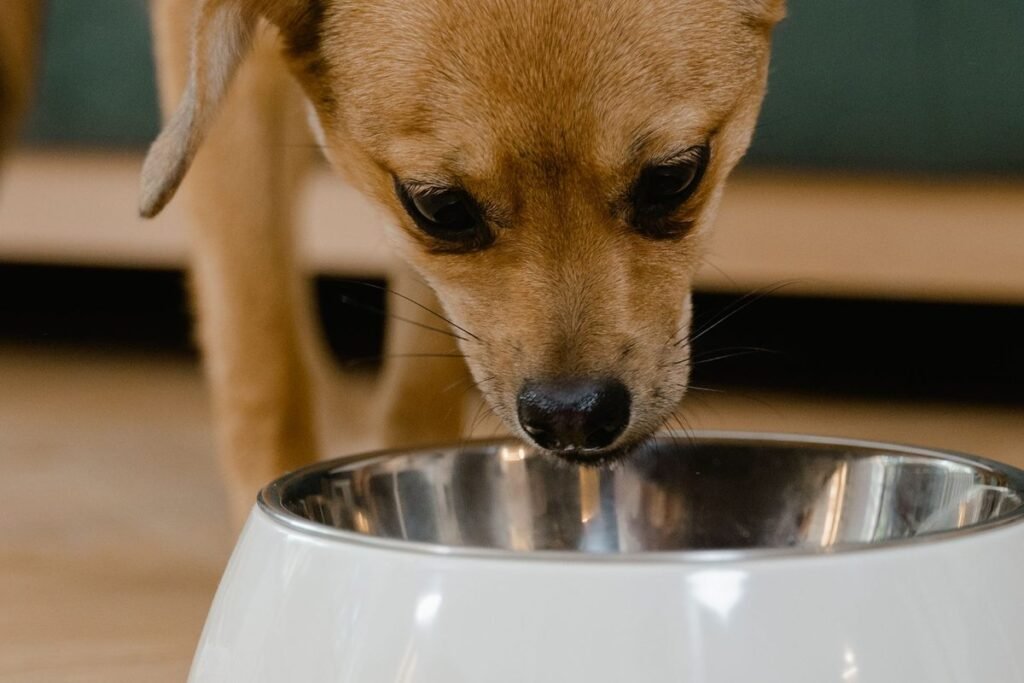
A pregnant dog who is not eating is usually fine — but it depends on when it happens. A dog who eats less for a few days in early pregnancy is usually just feeling queasy from hormone changes. A dog who cannot eat large meals in late pregnancy usually has a belly full of puppies pressing on her stomach. A dog who stops eating in the last few days is often nearing labour. Each pattern has a different meaning, and each has a different response.
That is the short answer. The rest of this article explains each pattern, what to try, and when a loss of appetite means you should call the vet straight away.
The three times a pregnant dog stops eating
There are three times in pregnancy when a dog is likely to eat less. They are easy to tell apart, once you know the stage of pregnancy she is in.
| When | Why she eats less | What is normal |
|---|---|---|
| Weeks 1–3 | Hormone changes | Normal for a few days; like morning sickness |
| Weeks 7–9 | Growing puppies press on her stomach | She cannot eat large meals; needs smaller, more frequent ones |
| Last few days | Labour approaching | Often a sign that whelping is near |
Early pregnancy: a few days of eating less
Some dogs eat less for a few days in the first weeks of pregnancy, and a few vomit. This is usually normal, and it is comparable to morning sickness in people. PetMD and the AKC both describe a dog eating less for a few days in early pregnancy as normal. The cause is thought to be hormone changes, which can make a dog feel queasy. It usually passes in a few days, and it does not mean the pregnancy has failed.
If she is still drinking and is otherwise herself, an appetite dip of a few days is not a reason to worry. Offer her food little and often, and do not fuss over her. If she refuses food for more than a day, or if she will not drink, call the vet.
Late pregnancy: she cannot eat large meals
As pregnancy progresses, the puppies grow and take up more room, so the stomach has less space. This is why many dogs eat less in late pregnancy even though they still need more energy than usual. A dog who cannot eat large meals is not being stubborn; she is physically limited in how much she can fit in at once, and the solution is to split her food into smaller, more frequent meals.
The right response in late pregnancy is three to four small meals a day, rather than two large ones. Offer her usual food, warmed slightly, with a little water or low-sodium broth added if that tempts her. Let her eat what she wants at each small meal, and weigh her every week so you can see whether she is holding her weight. If she is losing weight while eating less, call the vet.
The last few days: labour is near
A dog who stops eating in the last few days of pregnancy is often nearing labour. The AKC says pregnant mothers may stop eating a few days before whelping, and restlessness and nesting often appear at the same time. If she has stopped eating and is also restless, panting, or rearranging her bedding, labour is likely close.
At this stage there is little to do except wait and watch. Keep her quiet, comfortable, and warm. Let her nest if she wants to, and let her sleep. Offer her small amounts of food and water, and do not force her to eat. If she is comfortable and still drinking, there is no need to rush to the vet.
If she has stopped eating and her behaviour is unusual — she is lethargic, she is in pain, she has discharge, or she is vomiting — call the vet. A sudden stop in eating in the last days is usually a sign of labour, but it can also be a sign of a problem, and only an examination can tell the difference.
What to try when she will not eat
These steps work for most dogs, and they cover both the early-pregnancy appetite dip and the late-pregnancy problem of a full belly.
- Offer a small, fresh serving of her familiar food. CanineCalc's advice is to offer the same food she is used to, in small amounts, at regular times. Do not offer a large bowl; a small serving is less off-putting than a full one, and you can always offer more if she eats it. If she will eat a little, that is better than nothing.
- Offer the food little and often. Instead of two meals, give her three or four small meals a day, and no extra food between meals. If she does not finish a meal, pick it up after 15 to 20 minutes and offer it again at the next meal time, rather than leaving it out all day.
- Warm the food slightly and add water or broth. Warming the food releases its smell, and a little water or low-sodium broth makes it easier to eat. Do not use gravy with added salt, onion, or garlic, and do not add seasoning.
- Do not change the food. This is the most important rule. Do not keep changing food brand every time she refuses it, because that teaches her to wait for something better and makes the pattern worse. Keep the same food, and change the way you offer it instead.
- Encourage her to drink. Offer fresh water regularly, and try adding a little low-sodium broth to the water if she is not drinking enough. A dog who will not eat or drink for more than a day needs a vet.
- Watch for other symptoms. Vomiting, diarrhoea, lethargy, pain, or discharge are all reasons to call the vet, even if she is still eating a little.
When to call the vet
| Sign | Action |
|---|---|
| Has not eaten for more than a day | Call the vet |
| Has not drunk for more than a day | Call the vet urgently |
| Vomiting repeatedly or cannot keep water down | Call the vet urgently |
| Diarrhoea with blood, or very lethargic | Call the vet urgently |
| Discharge, pain, or fever | Call the vet |
| Labour signs with no puppies after a day of nesting | Call the vet |
| Puppies due but no labour | Call the vet |
| She is distressed or in pain | Call the vet urgently |
The "more than a day" rule is the one to remember. A dog who has not eaten for more than a day, or who will not drink for more than a day, needs a vet. A dog who has had no water for more than a day is at risk of dehydration, and a pregnant dog needs water to keep her blood volume up and to help the puppies grow.
What not to do
- Do not change the food. If she won't eat the food she is used to, changing it is unlikely to help. A change of food can upset her stomach, and it can also make it harder for the vet to work out what the problem is.
- Do not give her human food to tempt her. Table food can be high in fat and salt, and it can cause an upset stomach. Salty food can make her thirsty, and if she has a medical problem, extra food can make it harder to treat.
- Do not force-feed her. Forcing food into her mouth can cause choking or aspiration, and it can make her more stressed. If she will not eat, the problem is not the delivery method.
- Do not wait and see if she is vomiting or lethargic. If she is vomiting, diarrhoea, lethargic, or in pain, call the vet.
Appetite after birth
A pregnant dog who has been eating well will usually return to her normal appetite after giving birth. It may take a day or two, and she may be tired and sore. Keep her food and water close to the whelping box, and give her small, frequent meals. She will need a lot of energy to nurse her puppies, so she should be back to eating a large amount within a few days.
Calculator note: If you know her breeding date, the free dog due date calculator can estimate when the puppies are due, so you know whether an appetite drop is early-pregnancy nausea or a sign of labour. The result is an estimate only: it does not replace a vet's examination. After birth, the puppy weight gain calculator can help you check that the puppies are growing well.
Related guides
- What to feed a pregnant dog
- Best food for pregnant dogs
- Can pregnant dogs eat eggs?
- Dog Whelping Calculator
Frequently asked questions
Why is my pregnant dog not eating?
Early in pregnancy she may eat less for a few days because of hormone changes. Late in pregnancy she may not be able to eat large meals because the puppies press on her stomach. In the last few days, stopping eating is often a sign that labour is near.
How long can a pregnant dog go without eating?
A dog who has not eaten for more than a day needs a vet. The "more than a day" rule is the one to remember, and a dog who has had no water for more than a day is at risk of dehydration.
Should I change my pregnant dog's food if she won't eat?
No. Do not change the food. Keep the same food and change the way you offer it — smaller meals, warmed slightly, with a little water or low-sodium broth. Changing food can upset her stomach and make it harder for the vet to work out what the problem is.
What can I give a pregnant dog who won't eat?
Offer her usual food in small, fresh servings, warmed slightly, with a little water or low-sodium broth. Do not give her human food or table scraps to tempt her, and do not force-feed her.
My pregnant dog stopped eating — is she in labour?
She might be. The AKC says pregnant mothers may stop eating a few days before whelping, and restlessness and nesting often appear at the same time. If she has no other symptoms, she is still drinking, and she is otherwise comfortable, labour is likely close. If she is lethargic, in pain, vomiting, or has discharge, call the vet.
Will my pregnant dog eat again after giving birth?
Yes, usually within a day or two. Keep her food and water close to the whelping box, and give her small, frequent meals. She will need a lot of energy to nurse her puppies.
Sources
Keep reading
How to Calculate a Dog’s Due Date
Start with the date you actually know, add the number of days that belongs to that date, and you have a due…
Do Pregnant Dogs Sleep a Lot?
Yes, pregnant dogs sleep and rest more than usual, especially in the early weeks and again in the last weeks. Tiring easily…
Pregnant Dog Behavior Changes
A pregnant dog's behaviour usually changes in predictable ways: she becomes more affectionate and clingy, or more irritable and withdrawn; she tires…